
New forensic scans and chemical analyses reveal complex rituals and varied deaths of Inca child sacrifices
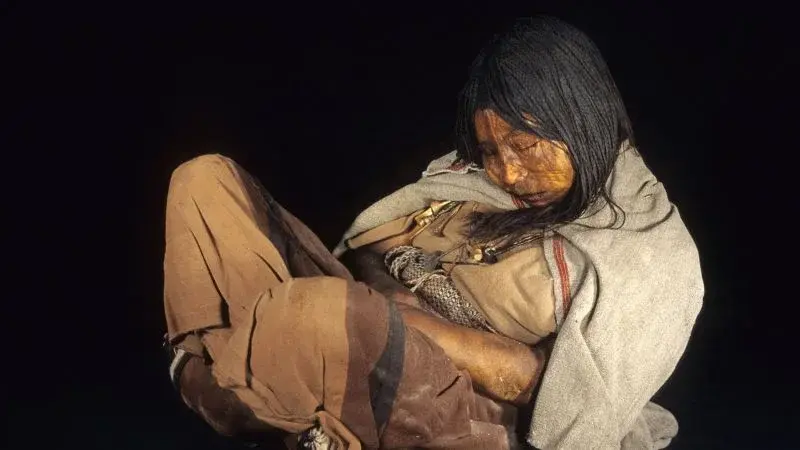
Recent studies on Inca 'ice mummies' reveal that children sacrificed in the 15th and 16th centuries underwent months-long journeys and were administered specific drugs, including coca and alcohol, before death. New CT scans and chemical analyses indicate varied causes of death, ranging from blunt force trauma to exposure, challenging previous assumptions about the ritual's uniformity.
Key points
- Toxicological analysis of eight mummies found cocaine in all samples and alcohol in four, suggesting children were drugged to calm them or ease altitude sickness before sacrifice.
- CT scans of the 'El Plomo Boy' revealed blunt force trauma from a star-shaped mace, while neck marks on two girls were likely caused by burial textiles rather than strangulation.
- Isotope analysis indicates the El Plomo Boy traveled over 1,600 miles (2,600 km) over nine months, with diet changes reflecting the long procession to the sacrificial site.
- The famous 'Ice Maiden' (Juanita) showed signs of violent trauma to the skull, chest, and pelvis, while another mummy on Mount Ampato may have been moved after death.
- Botanical dating of remains on Mount Llullaillaco narrows the sacrifice period to 1462–1507, coinciding with the reigns of Inca rulers Topa Inca and Huayna Capac, suggesting political motivations for the ritual.
Background
The Inca Empire, which existed from the 13th century until the Spanish conquest in 1572, practiced capacocha, a ritual sacrifice of children and young women to mountain deities. Johan Reinhard discovered the first 'ice mummy,' Juanita, on Mount Ampato in 1995. Since then, dozens of naturally preserved bodies have been found in Peru, Chile, and Argentina. Previous knowledge relied heavily on Spanish colonial chronicles, which described the rituals but lacked direct physical evidence. Recent advances in forensic technology, including CT scanning and mass spectrometry, have allowed researchers to analyze hair, nails, and bones with unprecedented detail, moving beyond historical accounts to biological data.
How outlets are covering it
CNN and Mezha.net provide a broad overview of the new findings, emphasizing the variety of causes of death and the long journeys undertaken by the children. Earth.com offers a more detailed chemical breakdown, highlighting that cocaine was found in all eight mummies analyzed and that the presence of harmine (an ayahuasca component) in Juanita’s nails suggests the use of antidepressant properties rather than hallucinogenic ones. Earth.com also notes that the chemical profiles varied by mountain deity, implying that rituals were tailored to specific gods rather than the child's gender. While all sources agree on the basic facts, Earth.com provides more specific data on drug concentrations and the methodological improvements that overturned previous negative results for psychoactive substances.
Why it matters
These findings refine our understanding of Inca religious practices and the logistical complexity of capacocha rituals. By confirming the use of specific drugs and varied methods of killing, researchers can better reconstruct the emotional and physical experiences of the sacrificed children. The political context of the sacrifices, linked to imperial expansion, also sheds light on how the Inca state used ritual to consolidate power and legitimize its presence in newly conquered territories.
What to watch
Researchers expect to publish full genome sequencing results in the coming months, which may reveal the origins and health status of the children. Further studies may analyze additional mummies to determine if the drug profiles and causes of death vary across different regions of the Inca Empire, potentially revealing a more nuanced map of Inca religious and political networks.
Want the full story? Read the original reporting
Read on CNN