
Venomous Slow Loris Resurfaces in Indonesian Urban Areas After 90-Year Scientific Absence
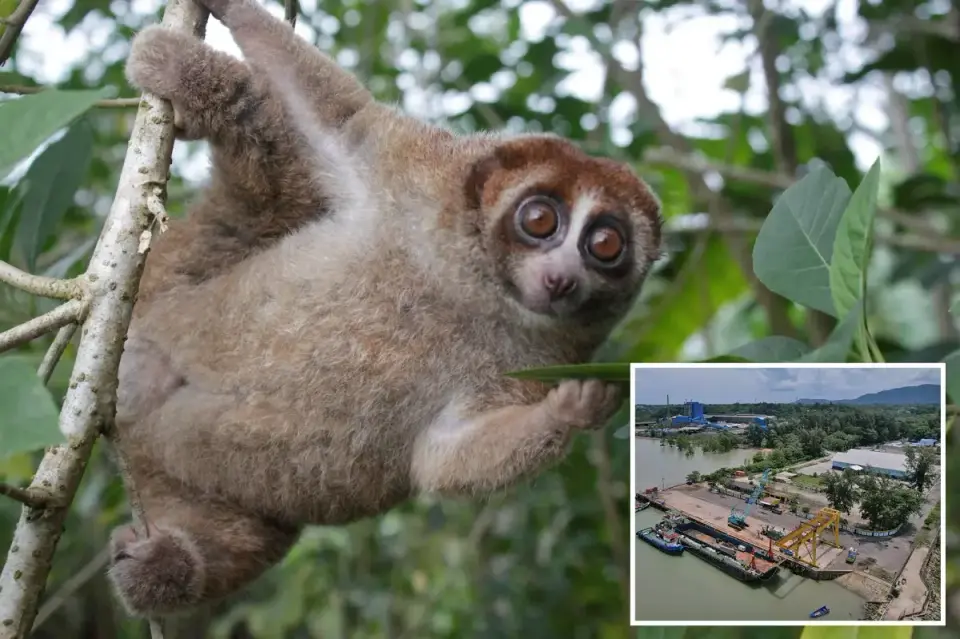
A study published in Spixiana confirms the existence of the Bangka slow loris, a venomous primate feared extinct since 1937. Researchers documented over 90 individuals in Indonesia between 2015 and 2025, finding them in urban backyards and on power lines. While 86 animals were successfully rehabilitated and released, the species remains critically endangered due to habitat loss from tin mining and oil palm plantations.
Key points
- The Bangka slow loris, the world’s only venomous primate, was last scientifically documented in 1937 and feared extinct for nearly nine decades.
- A new study in Spixiana details the rescue of over 90 individuals by the Alobi Wildlife Rescue Center in Indonesia between 2015 and 2025.
- The animals were found in unexpected urban settings, including backyards, roadsides, and power lines, rather than deep forest habitats.
- Of the rescued animals, 86 recovered from injuries, including electrical burns and dog attacks, and were released at seven sites on Bangka Island.
- The species is classified as Critically Endangered on the IUCN Red List, with threats including illegal tin mining, oil palm expansion, and the pet trade.
- Researchers call for long-term conservation strategies, including population surveys, genetic studies, and a potential breeding program to ensure survival.
Background
This discovery follows a pattern of rare species being rediscovered after long absences from scientific records, such as the flat-headed cat reported in 2026. It contrasts with the ongoing search for missing persons in other regions, highlighting how wildlife can persist in human-dominated landscapes despite official extinction fears.
How outlets are covering it
The New York Post emphasizes the shock of finding the primate in urban backyards and highlights the danger of its venom to humans. Qazinform focuses on the scientific validation of the species' existence and the specific threats from tin mining and oil palm plantations. Both sources agree on the critical need for conservation but differ in emphasis: the Post highlights the 'incredible' nature of the rediscovery, while Qazinform details the collaborative effort between the rescue center, Vienna-based researchers, and conservation organizations like Re:wild.
Why it matters
The rediscovery proves that species feared extinct may still survive in overlooked urban or semi-urban areas. It underscores the importance of local wildlife rescue centers in maintaining scientific records and highlights the urgent need to protect remaining habitats from industrial expansion to prevent the species from becoming truly extinct.
What to watch
Researchers plan to conduct population surveys and genetic studies to better understand the Bangka slow loris. Conservation efforts will focus on protecting suitable forests and potentially establishing a breeding program. The Alobi Wildlife Rescue Center will continue monitoring released animals to ensure their survival in the wild.
- World’s only venomous primate lost to science for 90 years resurfaces in unbelievable place New York Post
- Feared extinct, Bangka slow loris primate rediscovered in Indonesia Reuters
- Venomous primate thought lost to science for nearly a century turns up in gardens and on roads across Indonesia Phys.org
- Critically endangered Bangka slow loris documented after decades without scientific records Qazinform
- Lost to Science for 89 Years, a Venomous Primate Has Been Sneaking Into People’s Homes and Gardens Gizmodo
Want the full story? Read the original reporting
Read on New York Post