
Turkish drilling finds no bedrock at Noah's Ark site, fueling debate
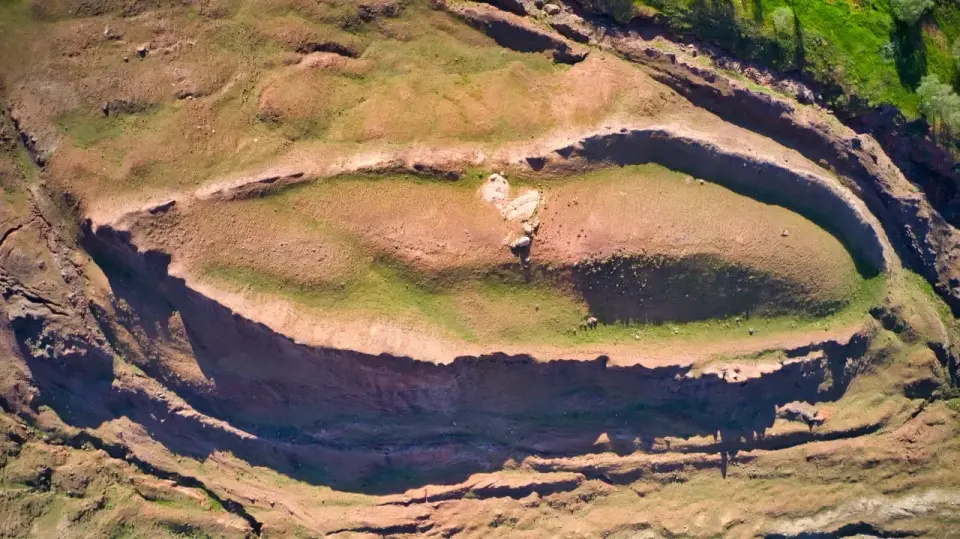
Researchers at the Durupinar formation in eastern Turkey report that core drilling found no bedrock, only rich black soil, challenging the theory that the site is a natural geological feature. While some claim radar scans reveal man-made structures, experts note the findings are preliminary and unverified.
Key points
- Core drilling at the Durupinar formation near Mount Ararat found no bedrock, only rich black soil, according to Fox News.
- Noah's Ark Scans claims radar scans reveal a 'man-made' structure, but findings are not peer-reviewed, per The Jerusalem Post.
- Critics maintain the formation is natural, but researchers argue new evidence challenges this view, according to Fox News.
- The Turkish government approved deeper investigation in 2026, allowing more invasive geological and archaeological excavations, per The Jerusalem Post.
- Soil samples are being tested for organic content at Ankara University this winter, according to Fox News.
Background
The Durupinar formation, discovered in 1959, has long been a focal point for Noah's Ark hunters due to its boat-like shape and proximity to Mount Ararat. Previous studies, including a 1990s paper by David Fasold and Lorence Collins, argued the site is a natural rock formation. The 2026 Turkish government approval for deeper investigation marks a significant shift in the decades-long debate.
How outlets are covering it
Fox News emphasizes the absence of bedrock and the presence of rich black soil as evidence against the natural-rock theory. The Jerusalem Post highlights radar scans suggesting a man-made structure but notes the findings are preliminary and unverified. Daily Sabah focuses on the first core drilling at the site, while the Washington Times reports on radar anomalies. Critics, as noted by Fox News, maintain the formation is natural, but researchers argue new evidence challenges this view.
Why it matters
The findings could potentially confirm or refute the long-standing debate over the Durupinar formation's connection to Noah's Ark. If the soil analysis reveals organic material consistent with decayed wood, it could provide significant evidence for the biblical account. However, the preliminary nature of the findings means the debate is likely to continue.
What to watch
Soil samples are to be tested for organic content at Ankara University this winter. The results of these tests will be crucial in determining whether the Durupinar formation holds the remains of Noah's Ark or is a natural geological feature.
- Noah's Ark researchers ‘inching towards’ confirmation after drilling challenges natural-rock theory Fox News
- Noah’s Ark? Researchers claim radar scan reveals 'man-made' structure at Turkey site The Jerusalem Post
- Researchers conduct 1st core drilling at Türkiye’s Noah’s Ark site Daily Sabah
- Radar anomalies at Turkish site may be Noah’s Ark, team says Washington Times
- 'Underground corridors' found at Noah's Ark site as scientist makes huge confession Daily Star
Want the full story? Read the original reporting
Read on Fox News