
Turkish Drilling Yields No Bedrock at Contested Noah's Ark Site
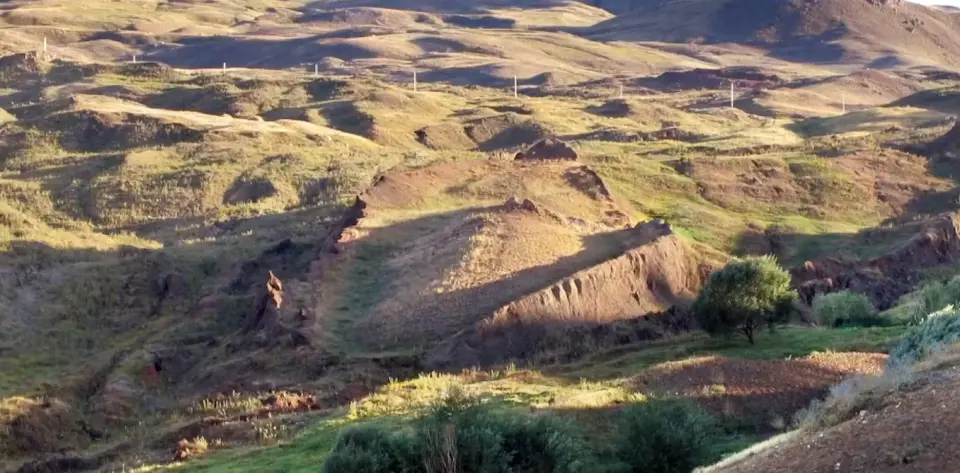
A new field season at the Durupınar formation in eastern Turkey has intensified the debate over whether the site is a natural rock structure or the remains of Noah’s Ark. Researchers from Sivas Cumhuriyet University and Noah’s Ark Scans drilled over 60 feet into the site, collecting more than 300 soil samples. Preliminary reports indicate the absence of solid bedrock, with drilling encountering mainly soil and boulders. While some claim radar scans reveal man-made structures, official university statements emphasize that laboratory analysis is still underway and results are inconclusive. The findings challenge previous geological assessments that identified the site as a natural limestone formation, but no definitive proof of a man-made vessel has been confirmed.
Key points
- Researchers drilled over 60 feet (20 meters) into the Durupınar formation, collecting more than 300 soil samples for laboratory analysis.
- Preliminary reports from Noah’s Ark Scans claim radar scans reveal 'man-made' structures, including corridors and right angles, but these findings are not yet peer-reviewed.
- Sivas Cumhuriyet University states that laboratory analysis is ongoing and will continue into 2027, with no definitive conclusions drawn yet.
- Geologists previously concluded the formation is a natural limestone feature shaped by geological processes, a view challenged by the new drilling results.
- The site has been associated with Noah’s Ark for nearly 70 years, with renewed interest driven by social media and new technological investigations.
Background
The Durupınar formation, located near Doğubayazıt in eastern Turkey, has been linked to Noah’s Ark since 1959, when Turkish Army Captain İlhan Durupınar noticed its boat-like shape in aerial photographs. A 1960 expedition concluded it was a natural formation, but claims resurfaced in the late 1970s. In 1996, geologists Lorence Collins and David Fasold published a paper rejecting the ark theory, identifying the site as a natural rock structure. Recent investigations, supported by the Turkish government, have used deep-core drilling and radar scans to probe the site, with preliminary results suggesting the absence of solid bedrock.
How outlets are covering it
Fox News and CBN News emphasize the preliminary findings that challenge the natural rock theory, highlighting the absence of bedrock and the presence of soil and boulders. The Jerusalem Post reports on radar scans that claim to reveal man-made structures, but notes that these findings are not yet peer-reviewed. The Conversation provides a scholarly perspective, noting that while the new research is intriguing, the formation has long been identified as a natural geological feature by trained geologists. The Conversation also highlights the broader cultural significance of flood myths in the ancient Near East, suggesting that the search for Noah’s Ark reflects ongoing fascination with biblical narratives rather than definitive archaeological evidence.
Why it matters
The Durupınar site remains a focal point for debates between religious belief and scientific inquiry. The new drilling and radar scans have reignited interest in the site, with preliminary results challenging previous geological assessments. However, the lack of peer-reviewed evidence and ongoing laboratory analysis means that the site’s status remains unresolved. The case underscores the tension between faith-based interpretations and scientific methodology, as well as the role of modern technology in archaeological investigations.
What to watch
Laboratory analysis of the soil samples is expected to continue into 2027, with results potentially providing further insights into the site’s composition. Noah’s Ark Scans plans to conduct deeper explorations based on the current findings, including the use of cameras to investigate any voids or cavities. The Turkish government’s support for the project suggests that further investigations will continue, with the potential for new discoveries or definitive conclusions.
- Why people keep looking for Noah’s Ark in a natural rock formation in Turkey: A scholar of early Christianity explains The Conversation
- Noah's Ark mystery enters new phase as researchers probe deep beneath site Fox News
- Man Convinced He’s Found Noah’s Ark Delivers Message For Critics cbn.com
- Noah’s Ark? Researchers claim radar scan reveals 'man-made' structure at Turkey site The Jerusalem Post
- Is It “100% Confirmed” That Noah’s Ark Has Been Found? Answers in Genesis
Want the full story? Read the original reporting
Read on The Conversation