
Europe’s 2026 Total Solar Eclipse Draws Millions, Boosts Tourism, and Previews 2027’s 'Eclipse of the Century'
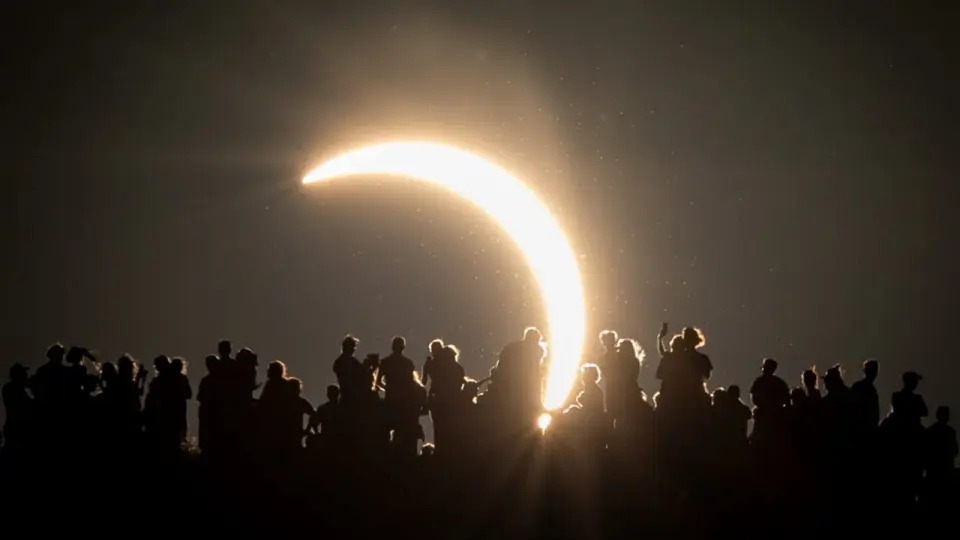
On August 12, 2026, a total solar eclipse swept across parts of Europe, marking the first such event visible from the continent since 1999. The path of totality crossed Greenland, Iceland, northern Spain, and a small portion of Portugal, plunging these regions into temporary darkness. Millions of spectators gathered to watch the rare spectacle, with Spain experiencing its first mainland total eclipse since 1905. The event generated significant economic activity, with hotels in Iceland and Spain charging over $1,000 per night and retailers facing shortages of certified eclipse glasses. While the total phase lasted under two minutes in most locations, the partial eclipse was visible across much of Europe and parts of the northeastern United States. The event also highlighted upcoming astronomical opportunities, including the Perseid meteor shower and the highly anticipated 2027 total solar eclipse, which will feature a longer duration of totality.
Key points
- The total solar eclipse occurred on August 12, 2026, with the path of totality crossing Greenland, Iceland, northern Spain, and Portugal.
- It was the first total solar eclipse visible from Europe since 1999 and the first for mainland Spain since 1905.
- Millions of people gathered to watch the event, with some locations experiencing totality for under two minutes.
- The eclipse boosted local economies, with hotels charging over $1,000 per night and retailers seeing high demand for eclipse glasses.
- A partial eclipse was visible across much of Europe and parts of the northeastern United States, with coverage varying by location.
- The event coincided with the Perseid meteor shower, offering additional astronomical viewing opportunities.
Background
The 2026 eclipse was part of a predicted 'golden age' of total solar eclipses between 2026 and 2028, though none are visible from the UK until 2090. Previous coverage noted that Spain expected around 450,000 visitors for the event, and that the total phase would last under two minutes in most locations. The 2027 eclipse, which will cross southern Spain, Gibraltar, and North Africa, is anticipated to have a longer totality phase, making it a major draw for future tourism.
How outlets are covering it
CNBC emphasized the economic impact of the eclipse, noting that hotels in Iceland and northern Spain charged over $1,000 per night and that retailers faced shortages of eclipse glasses. CNN focused on the global reach of the event, highlighting partial eclipse coverage in the US and Europe, and provided practical advice on eye safety and future eclipse opportunities. The New York Times looked ahead to the 2027 eclipse, describing it as the 'eclipse of the century' due to its longer duration of totality and its path through iconic locations like the Valley of the Kings in Egypt. NPR provided a visual summary of the event, emphasizing the widespread public engagement and the rarity of the event for Spain. All sources agreed on the basic facts of the eclipse's path and timing but differed in their emphasis, with CNBC focusing on economics, CNN on global impact and safety, the NYT on future opportunities, and NPR on visual documentation.
Why it matters
The 2026 solar eclipse was a rare astronomical event that had significant cultural, economic, and scientific implications. It demonstrated the global interest in celestial events and their potential to drive tourism and economic activity. The event also highlighted the importance of eye safety during such events and the need for certified viewing equipment. Looking ahead, the 2027 eclipse is expected to be even more significant, with a longer duration of totality and a path through iconic locations, making it a major draw for future tourism and scientific observation.
What to watch
The next major astronomical event is the Perseid meteor shower, which peaked on August 13, 2026. The 2027 total solar eclipse, expected to have a longer duration of totality, is being promoted as the 'eclipse of the century' and is likely to draw significant global attention. The next total solar eclipse visible from the contiguous US is not until August 23, 2044, making the 2027 event a particularly important opportunity for those in the region.
- In pictures: Europe sees best solar eclipse since 1999 CNBC
- Live updates: Total solar eclipse sweeps across Europe CNN
- How to Catch the ‘Eclipse of the Century’ Next Year The New York Times
- Photos: See the best photos from the solar eclipse : The Picture Show NPR
- A total solar eclipse will darken the sky for millions today! Here's what you need to know Space
Want the full story? Read the original reporting
Read on CNBC