
LiDAR Scans Reveal Massive Pre-Columbian Amazonian Civilization
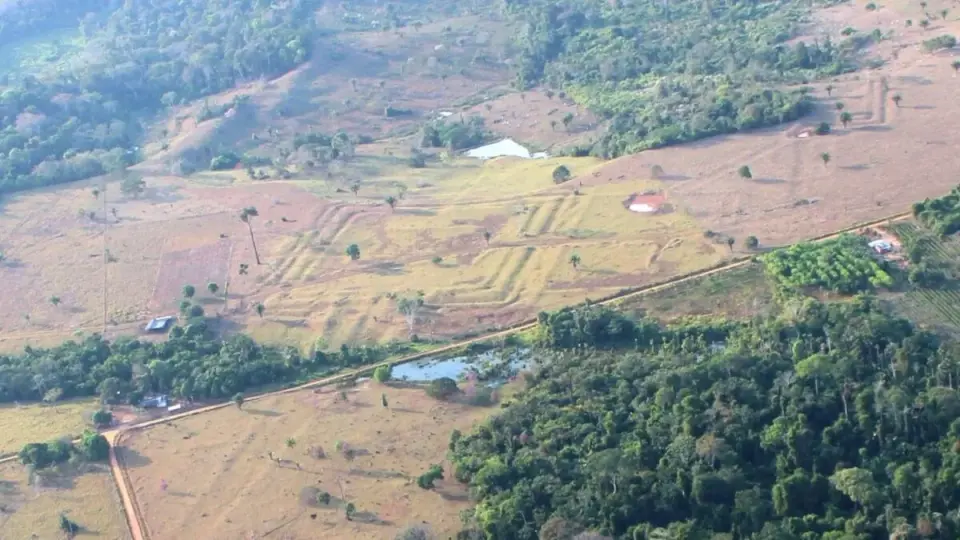
A new LiDAR survey of southwestern Brazil has uncovered evidence of a massive pre-Columbian civilization, dubbed the Aquiry, that thrived in the Amazon between 600 BCE and 850 CE. The study, published in Nature, suggests this society supported a population of 1.2 to 3 million people and constructed up to 30,000 geometric earthworks, challenging the long-held view of the Amazon as an untouched wilderness.
Key points
- Researchers led by Martti Pärssinen used airborne LiDAR to scan 4,497 square kilometers of rainforest in Brazil's Acre and Amazonas states.
- The survey identified 432 new earthworks, including complex geometric shapes like pentagrams and octagons, many hidden beneath dense foliage.
- Estimates suggest the Aquiry civilization may have had a peak population of 1.25 to 3 million people around 100-300 CE.
- The findings imply the Amazon was significantly altered by human activity, affecting carbon balances and biodiversity, which may require updates to climate models.
- The civilization disappeared around 850 CE, leaving behind a landscape that was later reclaimed by the rainforest.
Background
Previous archaeological consensus held that the Amazon was largely uninhabited before European contact. Recent LiDAR discoveries in other parts of South America, such as the Khmer Empire in Cambodia and Mayan cities in Mexico, have begun to shift this view. This new study builds on earlier satellite imagery surveys that found around 1,300 earthworks, but LiDAR has revealed that satellite methods missed up to 90% of the structures due to canopy cover.
How outlets are covering it
Gizmodo and Live Science emphasize the sheer scale of the discovery, highlighting the 30,000 earthworks and the 3 million population estimate as a paradigm shift in understanding the Amazon. ScienceAlert focuses on the cultural and ecological impact, noting that the Aquiry were not a single empire but a network of communities with shared traditions. Heiko Prümers, a researcher at the German Archaeological Institute, offers a cautious perspective, suggesting that the high number of geoglyphs might result from frequent relocations rather than dense population centers. Pärssinen counters this by pointing to evidence of long-term land management and agriculture, such as maize and squash cultivation, which supports the idea of a stable, large population.
Why it matters
This discovery forces a re-evaluation of the Amazon's pre-colonial history and its role in global climate models. If the Aquiry civilization significantly altered the forest's carbon balance, modern climate models may need to account for these historical changes. Additionally, it challenges the narrative of the Amazon as a pristine wilderness, highlighting the deep human impact on the region's biodiversity and ecosystem.
What to watch
Researchers plan to expand LiDAR surveys to other parts of the Amazon to see if similar civilizations existed elsewhere. There is also interest in understanding why the Aquiry civilization disappeared around 850 CE, a gap in the archaeological record that remains unexplained. Further ground-based surveys may be needed to confirm population estimates and understand the daily lives of the Aquiry people.
- Scientists Find Evidence of Lost Amazonian Civilization That May Have Been Home to Millions Gizmodo
- Over 20,000 precolonial earthworks in the Southwest Amazonia Nature
- Archaeologists Find Hundreds of Ancient Glyphs in the Amazon The New York Times
- Lasers reveal hundreds of geoglyphs made by a mysterious civilization in the Amazon rainforest thousands of years ago Live Science
- 'Completely Transformed My Understanding': Scientists Uncover Hundreds of Hidden Structures Beneath The Amazon ScienceAlert
Want the full story? Read the original reporting
Read on Gizmodo