
Brain Scans Reveal Dogs Distinguish Human Emotions Beyond Simple Positivity
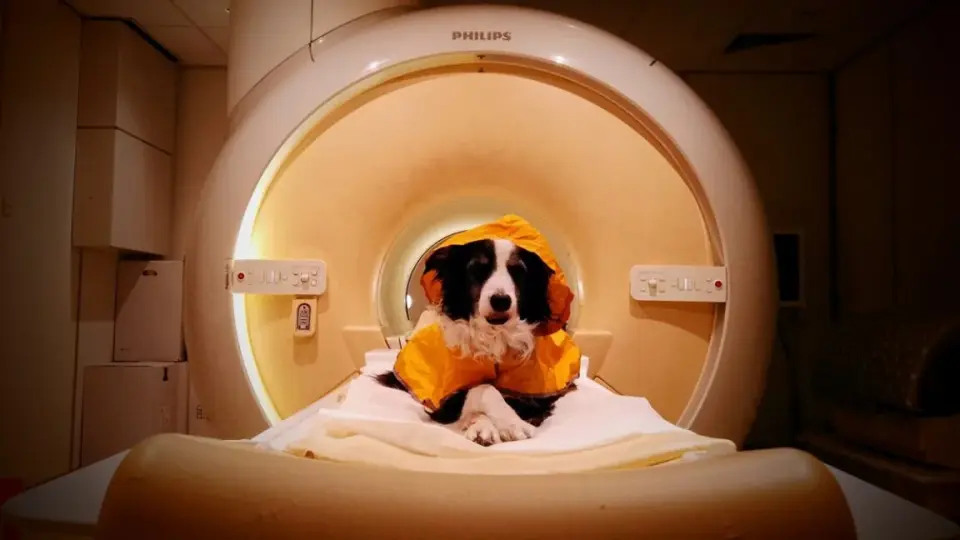
A new study published in iScience confirms that dogs can distinguish between happy, sad, fearful, and angry human faces. Researchers at the University of Vienna used fMRI scans on 14 dogs to map specific brain activity, finding that while happy faces trigger reward centers, negative emotions activate distinct neural patterns, proving dogs process human emotions with nuance rather than just binary positive/negative categories.
Key points
- Researchers Laura Cuaya and Raúl Hernández-Pérez at the University of Vienna conducted fMRI studies on 14 dogs, primarily border collies, to analyze their response to human facial expressions.
- The study found that happy human faces activate the temporal cortex and caudate nucleus, regions associated with reward and motivation in dogs.
- While dogs clearly distinguish happy faces from neutral or negative ones, they can also differentiate between specific negative emotions like fear, anger, and sadness when whole-brain analysis is used.
- The findings suggest that thousands of years of domestication have evolved dog brains to understand human social cues, even from strangers, enhancing the human-animal bond.
- Limitations include a small sample size and the fact that dogs rely on additional cues like body language and scent in real-world interactions, not just static facial images.
Background
Previous behavioral studies indicated dogs could choose boxes associated with happy human expressions over those with fear or disgust, but lacked neural evidence. Earlier fMRI research showed dogs respond more strongly to human faces than dog faces, particularly in the left temporal cortex. This new study builds on that by mapping specific emotional processing rather than just general face recognition.
How outlets are covering it
Ars Technica and The Guardian emphasize the novelty of dogs distinguishing between different negative emotions, a capability previously unproven. BBC highlights the practical implication that owners should smile at dogs to trigger reward pathways. Time Magazine focuses on the training process required for dogs to tolerate MRI scanners and the evolutionary uniqueness of this ability compared to primates. All sources agree on the core finding but differ in emphasis: BBC and Time stress the practical and evolutionary aspects, while Ars and The Guardian focus on the technical distinction between negative emotions.
Why it matters
Understanding how dogs process human emotions can improve training methods and strengthen the human-animal bond. It also provides insights into how domestication has shaped canine brains to cooperate with humans, offering a model for studying social cognition in non-primate species.
What to watch
Researchers may explore how dogs integrate facial expressions with body language and scent in real-time interactions. Further studies could investigate if stray dogs or dogs from different backgrounds process these cues differently, and how these findings can be applied to training and therapy programs.
- Dogs can tell if you’re scared or sad Ars Technica
- We should smile at our dogs - a new scientific study reveals why BBC
- Dogs can distinguish between fearful and angry or sad human faces, brain scans suggest The Guardian
- Your Dog Really Can Tell When You're Happy Time Magazine
- Dogs can distinguish between human fear and sadness EurekAlert!
Want the full story? Read the original reporting
Read on Ars Technica