Tag

Fmri

All articles tagged with #fmri

Common neural fingerprint linked to five psychedelics, study suggests
science23 hours ago

Common neural fingerprint linked to five psychedelics, study suggests

A multinational reanalysis of 11 datasets (267 participants, 519 brain scans) across five psychedelics—psilocybin, LSD, mescaline, DMT and ayahuasca—identified a shared neural fingerprint: increased cross-network communication and selective reductions within certain networks across cortical and subcortical regions, suggesting a flattening of the brain's hierarchy. The pattern was most similar for psilocybin and LSD. While promising for understanding psychedelics and potential therapies, the study emphasizes the need for standardized, larger trials and notes that existing datasets used varied methods and doses.

Three Gradients Shape Lifespan Cortical Hierarchy
neuroscience16 days ago

Three Gradients Shape Lifespan Cortical Hierarchy

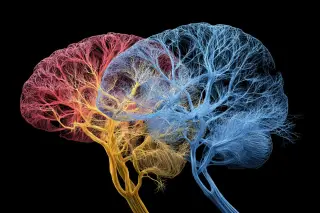
A large-scale lifespan study maps three core functional gradients—sensory–association (SA), visual–somatosensory (VS), and modulation–representation (MR)—across birth to 100 years, showing early anchoring to primary sensory systems, differentiation along association and control axes through development, and later dedifferentiation with aging; these gradients relate to cognitive performance, structure–function coupling, and transcriptomic patterns, providing a normative lifespan atlas for brain organization.

Sound World: Chronic Back Pain Amplifies Everyday Noises, Reversable with Brain-Based Therapy
science1 month ago

Sound World: Chronic Back Pain Amplifies Everyday Noises, Reversable with Brain-Based Therapy

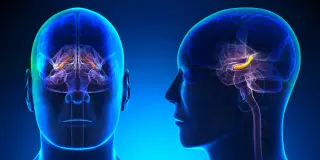
New fMRI study shows chronic back pain heightens the brain’s response to ordinary sounds, with stronger activity in the auditory cortex and insula and less regulation by the medial prefrontal cortex; 142 patients vs 51 controls reacted more intensely than 84% of controls. A randomized trial found Pain Reprocessing Therapy (PRT) best reduced this sensory amplification and normalized brain activity, supporting the idea that chronic pain is a whole-brain issue that can be treated with brain-based therapies.

Trauma reshapes how children's brains read caregiver cues
developmental-psychology1 month ago

Trauma reshapes how children's brains read caregiver cues

A study of 148 children aged 4–9 found that exposure to threat (abuse, witnessing domestic violence) is linked to greater insula activation when processing a caregiver’s cue, suggesting trauma makes caregiver signals more salient and engages interoceptive processing. Deprivation showed no similar effect, indicating adversities affect brain circuitry in distinct ways. The study used a multimodal fMRI task comparing caregivers to strangers and highlighted cross-sectional limits and the need to explore attachment and long-term mental health outcomes.

Cerebellum Hosts a Language Satellite Echoing the Brain’s Speech Network
science1 month ago

Cerebellum Hosts a Language Satellite Echoing the Brain’s Speech Network

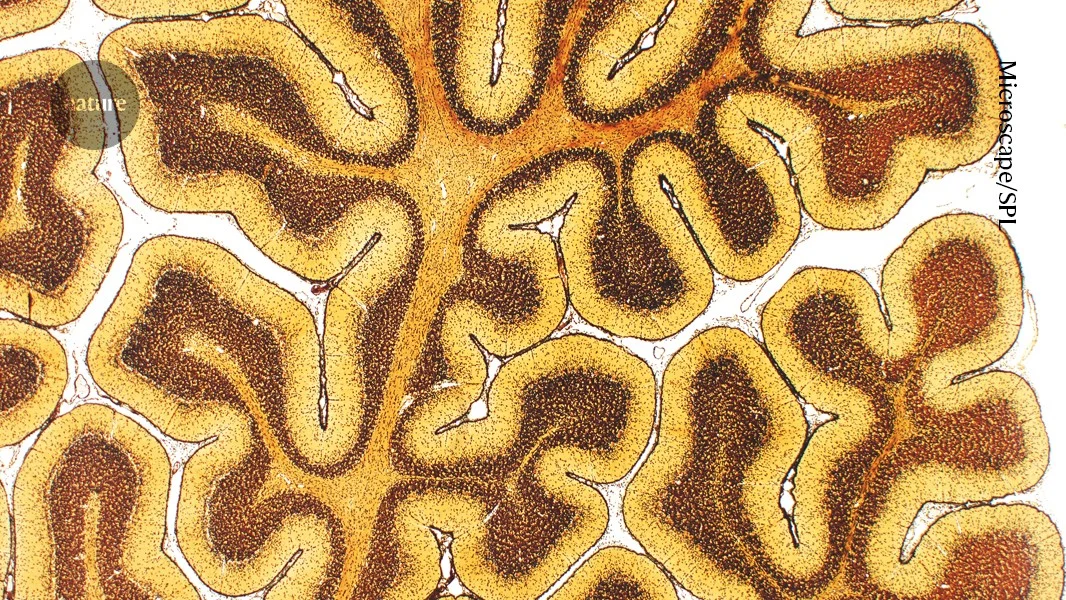
New precision MRI work across 800+ participants reveals four cerebellar regions involved in language, including a right-posterior area that acts as a dedicated language satellite mirroring the neocortical language network. Most cerebellar regions also activate during non-linguistic tasks, suggesting the cerebellum helps integrate information across brain networks. The findings extend the language network into the cerebellum, with potential implications for language learning and aphasia therapy through non-invasive brain stimulation.

Polygenic anhedonia risk linked to altered reward-brain activity
neuroimaging1 month ago

Polygenic anhedonia risk linked to altered reward-brain activity

A German neuroimaging study found that individuals with higher polygenic risk scores for anhedonia show distinct brain activity during a monetary incentive delay task: they exhibit decreased activation in the bilateral putamen and left middle frontal gyrus during reward anticipation and reduced right caudate activity during reward feedback. Higher risk is also associated with lower activity in the left middle frontal gyrus when anticipating losses and during salience processing, while there is heightened activity in the bilateral putamen and right caudate during loss feedback. The results highlight the involvement of striatal and prefrontal circuits in genetic risk for anhedonia, though replication and further research are needed.

Adolescent BPD Linked to Diminished Brain Control During Self-Identity Tasks
neuroscience2 months ago

Adolescent BPD Linked to Diminished Brain Control During Self-Identity Tasks

A neuroimaging study of drug-naïve adolescent girls with borderline personality disorder found reduced activation in the right dorsolateral prefrontal cortex and other regions during self-reflection compared with healthy controls, suggesting diminished cognitive control over identity processing; results hint that some social-cognition networks may be preserved, but generalizability is limited by the small, female-only sample and study design, underscoring the need for replication and longitudinal work.

Challenges in Interpreting BOLD MRI Signals and Brain Metabolism
science3 months ago

Challenges in Interpreting BOLD MRI Signals and Brain Metabolism

Recent research reveals that fMRI signals often misrepresent actual neural activity, with about 40% of cases showing increased signals where neural activity is reduced, due to regions extracting more oxygen without increased blood flow. This challenges long-standing assumptions in brain imaging and suggests a need for direct energy consumption measurements to better understand brain function and disorders.

Study Explains Why Time Feels Faster as We Age
science5 months ago

Study Explains Why Time Feels Faster as We Age

A study using fMRI scans of people watching an Alfred Hitchcock show suggests that as we age, our brains experience fewer and longer-lasting neural states, which may contribute to the perception that time passes more quickly in older adults. This neural dedifferentiation could make it harder to distinguish between events, influencing our subjective experience of time.