
Isotope Analysis Confirms Shackled Men in Ancient Athens Mass Grave Were Locals, Not Invaders
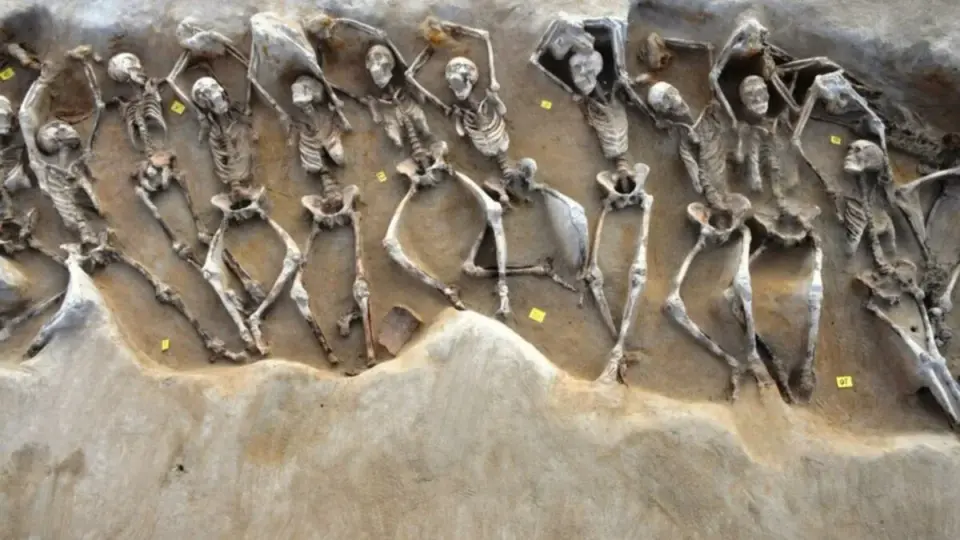
New strontium isotope analysis of 66 men from a 2,600-year-old mass grave in Athens reveals that nearly all were locals from Attica, debunking the theory that they were foreign invaders. The findings suggest the victims were victims of internal political violence during the Archaic Period.
Key points
- In 2016, archaeologists discovered a mass grave in the Phaleron Necropolis near Athens containing 79 men buried with iron shackles on their wrists.
- A study published in the Journal of Archaeological Science: Reports analyzed strontium isotopes in the teeth of 66 of these men and 97 other individuals from the same cemetery.
- The analysis found that approximately 97% of the shackled men had local strontium signatures, indicating they grew up in the Attica region.
- This contradicts previous hypotheses that the victims were foreign invaders, mercenaries, or pirates, suggesting instead that the violence was internal.
- The findings imply that Archaic Athens had limited immigration despite increasing trade, and that the mass execution was likely a result of political conflict or state repression.
Background
The discovery of the Esplanada mass grave in 2016 sparked debate among historians regarding the nature of violence in Archaic Athens. While the Classical Period is famous for its democracy, the preceding Archaic Period (700-460 BCE) was marked by intense political instability and conflicts between aristocratic tyrants and emerging democratic ideals. The new study provides scientific evidence to resolve long-standing debates about the origins of the victims, offering a clearer picture of social dynamics in early Athens.
How outlets are covering it
Gizmodo and Archaeology News Online both emphasize the surprise that the victims were locals, given the increased trade and connectivity of the period. La Brújula Verde highlights the statistical rigor of the study, noting that even under stricter criteria, 89% of individuals were identified as local. The Economic Times focuses on the implication that the violence was an organized exercise of power, possibly linked to the Kylon revolt of 632 BCE, rather than chaotic mob violence. All sources agree that the findings shift the narrative from external conflict to internal political strife.
Why it matters
The study provides concrete evidence that the victims of the Esplanada mass grave were not foreign invaders but locals, reshaping our understanding of political violence in Archaic Athens. It suggests that the development of Athenian democracy was accompanied by internal repression and that the region had limited immigration despite growing trade. This challenges previous assumptions about the social and political dynamics of early Athens and offers new insights into the origins of democratic institutions.
What to watch
Researchers plan to further investigate the identities of the individuals buried at Phaleron, including analyzing their diet and stress levels. Future studies may provide more detailed information about the social status and life histories of the victims, offering a deeper understanding of the political and social context of Archaic Athens.
- Archaeologists Thought a Mass Grave of 79 Shackled Men Held Foreign Invaders. They Were Wrong Gizmodo
- Shackled men in ancient Athens mass grave were locals, not foreign invaders, study reveals Archaeology News Online Magazine
- Analyses Reveal That the Chained Men Found in the Phaleron Mass Grave Were Athenians, Not Foreign Invaders La Brújula Verde
- Shocking discovery after 2,600 years: Bodies bound in a mass grave reveal a mysterious enigma from ancient times صوت الإمارات
- Archaeologists reexamined an ancient Greek mass grave where nearly 80 men were buried together, many still The Economic Times
Want the full story? Read the original reporting
Read on Gizmodo