
Bolivia's Cloud Forest Yields First New Cat Species in Over a Century
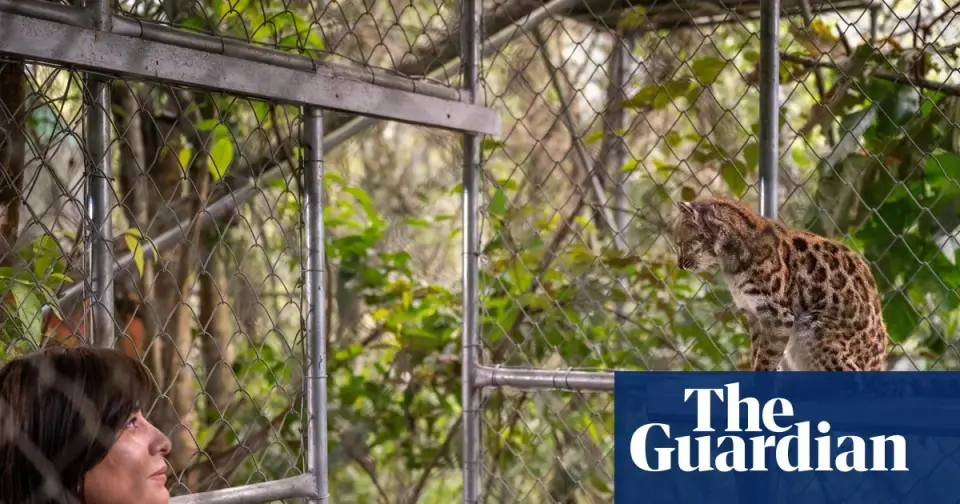
Researchers have formally identified Leopardus tilcayo, a small wild cat from Bolivia's Yungas cloud forest, as a new species. This marks the first new feline species described in over 100 years. Genetic analysis reveals that tiger cats are actually five distinct species, not two, with the tilcayo lineage diverging approximately 1.4 million years ago. The discovery highlights urgent conservation needs, as the species' habitat faces severe threats from deforestation and mining, and its population remains critically unknown.
Key points
- Leopardus tilcayo is a small, spotted wild cat measuring about 18 inches and weighing 3 pounds, found in Bolivia's Yungas region.
- The species was confirmed through genetic analysis of 38 samples, including museum specimens and live individuals, revealing it diverged from other tiger cats 1.4 million years ago.
- The study reclassifies tiger cats from two to five distinct species, including a new subspecies in Peru named Leopardus tigrinus antisuyo.
- Only one known living individual, a 10-year-old male named Tigrino, resides in a Bolivian sanctuary, though scientists believe others exist in the wild.
- The discovery underscores the need for updated conservation assessments, as the Yungas forest faces threats from deforestation, agriculture, and mining.
Background
This discovery follows a broader trend of reclassifying small wild cats through advanced genomic analysis. Previous studies in 2013 and 2024 had already suggested that the single tiger cat species was actually a complex of multiple lineages. The current finding aligns with recent identifications of other new species, such as the Likweli colobus in the DRC, emphasizing that biodiversity in less-studied regions remains significantly underdocumented.
How outlets are covering it
The Guardian and National Geographic emphasize the historical significance of the discovery as the first new cat species in over a century, highlighting the role of local knowledge in identifying the animal. The BBC focuses on the conservation implications, noting that the new species was missing from previous vulnerability assessments. The Washington Post provides a concise overview, noting the cat's physical resemblance to a miniature leopard. All sources agree on the genetic basis of the discovery but differ in emphasis: National Geographic details the personal journey of the lead researcher, while the BBC and Washington Post focus on the broader impact on the global cat family tree and conservation status.
Why it matters
The identification of Leopardus tilcayo challenges the assumption that small, common-looking mammals are fully understood. It reveals that even well-studied groups like cats have hidden diversity, which has direct implications for conservation. By splitting one species into five, the discovery likely elevates the conservation status of these animals from 'vulnerable' to potentially 'endangered,' prompting more urgent protection efforts in threatened habitats like the Yungas forest.
What to watch
Researchers will submit the findings to the International Union for Conservation of Nature (IUCN) for a formal review of the five tiger cat lineages. Scientists plan to install more camera traps in Bolivia's Yungas region to estimate the wild population of Leopardus tilcayo. Additionally, the methods used in this study may be applied to other small wild cats in Africa and Asia, potentially leading to further species discoveries and a re-evaluation of the global cat family tree.
- New cat species identified for first time in more than a century in Bolivia The Guardian
- Meet the First New Cat Species Discovered in 100 Years National Geographic
- Spotted wildcat from Bolivian forest revealed as new species BBC
- New cat species discovered in Bolivia for first time in over 100 years washingtonpost.com
- Leopardus tilcayo: Tiny cat discovered in Bolivia said to be 1st new feline species in over 100 years ABC7 Los Angeles
Want the full story? Read the original reporting
Read on The Guardian