
CT Scans Reveal Dodo Was Not 'Stupid,' but a Nocturnal Forager with Keen Senses
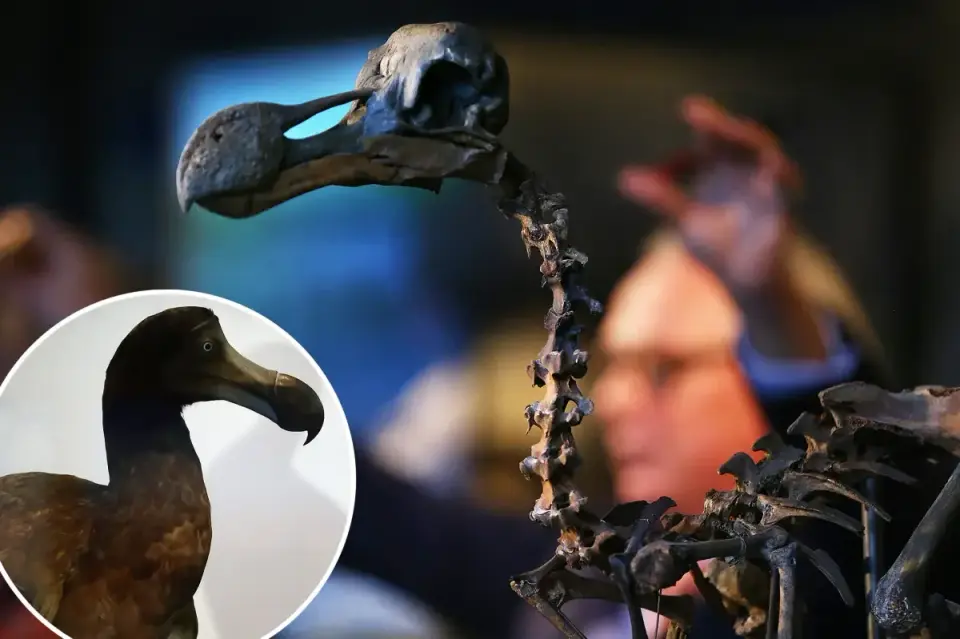
A new study using high-resolution CT scans of the world’s only three preserved dodo skulls challenges the long-held myth that the extinct bird was unintelligent. Researchers found that the dodo’s cognitive brain regions were proportionally similar to those of modern pigeons, suggesting comparable intelligence. Instead, the dodo likely possessed enhanced olfactory and tactile senses and was adapted for low-light foraging, debunking the stereotype of it as a clumsy, diurnal fool.
Key points
- Researchers from the University of Lethbridge, Flinders University, and the Natural History Museum Denmark analyzed three preserved dodo skulls via CT scanning.
- The dodo’s forebrain, linked to cognition and memory, was found to be proportionally similar to that of other pigeons, indicating no evidence of lower intelligence.
- The dodo’s optic lobes were significantly smaller than those of its closest living relatives, suggesting adaptation to nocturnal or crepuscular (dawn/dusk) activity.
- Enlarged olfactory bulbs and trigeminal nerves suggest the dodo had a strong sense of smell and used its large beak to feel its surroundings.
- The dodo’s trusting behavior toward humans is attributed to a lack of natural predators on Mauritius, not low intelligence.
Background
The dodo, a flightless bird endemic to Mauritius, went extinct in the late 17th century shortly after human arrival. It has long been a symbol of human-induced extinction and stupidity, with historical accounts describing it as naive and easy to hunt. Previous studies have debated its behavior, but this is the first to use advanced imaging of complete skulls to reconstruct its brain anatomy. The dodo’s relative, the Rodrigues solitaire, also went extinct around the same time but was not similarly stigmatized.
How outlets are covering it
The New York Post emphasizes the dodo’s potential intelligence, comparing it to modern pigeons and highlighting its 'Darwin award' status. BBC Wildlife focuses on the technical method of endocast reconstruction and the dodo’s potential foraging habits at dawn and dusk. Sci.News provides the most detailed anatomical breakdown, noting the dodo’s optic lobes were three times smaller than its closest relative, the Nicobar pigeon, and linking this to nocturnal activity. Gizmodo frames the findings as an 'apology' to the dodo, stressing that its naivety was a survival trait in a predator-free environment, not a sign of stupidity. All sources agree that the dodo was not less intelligent than its relatives, but differ in emphasis: some highlight its nocturnal adaptation, while others focus on its sensory enhancements like smell and touch.
Why it matters
This study corrects a centuries-old misconception about one of the most famous extinct animals, demonstrating that the dodo’s behavior was a result of evolutionary adaptation to its island environment, not cognitive deficiency. It also provides a new framework for understanding extinct species through anatomical analysis, potentially informing conservation efforts and de-extinction projects, such as those by Colossal Biosciences.
What to watch
Researchers will continue to refine their models of the dodo’s sensory world, though they acknowledge that without preserved brains, certainty is limited. The findings may influence future de-extinction efforts, such as those by Colossal Biosciences, which aims to resurrect the dodo using artificial eggs and genetic re-engineering.
- Scientists debunk long-held myth about the most famous animal extinction — turning Darwin’s theory on its head New York Post
- One of the world's only two complete dodo skulls reveals new clues about the extinct bird Phys.org
- Only two complete dodo skulls are known to exist. Scientists just looked inside them – and discovered this BBC Wildlife Magazine
- Dodo Had Surprisingly Keen Sense of Smell and Owl-Like Vision, New Study Reveals Sci.News
- Scientists Studied the Only 3 Dodo Skulls in Existence. Turns Out We Owe Them an Apology Gizmodo
Want the full story? Read the original reporting
Read on New York Post