
Polish Archaeologists Reveal 17th-Century Woman Buried with Padlock and Sickle to Prevent Reanimation
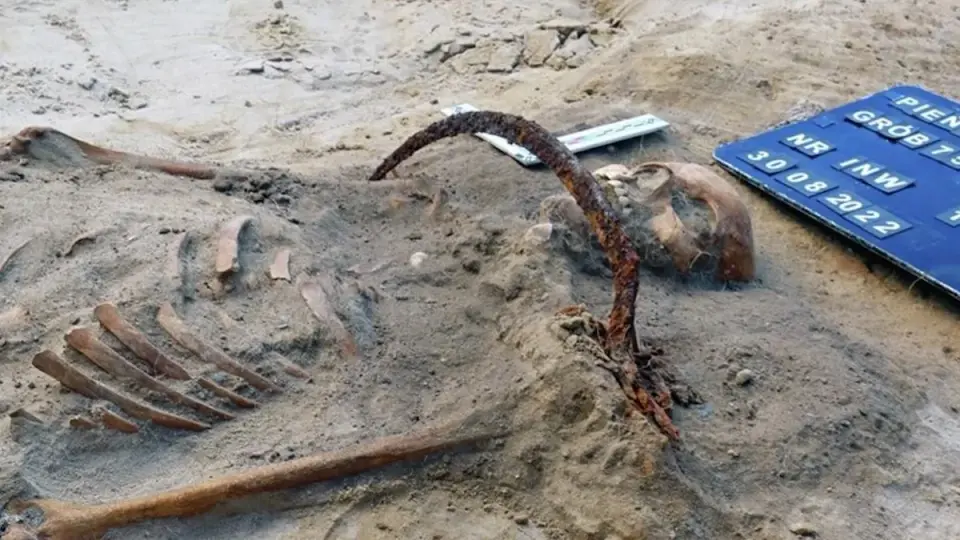
In 2022, archaeologists in Pień, Poland, discovered a 17th-century grave containing a young woman secured with a padlock on her toe and a sickle across her neck. Published in 2026, research suggests these 'anti-demonic' measures were used to prevent her from returning as a revenant after a socially stigmatized death.
Key points
- The skeleton, dubbed 'Zosia,' was found in an unconsecrated cemetery in Pień, Poland, in 2022.
- She was buried with a triangular padlock on her left big toe and later had a sickle placed across her throat.
- Analysis indicates she was aged 17-19, of high social status, and possibly of Scandinavian ancestry.
- Researchers describe the practices as 'anti-demonic' measures to prevent the dead from causing misfortune.
- The grave is part of a broader pattern of 'non-normative' burials in the region, including children buried facedown.
Background
This discovery builds on earlier findings of 'vampire' or 'anti-demonic' burials across Europe, where communities used physical restraints to prevent the dead from returning. The archive notes no direct connection to recent media industry disputes, but the story highlights historical anxieties about social outcasts and the dead.
How outlets are covering it
ScienceAlert emphasizes the 'gruesome' nature of the discovery and the fear of the dead returning, while Smithsonian Magazine focuses on the social status of the woman and the broader context of 'anti-vampiric' practices. Gizmodo highlights the multidisciplinary analysis and the hypothesis that the woman was feared for her 'demonic' nature, noting the irony of modern efforts to reconstruct her face.
Why it matters
This discovery provides insight into 17th-century Polish beliefs about death, social stigma, and the fear of the dead returning. It highlights how communities used physical restraints to manage anxiety about misfortunes, offering a tangible link to historical folklore and practices.
What to watch
Researchers continue to analyze Zosia's remains and other unusual burials in the Pień cemetery to determine her cause of death and whether she was a local or a migrant. Further studies may reveal more about the social dynamics and beliefs of 17th-century Poland.
- Gruesome Discovery Shows 17th-Century Villagers Were Terrified of What Lurked in 'Grave 75' ScienceAlert
- Why Was This 17th-Century Polish Woman Buried With a Padlock on Her Toe and an Iron Sickle Across Her Neck? Smithsonian Magazine
- Archaeologists investigate a feared young woman's 17th century vampiric grave in Poland Phys.org
- DNA Study Probes Secrets of Sickle-Bound 'Vampire' Grave Newser
- Meet Zosia, the 17th-Century Vampire Suspect Buried With a Sickle at Her Throat Gizmodo
Want the full story? Read the original reporting
Read on ScienceAlert