Tag

Anthropology

All articles tagged with #anthropology

Culture Takes the Lead in Human Evolution
science21 days ago

Culture Takes the Lead in Human Evolution

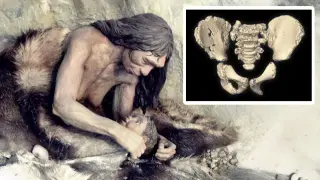
New research argues that culture and technology are now driving human evolution more than genetic changes, with cultural solutions rapidly solving problems and relaxing natural selection; evidence spans lactose tolerance, altered birth practices, and historical disease legacies, suggesting we’re in an evolutionary transition where cultural inheritance outpaces genes; some scientists warn this could require medical or technological interventions to offset potential fitness costs, while raising ethical questions about shaping biology.

Digital Face of Little Foot Unearthed from a 3.67-Million-Year Skull
science25 days ago

Digital Face of Little Foot Unearthed from a 3.67-Million-Year Skull

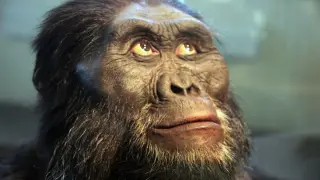
Scientists digitally reconstructed a stable facial model for Little Foot (StW 573) by modeling deformation from 3.67-million-year-old geological crushing and using high-resolution synchrotron X-ray scans, enabling quantitative facial comparisons with other Australopithecus fossils. The results show Little Foot’s facial structure more closely resembles East African specimens than South African ones, suggesting a more dynamic early hominin history than previously thought.

Listening for Stone-Age Voices: How Humans Learned to Talk
science1 month ago

Listening for Stone-Age Voices: How Humans Learned to Talk

A BBC feature explains how scientists infer what early humans sounded like by examining fossil skulls, vocal‑tract anatomy and brain development, outlining two main theories of language origins (sudden symbolic thought vs gradual evolution) and tracing a timeline from primate vocal capacity 27 million years ago to Cro-Magnon speech ~30,000 years ago, suggesting Neanderthals could have spoken and that Homo sapiens eventually developed a full language-ready system, ending with a note on today’s thousands of languages and their fragility.

Sex-biased interbreeding left a lasting Neanderthal DNA pattern in modern humans
anthropology1 month ago

Sex-biased interbreeding left a lasting Neanderthal DNA pattern in modern humans

A genetic analysis comparing Neanderthal genomes with African references shows Neanderthals carried far more modern human DNA on their X chromosome than on other chromosomes, while modern humans have very little Neanderthal DNA on their X. The researchers argue that this pattern results from sex-biased interbreeding—likely Neanderthal males with modern human females—rather than widespread genetic incompatibility. Computer simulations using a mating bias reproduce the observed distribution, suggesting social/partner-choice factors shaped inheritance. The team plans to investigate population structure to determine which sex moved between groups and how cultural practices influenced mating in ancient encounters.

No universal testosterone: culture and ecology reshape our hormonal norms
science2 months ago

No universal testosterone: culture and ecology reshape our hormonal norms

A study of 104 Shuar men in Amazonian Ecuador finds that Western notions of a single “normal” testosterone pattern don’t apply globally. Morning testosterone levels were lower than in the US and declined across the day, with age and body fat producing different lifespan patterns: lean men show an inverted U with a midlife peak, while higher-fat men peak earlier and then decline. Social factors also matter, as men with partners had lower morning levels. The results challenge universal clinical benchmarks and highlight energy, environment, and lifestyle as drivers of hormonal regulation, though the cross-sectional design limits causal conclusions.

Indonesia's ancient hand stencils reveal oldest cave art at 67,800 years
science2 months ago

Indonesia's ancient hand stencils reveal oldest cave art at 67,800 years

Dating from the Liang Metanduno cave on Sulawesi's Muna Island, hand stencils are about 67,800 years old, making them the oldest known cave art. The technique involved blowing pigment over a pressed hand, and the find suggests early Indonesians created sophisticated art long before similar European examples, with potential links to the ancestors of Aboriginal Australians.

Reconstructed Face of Kennewick Man Sheds Light on America's First Inhabitants
science2 months ago

Reconstructed Face of Kennewick Man Sheds Light on America's First Inhabitants

Scientists have unveiled a facial reconstruction of the Kennewick Man, a roughly 8,000-year-old skeleton found in Washington, revealing a strong, resilient man whose bones show multiple injuries and a marine-based diet; the image was created using objective skull-based tissue-depth models and a digital donor, providing new insights into the peopling of the Americas and the daily life of one of North America’s most important ancient skeletons.

Primates' Same-Sex Behavior Points to Deep Evolutionary Social Strategies
science2 months ago

Primates' Same-Sex Behavior Points to Deep Evolutionary Social Strategies

A study reviewing 491 primate species found same-sex sexual behavior in 59 species, indicating a deep evolutionary root linked to harsh environments, predation pressure, and complex social hierarchies. The behavior may help manage stress, reinforce bonds, or build alliances, with potential implications for understanding human evolution, while warning against simplistic interpretations that would erase such behavior in humans.

Scientists Discover New Human Species Challenging Old Beliefs
science8 months ago

Scientists Discover New Human Species Challenging Old Beliefs

Scientists from China and Hawai'i have identified a potential new human species, Homo juluensis, based on fossil similarities, which may include Denisovans, and could help clarify the complex history of human evolution in Asia. The species thrived from 300,000 to 50,000 years ago and shows unique cranial and dental features, although further research is needed for confirmation.

Anthropologist Explains Human Global Dominance
science1 year ago

Anthropologist Explains Human Global Dominance

Anthropologist Morgan proposes that humans dominate the world due to their unique cultural openness, which allows for complex planning, adaptability, and innovation. Unlike animal cultures that often stagnate, human culture continuously evolves by building on accumulated knowledge, leading to advancements like modern technology. This openness is linked to the complexity of the human brain, particularly the prefrontal cortex, and raises questions about future cultural evolution in the context of emerging technologies like AI and robotics.

Unraveling the Global Legacy of the Mysterious Denisovans
science1 year ago

Unraveling the Global Legacy of the Mysterious Denisovans

Denisovans were an ancient human species whose DNA has been found in diverse modern populations, particularly in Asia and Oceania. Despite limited fossil evidence, genetic studies reveal that Denisovans interbred with ancestors of modern humans, contributing to the genetic diversity seen today. Their existence highlights the complex history of human evolution and migration.

Greek Fossils Challenge Africa as Cradle of Humanity
science1 year ago

Greek Fossils Challenge Africa as Cradle of Humanity

A recent analysis of fossils found in Nikiti, Greece, suggests that human ancestors may have evolved in Southeastern Europe rather than Africa, challenging the long-standing theory of African origins. The fossils, initially linked to the extinct ape Ouranopithecus, were re-evaluated by a team led by David Begun, who proposed they might belong to a new species predating the first hominin, Graecopithecus. This theory, however, is controversial and not widely accepted among experts, as it contradicts the prevailing belief that hominins originated in Africa.

Hunter-Gatherer Children Master Essential Skills by Age Six
education1 year ago

Hunter-Gatherer Children Master Essential Skills by Age Six

Hunter-gatherer children in the Congo Basin learn essential skills like hunting and childcare by age six through a unique social learning environment that involves parents, peers, and unrelated adults. This broad network fosters cumulative culture, allowing skills to be innovated and passed across generations. Unlike Western societies, where learning is parent- or teacher-centered, these children benefit from egalitarian values and autonomy, promoting self-driven exploration. The study highlights the importance of diverse social interactions in preserving cultural traits over time.

Hunter-Gatherer Insights Reveal Ancient Child Learning Methods
science1 year ago

Hunter-Gatherer Insights Reveal Ancient Child Learning Methods

A study led by Washington State University reveals that hunter-gatherer children in the Congo Basin learn essential survival skills by age six or seven through a unique social environment where knowledge is passed down by the broader community, not just parents. This research highlights the role of extended family and unrelated community members in cultural transmission, contrasting with the Western nuclear family model. The findings underscore the importance of egalitarianism and autonomy in learning, contributing to 'cumulative culture' and human adaptability across diverse environments.