
Researchers Map 1.5km Coral Colony in Indian Ocean, Raising Questions on Its Age and Genetic Identity
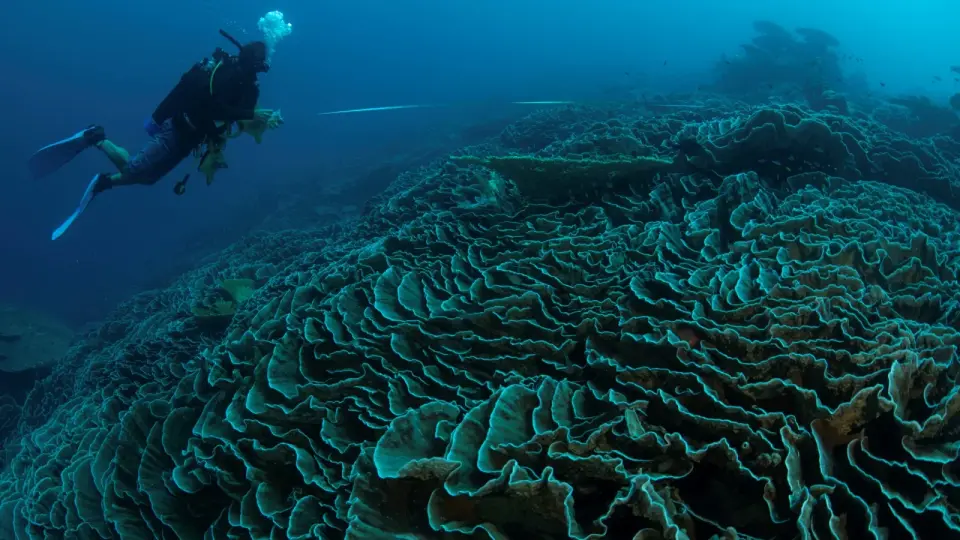
Marine biologists have mapped a 1.56-kilometer-long rose coral colony near the Cocos Islands, potentially the largest of its kind. While local divers noticed it decades ago, recent genetic sampling aims to determine if it is a single ancient organism or a fusion of multiple colonies.
Key points
- The colony spans 1.56 kilometers, equivalent to 100 buses, and covers approximately 5.7 hectares.
- It was first noticed by dive operator Dieter Gerhard over 30 years ago but only fully mapped recently by Dr. JP Hobbs.
- The coral exists in deep water (14 to 65 meters), potentially offering a refuge from shallow-water bleaching events.
- Genetic tests are underway to determine if the structure is one individual or a chimera of fused colonies.
Background
This discovery follows a trend of finding massive coral structures, such as a 34-meter coral in the Solomon Islands in 2024 and a 111-meter formation on the Great Barrier Reef in 2026. Unlike previous finds, this colony is significantly larger and located in the remote Indian Ocean.
How outlets are covering it
ScienceAlert and ABC News emphasize the sheer scale and the difficulty of mapping the coral, noting that divers ran out of air before reaching the end. Yahoo News highlights the public excitement and compares the size to the Sydney Harbour Bridge. ZME Science focuses on the biological mystery of whether the coral is a single genetic individual or a chimera, noting that similar large corals have been found recently but lack genetic confirmation.
Why it matters
Understanding how this coral thrives in deep, stable waters could provide insights into climate resilience for other coral species. If it is a single ancient organism, it could rewrite records for the largest and oldest coral colonies.
What to watch
Researchers are analyzing DNA samples from 50 points across the colony to determine its genetic identity and age. They plan to use the mapped baseline to monitor the coral's health against future climate events.
- Incredible Coral 100 Buses Long Discovered in The Indian Ocean, Could Be One of The World's Largest ScienceAlert
- Coral colony the size of three MCGs thriving off remote Australian island ABC News & Headlines – Australian Broadcasting Corporation
- Aussie crew uncover 1.5km secret hidden underwater for 30 years Yahoo News Australia
- Huge 140-bus-long coral colony mapped by scientists for first time Oceanographic Magazine
- Scientists Found a Coral Formation Nearly a Mile Long. It Could Be One Giant Organism ZME Science
Want the full story? Read the original reporting
Read on ScienceAlert