Two humpback whales completed a record-breaking journey of about 9,000 miles between breeding sites in Australia and Brazil, highlighting their remarkable long-range migration and the global scale of whale movements.
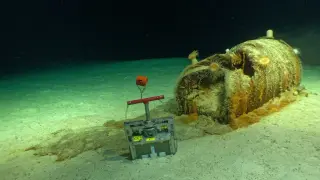
NASA’s Curiosity rover encountered an unusual hitch when a rock named Atacama stuck to its drill sleeve during a Mars sampling attempt, but ground teams freed it after several maneuvers; in Greenland’s Inglefield Bredning, researchers deployed a deep-water camera and hydrophone at 260 meters to document 478 organisms and sounds (including narwhals and iceberg activity), showing a feasible approach for Arctic seafloor studies; NASA also released thousands of Artemis II mission photos featuring lunar, Earth, and Milky Way views.
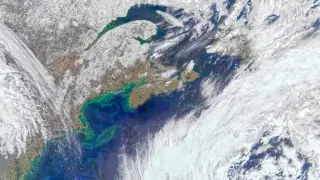
Researchers find that marine bacteria produce methane when surface waters become phosphate-poor, creating a self-reinforcing warming loop: warming drives stratification that limits nutrient (phosphate) delivery, triggering more methane emissions and potentially accelerating near-term climate warming—an interaction not fully captured in many climate models.
Oxford and Harvard researchers find tardigrades—the water bears—are the most likely animals to outlive Earth’s final catastrophe, thanks to cryptobiosis and refuges in deep oceans; true planetary sterilization would require boiling the oceans, a feat only achievable by an extraordinarily massive asteroid or rare stellar explosions, while microbes would likely survive and ecological collapse could still wipe out all life even if some tardigrades endure.
A Rochester-led study finds methane in nutrient-poor, oxygen-rich surface waters is produced by bacteria when phosphate is scarce, solving a long-standing paradox and suggesting the open ocean may emit more methane than models predict; as global warming slows nutrient upwelling, methane production could rise, creating a feedback loop not yet accounted for in many climate projections.
A wildlife photographer captured close-up footage of a blue dragon nudibranch feeding on venomous prey near Gran Canaria, showing how it steals venom from victims like Portuguese man o’ war and Velella velella for defense; the scene occurred as winds pushed open-ocean species toward shore, offering a rare, bittersweet glimpse of these open-water creatures during their coastal journey.
A study of 24 enclosed Martian craters in the northern hemisphere finds evidence for a planetwide groundwater system that persisted after surface water declined, with water migrating into deep, interconnected underground reservoirs likely fed by a vast ancient ocean about 3–4 billion years ago. Minerals such as clays and carbonates at several sites suggest habitable conditions in the subsurface and the potential preservation of biosignatures in buried sediments.
Coastal deserts form where cold ocean currents chill the air and fog limits moisture, while nearby mountains create rain shadows that block precipitation, producing arid zones right along shores (as seen in the Namib and Atacama).
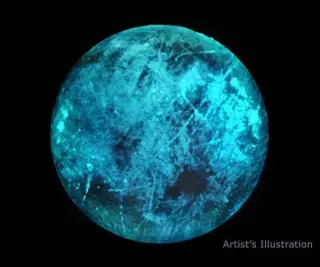
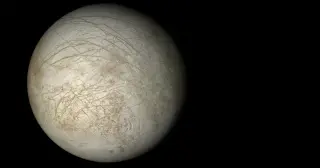
A computer-modeling study indicates Europa’s global ocean may lack the energy needed to support life because its rocky interior is largely quiet and tidal heating is weak. Energy would be scarce for potential ecosystems, confined to shallow rocky zones or radiolysis-driven chemistry, making life less likely overall. The findings help guide the Europa Clipper mission’s search strategies, but confirmation would require direct samples from the ocean.
A U.S. Navy hydrophone recorded a strange 52-Hz whale call in the Pacific starting in 1989, a frequency higher than typical baleen whales. Woods Hole researchers followed the single-singer call for about 12 years, naming the animal Blue 52, though its exact species and identity remain unknown. Theories include a malformation or a hybrid; there is no evidence the whale is truly lonely. The case popularized the idea of the “loneliest whale,” intertwined with concerns about how ship noise affects whale communication, and the animal has never been visually observed.
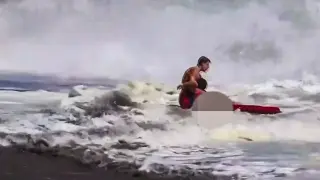
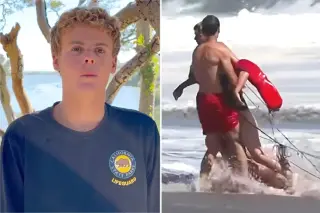
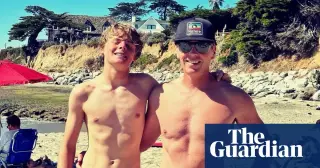
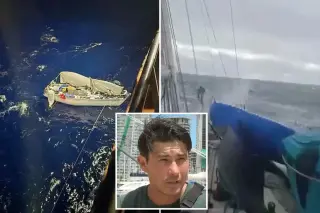
In Western Australia, 13-year-old Austin Appelbee swam about 4 km through rough seas to reach shore and call emergency services after his mother and younger siblings were swept out to sea. The family drifted roughly 14 km offshore before being found; Austin later sprinted 2 km to reach a phone. All were rescued with minor injuries and are recovering.
A 13-year-old boy paddled back to shore after his kayak took on water and then swam about four hours to raise the alarm when his family was swept out to sea off Quindalup, near Geographe Bay in Western Australia; a multi‑agency rescue saved his mother and two siblings, who were treated at a medical center, with authorities praising the boy’s courage and highlighting the dangers of changing ocean conditions.
New high-resolution imagery from Mars orbiters shows delta-like, fan-shaped deposits at the Coprates Chasma end of Valles Marineris, suggesting Mars once supported a vast, Earth-sized ocean in its northern hemisphere, implying long-lasting surface water and potentially connected water systems in the planet’s past.
A recent study suggests that the search for life on Europa, a moon of Jupiter with a subsurface ocean, may be futile due to lack of sufficient internal heat and tectonic activity, casting doubt on the presence of habitable conditions despite upcoming missions like NASA's Europa Clipper and ESA's Juice.
A woman drowned after being swept into the ocean at Sydney's Maroubra Beach on New Year's Day amid dangerous surf conditions, which also led to a missing swimmer at Coogee Beach and multiple rescue operations along the NSW coast, prompting warnings to stay out of the water due to hazardous conditions.