
Stonehenge Altar Stone Origin Remains Unsolved as Northeast Scotland Theory Fails
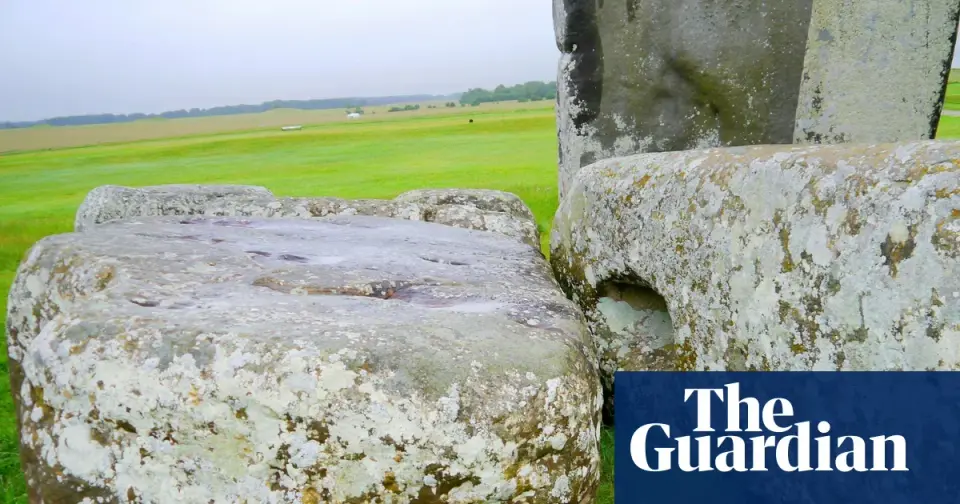
A new study rules out northeast Scotland as the source of Stonehenge’s altar stone, contradicting earlier 2024 findings. Researchers analyzed sandstone grains and found no match in the Orcadian Basin, leaving the origin of the six-tonne slab an unresolved mystery.
Key points
- A new geological report concludes it is 'very unlikely' the altar stone originated in northeast Scotland, specifically the Orcadian Basin.
- The study, led by Duncan Pirrie of the University of South Wales, involved non-invasive testing of the stone in situ and analysis of eight museum fragments.
- Researchers from universities in London, Wales, Australia, Canada, Italy, and Sweden collaborated on the comprehensive investigation.
- The stone definitely did not come from southern Britain, but its origin remains unknown, with possibilities including other parts of Scotland, northern England, or Ireland.
- The findings are published in the Journal of the Geological Society and represent the most comprehensive geological investigation of the altar stone to date.
Background
In 2024, a team from London, Wales, and Australia hypothesized the altar stone came from northeast Scotland based on sandstone grain analysis, a finding previously reported as confirmed in our archive. This new study contradicts that earlier conclusion, ruling out the Scottish origin despite extensive fieldwork and laboratory testing.
How outlets are covering it
The Guardian reports that the 2024 hypothesis linking the stone to northeast Scotland has been ruled out by a new, more comprehensive study involving international experts. The secondary source, Geosirius, still presents the northeast Scotland origin as a confirmed fact, ignoring the new refutation. This highlights a discrepancy between the latest scientific findings and some popular interpretations of the 2024 data. The Guardian emphasizes the ongoing mystery and the importance of ruling out potential sources, while Geosirius focuses on the cultural implications of a long-distance transport from Scotland, which the new study suggests may not have occurred.
Why it matters
The unresolved origin of the altar stone challenges previous assumptions about Neolithic trade networks and mobility. If the stone did not come from northeast Scotland, it forces a re-evaluation of the logistical and cultural connections between prehistoric communities in Britain. The mystery remains a significant puzzle in understanding the construction and meaning of Stonehenge.
What to watch
Researchers will continue to search for the origin of the altar stone, testing other potential locations in Scotland, northern England, and Ireland. The process of elimination is expected to narrow the search area, potentially leading to a definitive answer in future studies.
- Origin of Stonehenge’s altar remains enigma as north-east Scotland theory ruled out The Guardian
- Stonehenge Altar Stone remains a mystery as theory overturned BBC
- Mystery origin of iconic Stonehenge Altar Stone deepens as search narrows Phys.org
- Scientists move closer to solving Stonehenge mystery helped by mid Wales experts County Times
- What The Stonehenge Altar Stone Mystery Gets Completely Wron ИФЗ РАН
Want the full story? Read the original reporting
Read on The Guardian