
China's Long March 7A Rocket Fails in Hainan, Raising Concerns Over Shared Engine Technology
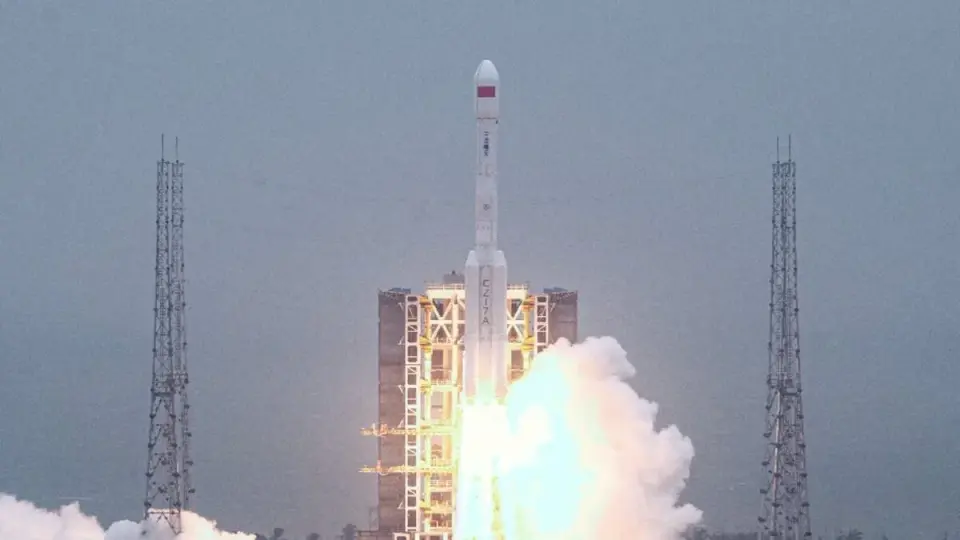
China's Long March 7A rocket exploded 85 seconds after liftoff from Wenchang on August 10, 2026, marking its first failure since 2020. The incident destroyed the ChinaSat-4B communications satellite and delayed the launch of the private Zhuque-3 rocket. While Chinese state media confirmed an 'anomaly,' the cause remains under investigation. Analysts worry that if the failure stems from the widely used YF-100 engine, it could impact other Chinese rockets, including the upcoming Chang'e 7 lunar mission.
Key points
- The Long March 7A rocket exploded approximately 85 seconds after launching from the Wenchang Space Launch Site in Hainan on August 10, 2026.
- The failure resulted in the loss of the ChinaSat-4B (Zhongxing-4B) geostationary communications satellite.
- This is the first reported failure for the Long March 7A since its inaugural flight in March 2020; it had completed over a dozen successful missions since then.
- The incident delayed the scheduled Tuesday launch of the LandSpace Zhuque-3, China's first serious attempt at a reusable rocket.
- Chinese state media, including Xinhua, confirmed the failure but described it as an 'unidentified anomaly' without providing specific technical details.
- The failure occurred at low altitude and speed, meaning neither the rocket nor the satellite reached orbit, according to NBC News.
Background
The Long March 7A is a medium-lift rocket developed by the China Academy of Launch Vehicle Technology (CALT), capable of delivering up to 7 metric tons to geosynchronous transfer orbit. It is a critical workhorse for China's high-orbit satellite missions. The rocket's maiden flight in March 2020 ended in failure due to an engine malfunction, but it successfully launched a classified payload in March 2021. Since then, it had maintained a perfect record for over six years. This failure occurs amidst China's rapid expansion of its launch capabilities, including the recent successful recovery of a Long March 10B booster in July 2026, which marked a milestone in reusable rocket technology.
How outlets are covering it
Gizmodo and CNN reported that the explosion was widely captured on video and that Chinese state media initially downplayed the incident, with Xinhua confirming the failure only three hours after liftoff. CNN noted that user-generated videos of the explosion were removed or deprioritized on Chinese social media platforms like Douyin and Xiaohongshu. Ars Technica emphasized the potential technical implications, suggesting that if the failure involved the YF-100 engine, it could affect up to nine other Chinese rockets, including the Long March 5, which is scheduled to launch the Chang'e 7 lunar mission in late 2026. NBC News highlighted the immediate operational impact, noting that the failure delayed the launch of the private Zhuque-3 rocket. While Ars Technica raised concerns about a potential delay to the Chang'e 7 mission, NBC News and analyst Blaine Curcio suggested that the damage might be limited to the Long March 7A program and that the Chang'e 7 schedule is unlikely to be affected, as it uses a different rocket type.
Why it matters
The failure of a reliable workhorse rocket like the Long March 7A highlights the inherent risks in spaceflight and the challenges China faces in scaling its space program. If the failure is linked to the YF-100 engine, which is used across multiple rocket types, it could have cascading effects on China's broader space operations, including lunar exploration and satellite deployment. The incident also underscores the competitive dynamics in the global space industry, as China continues to push for reusable launch technology and high-orbit capabilities in competition with the United States and private companies like SpaceX.
What to watch
An investigation into the cause of the failure is underway, but no specific technical details have been released by Chinese authorities. The launch of the Zhuque-3 rocket has been postponed, and the schedule for the Chang'e 7 lunar mission, which was expected in late 2026, will be monitored for any potential delays. Chinese space officials are expected to provide more information as the investigation progresses, though the closed nature of the program may limit public disclosure.
- Watch China’s Workhorse Rocket Explode in a Massive Fireball During Launch Gizmodo
- Chinese rocket carrying satellite explodes seconds after launch CNN
- One of China’s workhorse rockets just exploded in flight Ars Technica
- China says Long March 7A rocket launch failed after flight anomaly NBC News
- Chinese rocket explodes less than 90 seconds after liftoff (photos) Space
Want the full story? Read the original reporting
Read on Gizmodo