
China's Long March 7A fails again, raising questions over shared YF-100 engines
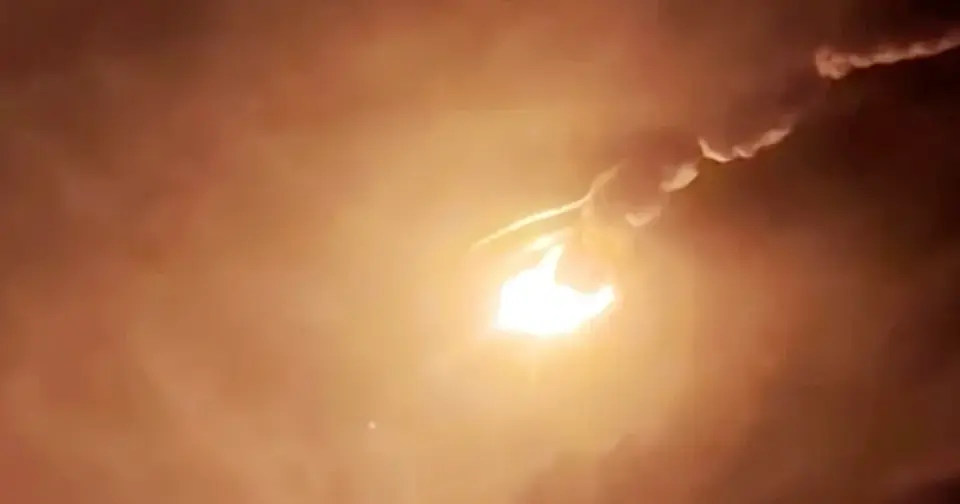
China confirmed a failed launch of the Long March 7A rocket on Monday, marking its first failure since 2020. The rocket carrying the ChinaSat-4B satellite exploded shortly after liftoff from Hainan. Analysts warn that if the failure stems from the widely used YF-100 engine, it could impact other Chinese rockets and potentially delay the upcoming Chang'e 7 lunar mission.
Key points
- China's National Space Administration confirmed the Long March 7A failed after an in-flight anomaly on Monday, launching at 8:02 p.m. Beijing time.
- The rocket was carrying the ChinaSat-4B satellite, a high-orbit communications satellite similar to the ChinaSat-4A launched in 2024.
- This is the first failure for the Long March 7A since its maiden flight in March 2020, which also ended in an in-flight malfunction.
- The rocket had completed over a dozen successful flights since returning to service in 2021.
- The failure occurred at low altitude, meaning neither the satellite nor debris reached orbit.
- Elon Musk commented on the failure on X, stating 'rockets are insanely hard' and wishing China a speedy recovery.
Background
China has been rapidly expanding its space program, with annual launch totals reaching 50 or more flights per year. The Long March 7A is a workhorse rocket for high-orbit missions, while China is also developing reusable rockets like the Long March 10B and 10C. The Chang'e 7 mission is a key part of China's lunar program, aiming to explore the Moon's south pole, a region of interest for both China and NASA.
How outlets are covering it
NBC News and AP News reported the failure as a setback for China's space program, with NBC noting the rocket's first failure since 2020. Ars Technica emphasized the potential broader implications if the failure is related to the YF-100 engine, which is used in multiple Chinese rockets. CNN's article was not fully accessible due to technical issues, but its title suggested the rocket exploded seconds after launch. All sources agreed on the basic facts of the failure but differed in their emphasis on the potential impact on other Chinese rockets and missions.
Why it matters
The failure of the Long March 7A could have significant implications for China's space program, particularly if it is related to the YF-100 engine, which is used in multiple rockets. It could also potentially delay the Chang'e 7 lunar mission, a key part of China's lunar program. The failure highlights the challenges of spaceflight and the importance of reliability in rocket design and manufacturing.
What to watch
China's National Space Administration is investigating the cause of the failure. The findings will determine whether the failure is confined to the Long March 7A or prompts wider checks of shared components, manufacturing, or launch-site operations. The Chang'e 7 lunar mission is planned for launch in the second half of 2026, but the failure could potentially delay it if the issue is related to the YF-100 engine.
- China says Long March 7A rocket launch failed after flight anomaly NBC News
- Chinese rocket carrying satellite explodes seconds after launch CNN
- One of China’s workhorse rockets just exploded in flight Ars Technica
- China Rocket Explodes During Communications Satellite Launch Bloomberg.com
- China fails to launch a rocket carrying a coms satellite, state news agency says AP News
Want the full story? Read the original reporting
Read on NBC News