
Russian Forces Grind Toward Donbas Fortress Belt as Kramatorsk Faces Daily Strikes
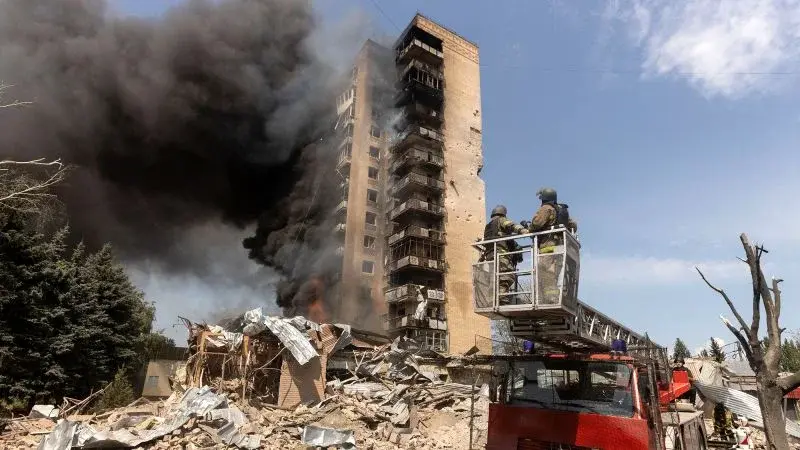
Russian troops are slowly advancing toward the 'fortress belt' in eastern Ukraine, a defensive line of industrial cities including Kramatorsk and Sloviansk. While progress is glacial and costly for Moscow, the pressure is eroding Ukrainian logistics and civilian safety. Kramatorsk, a key rear hub, now faces dozens of daily drone and bomb strikes, with nearly all bridges destroyed. Analysts warn that if Russia breaks through this belt, it could accelerate its advance into central Ukraine.
Key points
- Kramatorsk is under intense daily bombardment, with dozens of strikes hitting residential and utility buildings; nearly all bridges have been destroyed.
- Russian forces advanced or infiltrated approximately 124 square kilometers of Ukrainian territory in August, a pace that is slow but consistent.
- The southern anchor of the fortress belt, Kostyantynivka, has effectively lost its strategic value after nearly a year of grinding combat.
- Western intelligence estimates Russia is losing roughly 40,000 troops per month, equating to about 340 casualties for every square kilometer gained.
- Civilians remain in the region, but evacuations are hampered by landmines and drones; police units can only reach some areas from 10 kilometers away.
- U.S. envoy Steve Witkoff and Jared Kushner visited Kyiv without a major diplomatic breakthrough, while Putin claims 'tangible advances' on the battlefield.
Background
This development follows months of Ukrainian counter-strikes against Russian logistics and energy infrastructure, including recent hits on refineries and depots. The current pressure on the fortress belt marks a shift from the spring, when Kyiv was liberating more land than it was losing. The belt’s cities—Sloviansk, Kramatorsk, Druzhkivka, and Kostyantynivka—form a critical barrier before the open plains to the west, protecting central and eastern Ukraine from faster Russian advances.
How outlets are covering it
CNN and UA.NEWS both emphasize the daily intensity of strikes on Kramatorsk and the slow but steady Russian advance, citing ISW analyst Jennie Olmsted. Mezha adds broader context, noting that while the advance is slow, it is accompanied by significant Russian losses and is part of a broader strategy to degrade Ukrainian logistics. All sources agree that the fortress belt is under mounting pressure, but they differ in emphasis: CNN and UA.NEWS focus on the immediate threat to Kramatorsk, while Mezha highlights the diplomatic context and the lack of a breakthrough from Witkoff and Kushner’s visit. No source disputes the core facts, but they vary in how they frame the strategic implications of the slow advance.
Why it matters
The fortress belt is the last major barrier preventing Russian forces from advancing rapidly into central Ukraine. If Russia breaks through, it could accelerate its campaign and force Ukraine to defend deeper into its territory. The slow, grinding nature of the advance, despite high casualties, suggests Russia is willing to pay a heavy price to achieve its territorial goals, which could have long-term implications for the war’s outcome and future negotiations.
What to watch
Ukraine is expected to continue fortifying the remaining cities in the fortress belt, while Russia may intensify its efforts to degrade Ukrainian logistics and defenses. Diplomatic efforts, including potential follow-up to Witkoff and Kushner’s visit, may continue, but no major breakthrough is expected in the near term. The situation on the ground will likely remain tense, with daily strikes and slow advances continuing to erode Ukrainian positions in the Donbas.
- ‘They can strike at any moment’: Ukrainian strongholds under pressure as Russian forces edge closer CNN
- Russia is approaching the Donbas fortress belt, according to CNN UA.NEWS
- Russian Forces Tighten Pressure on Donbas Defense Belt Near Kramatorsk Межа. Новини України.
- Anti-drone nets and razor wire installed in the centre of the frontline city of Druzhkivka Reuters
- Russian Forces Advance Near Druzhkovka, Expert Says Военное дело
Want the full story? Read the original reporting
Read on CNN