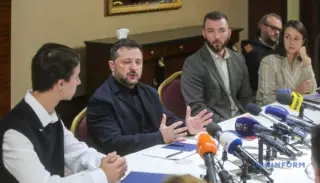
Zelensky dismissed Putin’s assertion that Kostiantynivka is under Russian control as a media stunt and warned that if it were true, Putin would have no problem meeting him there to resolve the war. Ukrainian officials say the city remains under Kyiv’s control despite some Russian incursions, as fighting in Donbas continues and the fortress belt near Sloviansk–Kramatorsk remains a focal point.
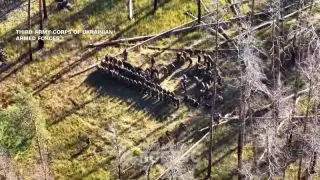
ISW reports that Russia’s spring-summer 2026 offensive has failed to secure operationally significant gains; June 2026 saw only about 30.4 square kilometers gained at an average pace of 1.01 sq km per day, far slower than June 2025. Ukrainian counterattacks in Kupyansk and Oleksandrivka remain effective, with gains concentrated in Kostyantynivka’s urban terrain at high cost. In the first six months of 2026 Russia seized or infiltrated about 622.6 square kilometers, roughly 28% of the 2025 six-month total, and suffered heavy casualties and equipment losses. Ukrainian long-range and intermediate-range strikes are disrupting Russian logistics and oil infrastructure, causing gasoline shortages and pressuring refinery capacity. Russia has closed seven railway border crossings with Finland, Latvia, and Estonia and is leaning on crude exports while importing refined fuels from India. Belarusian airspace and signal repeaters remain contested. Overall, ISW expects no rapid Russian breakthrough and continued attrition in the near term.
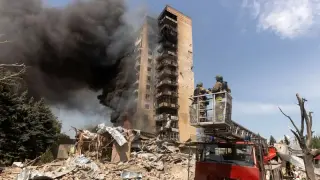
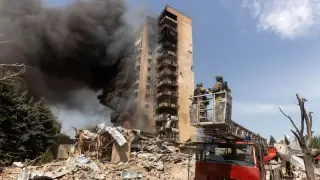
In a televised address, Zelensky condemned Russian drone strikes on Zaporizhzhia targeting civilian transit and a missile strike on Dnipro that killed civilians, vowed Ukraine would respond with precision against Russia’s war machine, and highlighted Moscow’s repeated failures by noting Putin’s 15 deadlines to capture Donetsk have all been missed since 2022. He also outlined Ukraine’s energy and sanctions strategy with partners and urged international support to bring peace, while stressing that Kyiv’s actions aim at destroying Russia’s war machine, not civilians.
President Zelensky said Russia has moved 15 self-imposed deadlines to capture Ukraine’s Donetsk region since the 2022 invasion, with Moscow obsessively pursuing Donbas; Ukraine’s forces hold their positions and Zelensky warned the deadline would shift again unless Russia ends the war.
Zelenskyy says Russia has set 15 deadlines to capture Donetsk since the invasion, illustrating a repeated failure to seize the Donbas; he outlines a pattern of target dates from 2022 through 2025 and warns that further deadlines could bring more Russian casualties, while noting recent strikes on Ukrainian civilian infrastructure and ongoing defense coordination with partners, including a Danish drone deal.
Zelensky says Russia’s repeated delays to capture Donbas reveal a faltering strategy and warns that if Moscow keeps fighting, ordinary Russians—even those queuing for gasoline—could face more hardship; he also notes Putin’s peace proposal and the Kremlin’s rejection, with Meduza explaining its AI-assisted translation of the report.
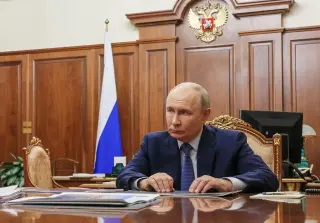
Russian President Vladimir Putin said Moscow will continue its operation to fully seize four Ukrainian regions, rejected Ukraine’s proposal for a halt to hostilities, and called for stronger air defenses amid intensified Ukrainian drone strikes, while suggesting Belarus could aid peace talks and noting there was no formal agreement reached in earlier US-led talks.
Russian President Vladimir Putin said Moscow will continue its battlefield campaign to fully capture four Ukrainian regions (Donetsk, Luhansk, Zaporizhzhia and Kherson), rejecting Ukraine’s proposal for a mutual halt to hostilities and warning against being distracted by it. He also called for boosting air-defense production to counter drone strikes, acknowledged fuel shortages linked to attacks, and suggested Belarus could assist in peace talks, though he noted no formal agreement has been reached.
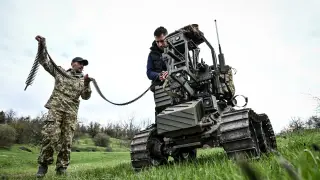
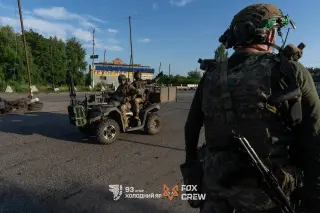
Francis Farrell reports from the Donbas front where elite Ukrainian drone teams, aided by Starlink and Western tech, have stabilized lines in a grueling war of attrition; Ukraine aims to defeat Moscow by building a dense, resilient defense that increases the cost of any Russian advance, while Russia continues to seek territorial gains and degrade Ukraine’s forces—showing that victory will come only through perseverance, immense human toll, and mass mobilization rather than a quick breakthrough.
Russia’s foreign minister Lavrov accuses Europe of threatening international peace by backing Ukraine and says the US is no longer an objective mediator, while Moscow signals readiness to engage in dialogue with the EU to end the war; U.S.-led talks remain effectively frozen, Moscow repeats a precondition that Ukraine withdraws from Donbas, a demand Kyiv has not agreed to.
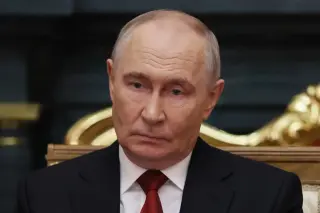
Putin said Russia is ready to negotiate with Ukraine on the basis of the 2022 Istanbul agreements, reviving a framework Kyiv initially endorsed, even as Moscow has pressed for talks on an Anchorage basis and the fate of the Istanbul deal remains uncertain after subsequent annexations.
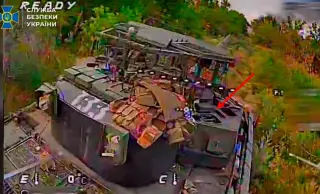
Russian forces have infiltrated Kostyantynivka and are attempting to encircle Ukrainian troops, turning the city into a contested ‘grey zone’ and a potential springboard toward Donbas towns like Kramatorsk and Sloviansk. Kyiv says the situation is under control with about 130 Russians inside the city, while Moscow claims encirclement; analysts warn that its fall would complicate supply routes and threaten remaining Ukrainian strongholds.
At the St. Petersburg/ Astana forum, Putin reiterated Russia’s maximalist aim to liberate Donbas on Moscow’s terms, contending the war is advancing even as front lines show limited gains. Analysts note Kyiv has gained momentum with medium- and long-range strikes targeting logistics and industry, while Russia’s offensive pace wanes. The Donbas front remains contested, with Luhansk largely occupied but Donetsk still partly in Ukrainian hands. The piece also highlights a shift in U.S. mediation and Kyiv’s diplomacy with Washington, with Europe remaining a key supporter.
President Zelensky said Roman Abramovich visited Kyiv in May as an informal channel to relay messages to Vladimir Putin, including a ceasefire proposal and a push for direct talks, while Kyiv’s position on Donbas remains non-negotiable. Abramovich reportedly asked for discretion, and Zelensky indicated Kyiv was open to a direct meeting with Putin, in any format, but would not concede territorial control in Donbas.
President Zelensky confirmed a private Kyiv meeting with Russian billionaire Roman Abramovich to convey Kyiv’s stance on Donbas—no territorial concessions and readiness to pursue peace talks only after a ceasefire; Putin has dismissed the overture, while Zelensky signaled willingness to meet Putin in a neutral setting, potentially with Western leaders, and Abramovich’s mediation role continues after earlier peace talks.