
Ukraine’s 2026 Counteroffensive Gains Momentum in Oleksandrivka as Moscow Exaggerates Losses
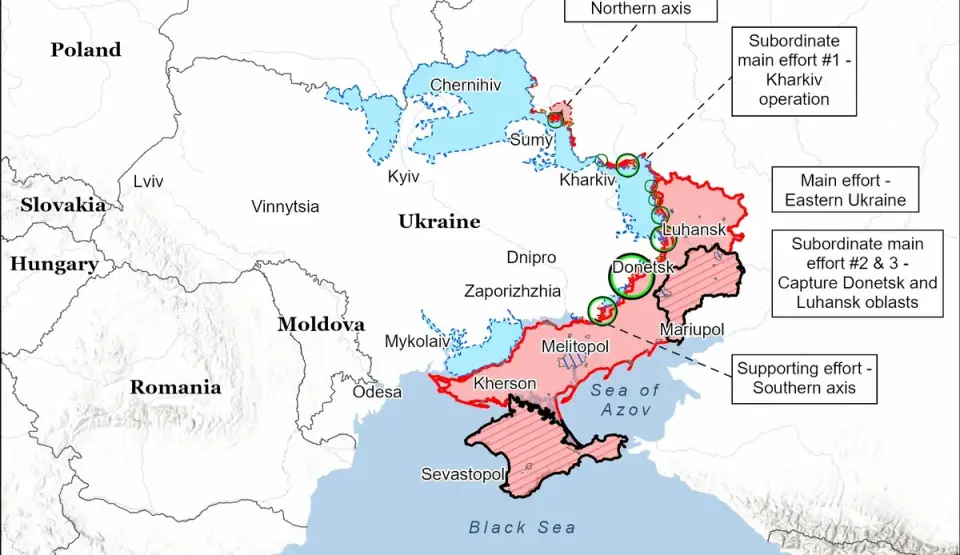
The Institute for the Study of War (ISW) reports that Ukrainian forces have achieved tactical gains in the Oleksandrivka direction during their 2026 counteroffensive, utilizing combined arms approaches and drones. Conversely, Russian Ministry of Defense officials and milbloggers continue to exaggerate their advances in the Oleksandrivka and Hulyaipole sectors as part of a cognitive warfare campaign. Ukrainian forces also struck a Russian enterprise critical for battlefield satellite communications and targeted ballistic missile launch infrastructure due to an interceptor shortage. Russia launched 152 long-range drones at Ukraine overnight on August 14 to 15.
Key points
- Ukrainian forces advanced in the Oleksandrivka direction, leveraging drones and mechanized maneuvering.
- Russian officials and milbloggers are exaggerating gains in Oleksandrivka and Hulyaipole for informational effects.
- Ukraine struck a Russian facility critical for developing domestic satellite communications for the battlefield.
- Ukrainian forces are targeting Russian ballistic missile launch infrastructure amid an interceptor shortage.
- Russia launched 152 long-range drones at Ukraine between August 14 and 15, 2026.
Background
This development follows a period where ISW noted that Russian spring-summer 2026 offensive efforts stalled with high casualty rates, while Moscow continued to exaggerate progress. In early August, ISW reported that Russian gains in Oleksandrivka were overstated, and Ukrainian forces used drones to advance and retook several settlements. Additionally, President Zelensky set an ambitious target in August to eliminate 30,000 Russian troops, emphasizing that Moscow’s gains are not irreversible and highlighting Kyiv's tech-heavy defense strategy.
How outlets are covering it
Both the Kyiv Post and Critical Threats, which both publish the ISW assessment, highlight the same core findings: Ukrainian tactical gains in Oleksandrivka and Russian exaggeration of advances. The Kyiv Post emphasizes the specific strike on a Russian satellite communications enterprise and the targeting of ballistic missile launch infrastructure. Critical Threats, as the primary source of the ISW report, provides the broader context of the Russian cognitive warfare effort. There is no disagreement between the sources, as they are reporting the same ISW analysis.
Why it matters
The Ukrainian counteroffensive's success in Oleksandrivka and the targeting of critical Russian infrastructure indicate a shift in battlefield dynamics, challenging Russian claims of progress. The continued Russian drone strikes and cognitive warfare efforts highlight the ongoing intensity of the conflict and the strategic importance of information control. Ukraine's ability to strike deep into Russian territory and target specific military capabilities underscores the evolving nature of the war and the impact of drone technology on both sides.
What to watch
Expect continued Ukrainian operations in the Oleksandrivka direction and further strikes on Russian strategic assets. Russia is likely to continue its cognitive warfare campaign, exaggerating gains and launching drone strikes. The situation may see further escalation in long-range strikes and counter-strikes, with both sides focusing on degrading the other's military capabilities and information narratives.
- ISW Russian Offensive Campaign Assessment, August 15, 2026 Kyiv Post
- Assessed Control of Terrain in the Kostyantynivka-Druzhkivka Tactical Area, August 16, 2026 at 1:30 PM ET Institute for the Study of War
- Russian Offensive Campaign Assessment, August 15, 2026 Critical Threats
- The Russia-Ukraine War Report Card, Aug. 12, 2026 Russia Matters
- Ukraine News Today: Breaking Updates & Live Coverage - August 16, 2026 from Kyiv Post Kyiv Post
Want the full story? Read the original reporting
Read on Kyiv Post