
Putin's Sviatohirsk Claim Exposed as AI Fabrication, Highlighting Russian Command Delusion
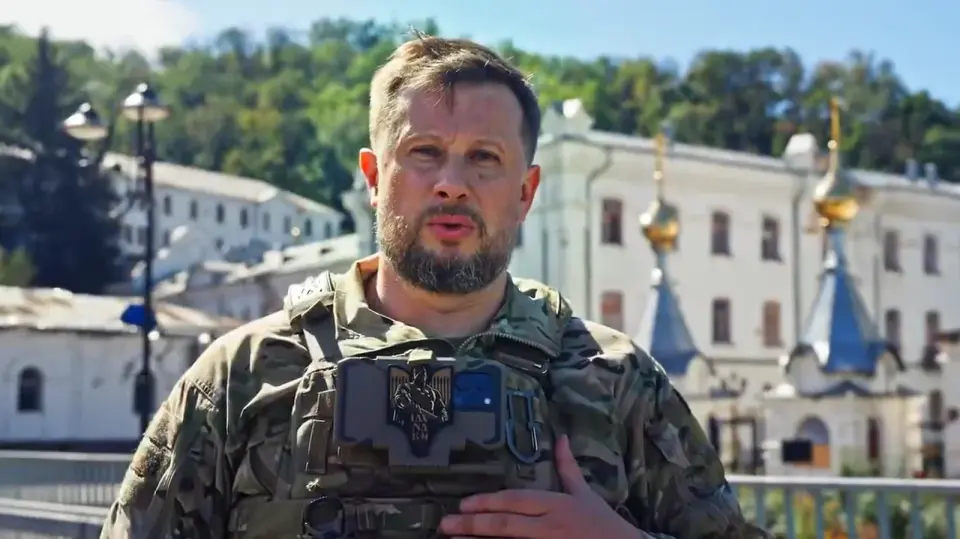
Vladimir Putin’s claim that Russian forces captured Sviatohirsk was debunked as a fabricated video, exposing a systemic culture of deception within the Russian military. Ukrainian commander Andriy Biletskyi visited the town to confirm it remains under Kyiv’s control. Analysts note that such 'beautiful reports' distort battlefield reality, leading to unrealistic deadlines for seizing the Donbas region.
Key points
- Putin announced the capture of Sviatohirsk, but Ukrainian commander Andriy Biletskyi visited the town on September 7 to confirm it is under Ukrainian control.
- Russian state media circulated a fake video using AI to replace the Ukrainian mayor with a soldier, which was quickly exposed by analysts and milbloggers.
- ISW states that Russian commanders systematically misinform Putin with 'beautiful reports,' leading to a belief that the Donbas can be captured by 2026, a deadline missed 15 times.
- At the current rate of advance, ISW calculates Russia would not seize the remaining 19% of Donetsk region until 2032.
- Putin signed a decree allowing people with severe disabilities, including the blind and deaf, to serve in air-defense units to counter drone shortages.
Background
This incident follows a series of false claims by Russian leadership regarding battlefield progress in late 2026. Previous reports indicated that Putin’s assertions of rapid gains in August 2026 were contradicted by data showing minimal territorial advances. The current episode underscores a recurring pattern where Moscow’s strategic rhetoric diverges from the operational reality on the ground, particularly regarding the 'Fortress Belt' cities of Sloviansk and Kramatorsk.
How outlets are covering it
EUobserver emphasizes the absurdity of the AI-generated evidence and the internal Russian confusion, noting that some Russian influencers expressed surprise at the debunking. Kyiv Post and ISW focus on the strategic implications, arguing that this 'battlefield fiction' prevents Moscow from making peace compromises. The Kyiv Independent highlights the bureaucratic disconnect, noting that while political leadership demands a 2026 deadline, the military is seeking to extend it to March 2027. Ukrainian National News (UNN) frames the issue as a broader 'culture of lying' that harms Russia’s ability to wage war effectively.
Why it matters
The Sviatohirsk incident illustrates how cognitive warfare and internal deception within the Russian command structure are distorting strategic planning. By relying on fabricated victories, Moscow is setting unrealistic expectations for its domestic audience and international partners, potentially prolonging the conflict and hindering peace negotiations. The reliance on AI to fabricate evidence also signals a shift in how Russia attempts to manage information warfare in the face of Ukrainian counter-offensives.
What to watch
Ukrainian forces are expected to continue counter-offensives in the Lyman and Donetsk sectors. Russia may further adjust its internal deadlines for capturing the Donbas, potentially pushing them beyond 2027. The Kremlin may face increased pressure to provide 'informational victories' to justify the war's costs to the Russian public, potentially leading to more aggressive but less realistic claims.
- Russians feel puzzled after Putin issues fake, AI-fuelled claim of victory in a Ukrainian battle (Ukraine Battlefield update, Day 1,656) EUobserver
- Russian Offensive Campaign Assessment, September 6, 2026 Institute for the Study of War
- Putin’s ‘Battlefield Fiction’ Could Take Russia Until 2032 to Seize Donetsk, ISW Says Kyiv Post
- Russia's deadline to capture Donbas slips again as military asks for more time, Ukraine says The Kyiv Independent
- ISW: Russia’s culture of lying harms its ability to wage war Українські Національні Новини (УНН)
Want the full story? Read the original reporting
Read on EUobserver