
Herzog's Baku speech triggers walkouts from Iran, Turkey, and others, while Qatari Emir stays
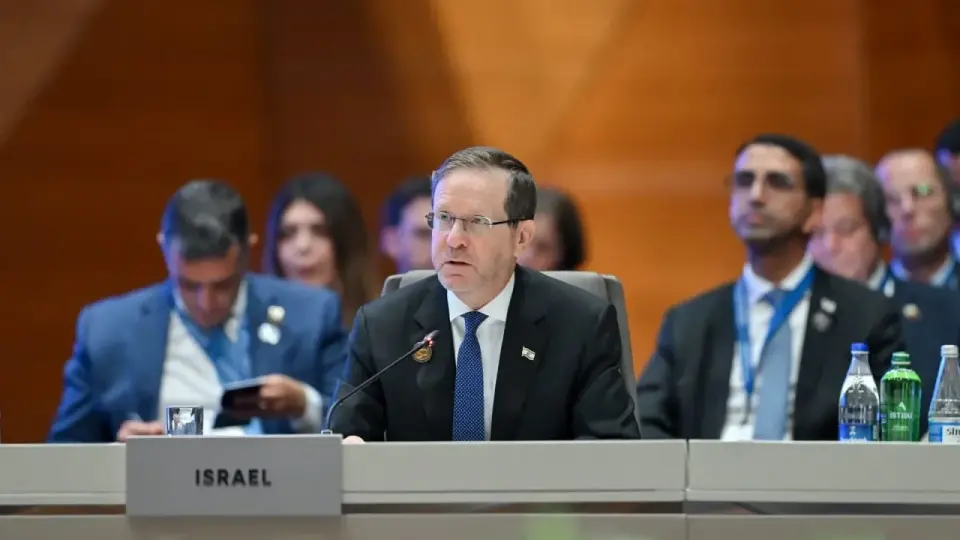
Israeli President Isaac Herzog’s address at the CICA summit in Baku prompted five delegations to leave the hall, but the Qatari Emir remained seated, highlighting a diplomatic divergence. The incident exposed tensions between Iran and Qatar, with Tehran accusing Doha of supporting Israel, while eyewitnesses confirmed the Emir’s presence. Herzog also met with Azerbaijani and Bahraini leaders to discuss regional stability and the Abraham Accords.
Key points
- Delegations from Iran, Turkey, Kuwait, Pakistan, and the Palestinian Authority exited the hall during Herzog’s speech at the CICA summit in Baku on October 14, 2026.
- The Emir of Qatar, Sheikh Tamim bin Hamad Al Thani, remained seated and listened to the address, contradicting reports from the Iranian newspaper Tehran Times that claimed the entire Qatari delegation had left.
- Herzog met with Azerbaijani President Ilham Aliyev and Bahraini Foreign Minister Abdullatif bin Rashid al-Zayani to discuss strategic relations and the expansion of the Abraham Accords.
- Herzog arrived in Baku via a commercial AZAL flight that transited Turkish airspace, a move that drew criticism from Ankara, which stated it was not informed of the Israeli president’s presence.
- Analysts suggest Iran’s media framing of Qatar’s actions may be an attempt to justify its own ties with Doha to domestic audiences, given Qatar’s role as a mediator between Tehran and Western powers.
Background
This event follows a period of heightened diplomatic friction for Israel, including Herzog’s recent condemnation of UK sanctions on settlements and his pardon of Elor Azaria. The CICA summit serves as a forum for nations with conflicting stances on Israel, such as Azerbaijan, which maintains ties with both Israel and Iran.
How outlets are covering it
The Jerusalem Post emphasizes the discrepancy between Iranian media claims and eyewitness accounts, highlighting the diplomatic nuance of Qatar’s decision to stay. The Israeli Presidency’s official release focuses on the positive diplomatic engagements with Azerbaijan and Bahrain, omitting the walkout incident. The divergence in reporting underscores the complex regional dynamics, where Iran’s narrative may be influenced by its need to justify its relationship with Qatar, a key mediator in the region.
Why it matters
The incident underscores the deepening geopolitical divisions in the Middle East, particularly regarding Israel’s standing in multilateral forums. Qatar’s decision to remain seated signals a cautious approach to balancing its relationships with both Israel and Iran, while the walkouts by other nations reflect the ongoing hostility toward Israel in the region. The diplomatic maneuvers by Herzog aim to strengthen ties with Gulf states and Central Asian powers, potentially mitigating the impact of the walkouts.
What to watch
Diplomatic channels may seek to address the tensions arising from the walkouts, particularly between Israel and the countries that left. Qatar may continue to play a mediating role, balancing its relationships with both Israel and Iran. Herzog’s efforts to expand the Abraham Accords could lead to further diplomatic engagements with Gulf states, potentially easing some of the regional tensions.
- Five delegations walk out during Isaac Herzog speech in Baku as Qatar Emir stays The Jerusalem Post
- WATCH: Iran And Turkish Delegates Walk Out Of Herzog Speech At Azerbaijan Summit i24NEWS
- Herzog flies over Turkey despite ban on Israeli state planes, joins summit alongside Iranian representative Ynetnews
- Herzog urges closer ties with Asian nations at Baku summit; meets Chinese FM The Times of Israel
- President Herzog Meets with the Foreign Minister of Bahrain בית הנשיא
Want the full story? Read the original reporting
Read on The Jerusalem Post