
Six Months In: Iran War Leaves Diaspora Fractured and Economy in Ruins
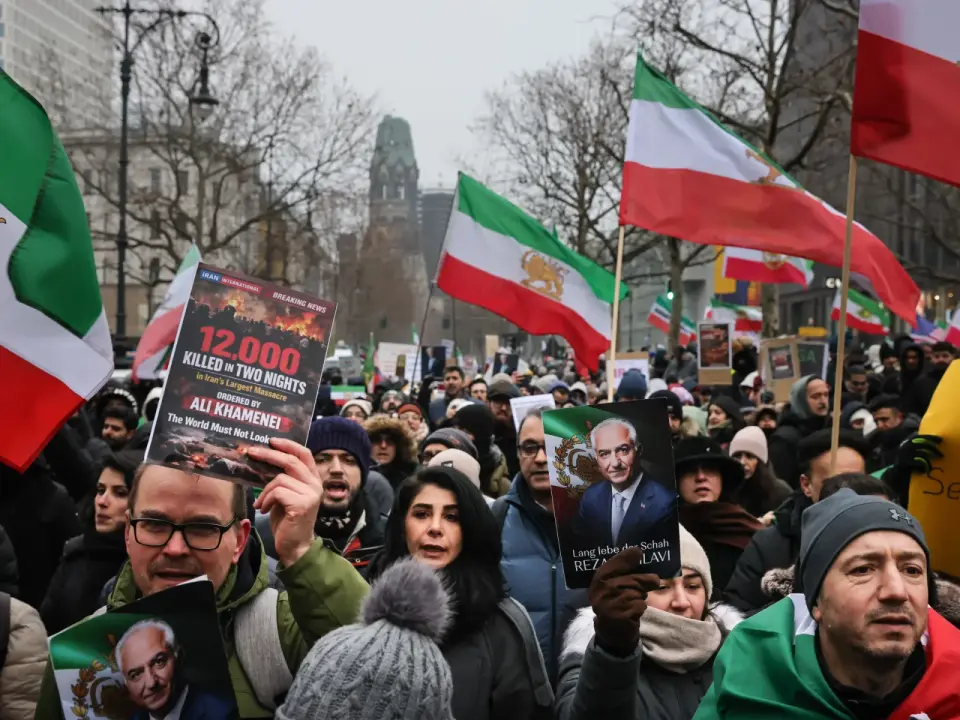
The US-Israeli war on Iran, which began on February 28, 2026, has entered a six-month stalemate, leaving the Iranian diaspora deeply divided and the global economy strained. While supporters of the strikes hope for regime change, opponents argue the conflict has empowered the Iranian government and caused massive civilian casualties. Inside Iran, a power struggle between pragmatists seeking a deal and hardliners demanding endurance is delaying peace, even as oil prices remain elevated and the Strait of Hormuz stays partially blocked.
Key points
- The war began on February 28, 2026, with joint US and Israeli strikes, leading to thousands of civilian deaths and a spike in energy prices.
- The Iranian diaspora is split: some support the strikes as a path to democracy, while others, like satirist Peyvand Khorsandi, view it as a 'racist war' that strengthens the regime.
- Inside Iran, President Masoud Pezeshkian and pragmatists push for a deal to end economic isolation, while hardliners accuse them of capitulation and refuse to negotiate.
- The conflict has disrupted global markets; US gas prices jumped 34% within the first week, and oil flows through the Strait of Hormuz remain reduced despite a fragile holding pattern.
- Supreme Leader Mojtaba Khamenei remains in hiding, leaving the internal power struggle unresolved and negotiations with Washington stalled.
Background
This conflict follows decades of US-Iran tensions, including the 1953 coup against Prime Minister Mohammad Mossadegh and the 1979 revolution. Recent archive coverage from August 2026 noted that Iranian Americans were already deeply divided over the war's implications, with some viewing it as a step toward change and others fearing regional instability. The current stalemate reflects a broader pattern of unresolved tensions in the Middle East, where external interventions often exacerbate internal divisions.
How outlets are covering it
Al Jazeera emphasizes the moral and political division within the Iranian diaspora, highlighting how the war has failed to deliver the promised 'humanitarian' benefits and instead empowered the regime. The New York Times focuses on the economic fallout, detailing how oil prices and stock markets have stabilized but remain volatile due to the ongoing blockade. CNN highlights the internal political struggle in Tehran, noting that hardliners are blocking peace talks to maintain their power, while pragmatists fear the economy will collapse if the war continues. The Independent frames the situation as a 'disaster,' emphasizing the human cost and economic chaos, though its text was largely obscured by technical code in the source.
Why it matters
The war has not only caused significant loss of life but has also reshaped global energy markets and diplomatic relations. The division within the Iranian diaspora and the internal power struggle in Tehran suggest that a lasting peace is unlikely in the near term. This stalemate could lead to further regional instability, affecting global oil supplies and economic stability. Additionally, the war has highlighted the limits of US military power and the resilience of the Iranian state, challenging the narrative of quick regime change.
What to watch
Negotiations between the US and Iran are likely to remain stalled as hardliners in Tehran continue to block peace talks. The global economy may see further volatility if the Strait of Hormuz remains partially blocked. The Iranian diaspora may continue to fracture, with some groups calling for more support for the regime and others demanding an end to the war. The internal power struggle in Iran could intensify, potentially leading to further repression or a shift in leadership if the current deadlock persists.
- Abroad and at odds: How the war has divided Iranians in the diaspora Al Jazeera
- After 6 Months of Iran War, Markets Defy Worst Fears The New York Times
- A power struggle in Iran could decide when Trump’s war ends CNN
- See How the World Has Changed Since the Start of the Iran War WSJ
- Disaster of Trump’s war in Iran laid bare six months on: Thousands dead, economic chaos and a region in flames The Independent
Want the full story? Read the original reporting
Read on Al Jazeera