
Gaza Winter Crisis Deepens as Hamas Rebuilds Amid International Pressure
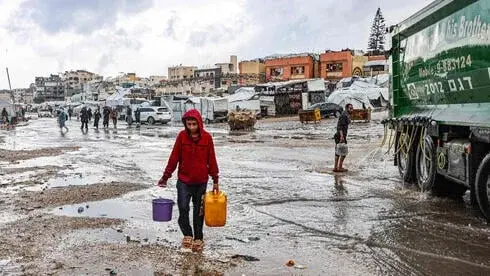
Severe winter storms have devastated Gaza’s already fragile infrastructure, killing civilians and flooding thousands of tents. While Israel maintains that reconstruction is blocked by Hamas’s refusal to disarm, international pressure is mounting. Hamas is simultaneously rebuilding its military strength and leveraging the humanitarian crisis to rally global support, creating a diplomatic stalemate that threatens Israel’s strategic position.
Key points
- Winter storms have caused mudslides and flooding, killing at least five civilians and damaging approximately 70,000 tents in Gaza.
- The UN reports that 94% of Gaza’s population urgently needs shelter assistance, with 117,000 tents stuck on the Egyptian side due to coordination issues.
- Hamas is rebuilding its military wing, with operative numbers estimated at 30,000, and is maintaining control over public life through police and social events.
- Israel’s Board of Peace has called its response to the crisis 'insufficient,' urging the entry of essential winterization and sanitation supplies.
- International protests, including a 250,000-person rally in Amsterdam, are increasing pressure on Israel to ease restrictions on aid and military operations.
Background
This crisis follows a ceasefire that took effect in October 2025. Despite the truce, Israel has maintained control over more than 60% of the Gaza Strip and continues daily strikes. Previous coverage highlighted the deadly Nasser Hospital strike and initial flood impacts, but the current situation reflects a broader humanitarian collapse as winter sets in.
How outlets are covering it
Outlets differ on the primary cause of the suffering. The Guardian and Al Jazeera emphasize Israel’s obstruction of aid and the resulting civilian deaths, framing the situation as a humanitarian catastrophe exacerbated by Israeli restrictions. YnetGlobal, however, argues that Hamas is exploiting the crisis for propaganda while simultaneously rebuilding its military strength, suggesting that the group’s refusal to disarm is the core impediment to reconstruction. CNN reports that the Board of Peace has criticized Israel’s response as 'insufficient,' highlighting a shift in international tolerance for the status quo.
Why it matters
The deepening humanitarian crisis is intensifying international pressure on Israel, potentially forcing a diplomatic resolution that does not include Hamas’s full disarmament. This could lead to a new governance framework where Hamas retains military power behind a technocratic government, altering the security dynamics in the region and Israel’s strategic position.
What to watch
Israel may face demands to allow the Palestinian technocratic administration to operate inside Gaza and to restrict military strikes. The outcome of the Israeli elections and the formation of a new government under Gadi Eisenkot will likely influence Israel’s approach to the crisis. International pressure may also extend to other conflict zones, including the West Bank, Syria, and Lebanon.
- Gaza sinks into winter misery as Hamas regains strength Ynetnews
- As deadly storms flood Gaza’s tent cities, the displaced fear a worse winter The Washington Post
- The Guardian view on Gaza’s misery: don’t let Palestinian deaths mount in this bleak winter | Editorial The Guardian
- ‘Her hands are as cold as ice’: Gaza families struggle to keep warm Al Jazeera
- Trump’s Board of Peace chides Israel for ‘insufficient’ response to Gaza flooding CNN
Want the full story? Read the original reporting
Read on Ynetnews