Microsoft AI has released MAI-Base-2, a 2.8 trillion-parameter model that CEO Mustafa Suleyman claims outperforms OpenAI’s GPT-5.6 while using only one-quarter of the compute power. The model, trained on 16,000 Nvidia GPUs, marks a significant step in Microsoft’s push to reduce reliance on its partner OpenAI.
Researchers at AI company Pathway have introduced a new model called BDH-CQ that utilizes a vector-based cognitive approach to significantly reduce operational costs. Published in August 2026, the study claims the model runs up to 11 times cheaper than OpenAI's entry-level GPT 5.6 Luna, despite achieving comparable performance on nonverbal reasoning benchmarks. The architecture relies on only 150 million parameters, a fraction of the billions used in standard frontier models, suggesting a potential shift toward more efficient 'post-transformer' AI systems.
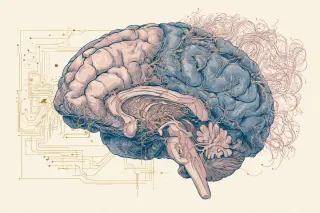
A Columbia Engineering team built biologically constrained recurrent neural networks and showed that an inhibition-on-inhibition circuit enables top-down control to reshape early visual processing based on task rules; weakening these connections collapses flexible switching, and live mouse cortex recordings validate the model's predictions, suggesting early sensory areas are dynamic workspaces and pointing to energy-efficient AI designs that mimic human cognitive flexibility.
Many companies are quietly rehiring staff they previously laid off due to AI, often at lower wages or offshore, as initial AI-driven layoffs are found to be ineffective or regretted. The trend suggests a potential rebound in employment, especially in HR, despite ongoing AI investments and industry layoffs, with some AI projects being reconsidered due to costs and performance issues.
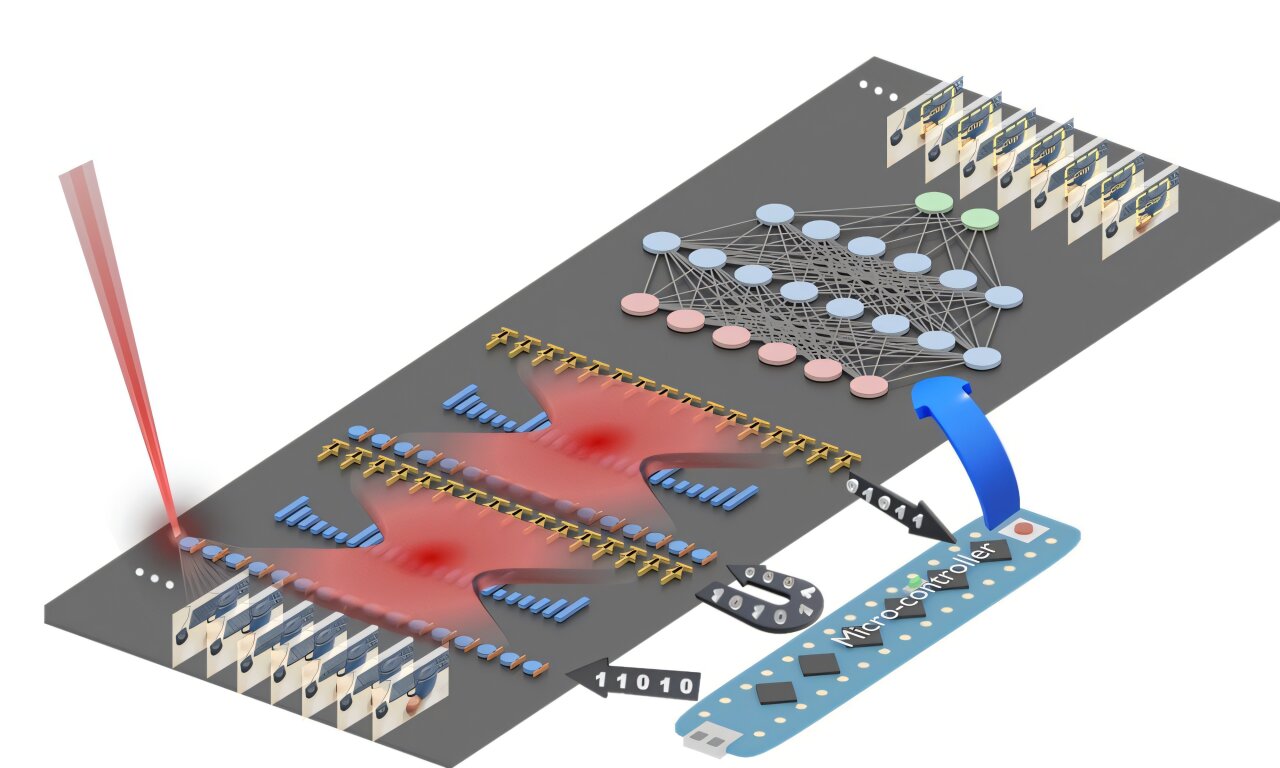
Researchers at the University of Florida have developed a silicon photonic chip that uses light to perform AI convolution tasks, achieving up to 100 times greater power efficiency than traditional electronic chips, which could significantly reduce energy consumption in AI systems.
The FDA has launched its generative AI tool, Elsa, ahead of schedule to improve efficiency in scientific reviews and operations, housing it securely in GovCloud and emphasizing the importance of human oversight to mitigate AI hallucinations. The tool is already aiding in accelerating reviews and identifying inspection targets, with plans for broader use in the future.
Recent data suggests that AI job losses are on the rise, with 37% of business leaders reporting that AI has replaced workers in 2023 and 44% predicting layoffs in 2024 due to AI efficiency. However, experts argue that these numbers may not accurately reflect the broader business landscape, as many traditional organizations and small businesses have yet to fully embrace technology. While layoffs are a reality, AI technology also enables business leaders to restructure and redefine jobs. By automating task-based work, AI allows humans to focus on higher-value tasks and move up the value chain. Additionally, the concept of "human-centered AI" seeks to enhance human abilities and collaboration rather than replace people outright. However, it is important to consider the digital divide and the impact of AI on the technological haves and have-nots. Professionals can take steps to avoid redundancy in an AI-fueled work environment by continuously developing new skills. Business leaders also have a responsibility to support employee skill development. While layoffs may occur, historical evidence suggests that increased technological capacity can lead to higher-value work and increased productivity.