Effective October 9, 2026, Google will restrict free Gemini users to the Flash-Lite model only. Access to the standard Flash and advanced Pro models will require paid subscriptions, with Pro features limited to the higher-tier AI Pro and AI Ultra plans.
Google is restructuring its Gemini AI access tiers, limiting free users to the Flash Lite model starting October 9. The $4.99 AI Plus subscription will lose access to the top-tier Gemini Pro model, restricting it to higher-priced AI Pro and Ultra plans.
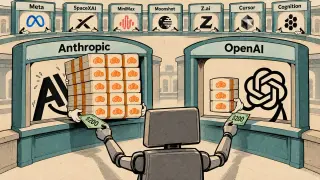
SemiAnalysis reports that Anthropic’s AI subscriptions now offer five times the API-equivalent value of OpenAI’s plans, driven by OpenAI’s recent 50% limit cuts and a new $500 tier. While OpenAI’s move aims to improve margins, it has reversed its previous advantage in generous usage limits. Meanwhile, industry observers note that unpredictable usage-based billing is causing enterprise churn, prompting vendors to experiment with caps, smoothing, and outcomes-based pricing to stabilize revenue and customer trust.
Lifehacker compares paid AI subscriptions from Gemini, ChatGPT, Claude, Copilot, and Perplexity, noting that higher tiers mainly increase usage limits and context windows, while unlocking newer models and extra features like video/image generation, custom AI bots, and deep research tools. Gemini scales up to AI Ultra with up to 1,000,000 tokens and adds Gemini Spark on the top tier; ChatGPT Pro/Plus boosts usage (5x–20x) and access to latest models; Claude offers a flat 200K‑token context window with Pro/Max pricing and integrations; Copilot ties pricing to Microsoft 365, with Premium unlocking AI agents and audio; Perplexity Max provides the highest usage and Spaces for custom prompts, with cross‑model access. The best choice depends on your ecosystem (Google, Microsoft, etc.) and whether you value limits or extra features more.
The article warns that major tech companies are likely to introduce paid AI services that will become essential for creatives, risking a new digital divide where only those who can afford premium tools stay competitive, while small creators may be priced out. It draws parallels with past tech price hikes and emphasizes the unsustainability of current AI investments, suggesting that access to AI will soon resemble a paid necessity rather than a luxury.