Tag

Ai Watermarking

All articles tagged with #ai watermarking

Google's SynthID Bio Embeds Invisible Watermarks in AI-Designed Proteins to Boost Biosecurity
technology1 month ago

Google's SynthID Bio Embeds Invisible Watermarks in AI-Designed Proteins to Boost Biosecurity

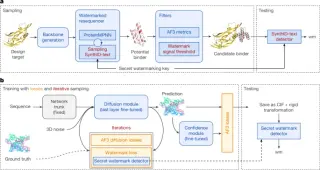
Google DeepMind has introduced SynthID Bio, a new technology that embeds imperceptible watermarks into AI-generated protein sequences and 3D structures. Published in Nature on September 30, 2026, the system aims to verify the provenance of synthetic biological designs without compromising their biological function. By integrating with tools like ProteinMPNN and AlphaFold 3, SynthID Bio allows DNA synthesis providers to distinguish trusted AI designs from potentially hazardous unknowns, enhancing biosecurity and scientific integrity.


Viral AI Watermark Remover Sparks Debate Over EU Compliance and Writing Integrity
technology3 months ago

Viral AI Watermark Remover Sparks Debate Over EU Compliance and Writing Integrity

Paris-based developer Guillaume Meyer created an open-source tool to remove invisible AI watermarks from Anthropic’s Claude model, sparking viral debate. The tool, which uses non-watermarked models to rewrite text, gained over 20,000 bookmarks on X and 100 contributors. While Anthropic claims the watermarking complies with EU AI Act regulations without affecting quality, critics argue it degrades writing craft and creates false positives. Meyer emphasizes the tool is for educational and personal use, not impersonation, as the industry awaits Anthropic’s official detection API.

Anthropic's EU-compliant watermark sparks user revolt and technical debate
technology3 months ago

Anthropic's EU-compliant watermark sparks user revolt and technical debate

Anthropic has implemented invisible watermarks in Claude’s text outputs to comply with the European Union’s AI Act, triggering backlash from users who fear the marks will flag their edited work as AI-generated. While the system aims to distinguish machine output from human writing, critics argue it is overly broad and technically flawed, leading to subscription cancellations despite Anthropic’s claims that the impact on performance is negligible.

Anthropic Clarifies Global AI Watermarking Strategy Amid EU Regulatory Pressure
technology3 months ago

Anthropic Clarifies Global AI Watermarking Strategy Amid EU Regulatory Pressure

Anthropic has published a detailed blog post explaining its new AI watermarking feature for the Claude model, clarifying that the technology is designed to comply with the European Union's AI Act. The company stated that it is applying watermarks globally because it currently lacks a reliable method to restrict the feature to specific regions. While the watermarking technique, based on a 2024 Google DeepMind paper, embeds subtle patterns in word choice to identify AI-generated text, Anthropic acknowledged significant limitations. The watermark only confirms involvement by Claude, not AI in general, and is less frequent in factual or code passages to preserve accuracy. Anthropic also noted that while light editing may not remove the mark, a complete rewrite can, and that the watermark does not affect user ownership rights.

Anthropic embeds invisible watermarks in Claude text to comply with EU AI Act
technology3 months ago

Anthropic embeds invisible watermarks in Claude text to comply with EU AI Act

Anthropic will embed imperceptible, machine-readable watermarks in text generated by its Claude models, starting with releases from August 2, 2026. The marks travel with copied content and aim to distinguish AI output from human writing, aligning with new EU transparency rules. While the watermarks may survive minor edits, they can be removed by heavy rewriting or translation. This move addresses growing concerns over low-quality 'AI slop' on platforms like YouTube and Substack, which are also implementing measures to detect and limit AI-generated content.

SynthID watermarking goes global with OpenAI, Nvidia and partners
technology6 months ago

SynthID watermarking goes global with OpenAI, Nvidia and partners

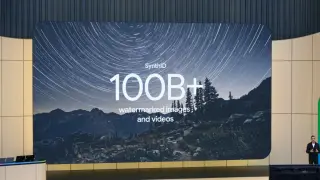
Google's SynthID AI watermarking, embedded in image pixels and audio, is expanding beyond Google to Nvidia, OpenAI, Kakao, and ElevenLabs, after users claim it has already labeled 100 billion images and videos and 60,000 years of audio; the system complements C2PA metadata tagging and will be integrated into Gemini, Chrome, and Search with new detection options, while a public SynthID API does not yet exist and a Gemini Enterprise API for trusted partners is planned.