Tag

C2pa

All articles tagged with #c2pa

Google Gemini Lets Users Remove Visible AI Watermarks, Sparking Detection Concerns
technology10 days ago

Google Gemini Lets Users Remove Visible AI Watermarks, Sparking Detection Concerns

Google Gemini will soon let users choose whether AI-generated images, videos, and music carry visible watermarks. It relies on C2PA metadata and an invisible SynthID watermark for verification, but metadata can be stripped and SynthID has shown resilience to some edits yet can be defeated by adversarial techniques and existing bypass tools. The move raises concerns about the erosion of our ability to recognize AI-generated content, with rollout excluding countries where watermarking is legally required.


Google Gemini now lets you hide visible watermarks on AI content
technology10 days ago

Google Gemini now lets you hide visible watermarks on AI content

Google is rolling out a “Media watermark” toggle in Gemini and Flow that hides the visible sparkle watermark on AI-generated images, videos, and music, while invisible SynthID and C2PA markers remain so content can still be verified as AI-generated by Gemini or Search. The change is expanding to Search, though it won’t launch in countries that require visible watermarks.

Claude to embed invisible watermarks on AI outputs for transparency
ai14 days ago

Claude to embed invisible watermarks on AI outputs for transparency

Anthropic says Claude-generated text will carry imperceptible, embedded watermarks and Claude-generated images will include provenance data via the C2PA standard to align with EU AI Act transparency rules. The marks are model-level and travel with content across surfaces, with detection tools to be released later. Implementation is a future commitment with a grace period for existing products, and there are caveats about watermark robustness and the possibility of marks being stripped by platforms.

SynthID watermarking goes global with OpenAI, Nvidia and partners
technology3 months ago

SynthID watermarking goes global with OpenAI, Nvidia and partners

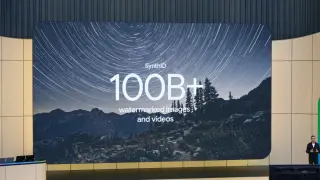
Google's SynthID AI watermarking, embedded in image pixels and audio, is expanding beyond Google to Nvidia, OpenAI, Kakao, and ElevenLabs, after users claim it has already labeled 100 billion images and videos and 60,000 years of audio; the system complements C2PA metadata tagging and will be integrated into Gemini, Chrome, and Search with new detection options, while a public SynthID API does not yet exist and a Gemini Enterprise API for trusted partners is planned.

Sensor-Level Signatures Could Certify Photos in Real Time
technology4 months ago

Sensor-Level Signatures Could Certify Photos in Real Time

ETH Zurich researchers propose cryptographic signatures generated by a camera’s sensor at capture time and stored in a public ledger to prove authenticity and detect tampering, offering a potentially more secure alternative to the current C2PA approach that signs data later in the camera’s processor; implementation would require redesigned sensors and hardware changes, with ongoing cost considerations.

Ring Rolls Out Public Tool to Verify Video Integrity
technology7 months ago

Ring Rolls Out Public Tool to Verify Video Integrity

Ring has launched Ring Verify, a public tool that lets users upload Ring videos to see if they’ve been edited, using a C2PA-based metadata signature and automatically included with videos downloaded from December 2025 onward. It signals when a video’s content has been altered (even cropping or length changes), but it can’t confirm real-world authenticity for non-Ring footage from platforms like TikTok or Instagram. Google’s SynthID offers a separate, limited watermark-based check for AI-generated images. While imperfect, Ring Verify represents a step toward provenance and authenticity in an era of convincing AI-generated media.

"Tech Giants Combat Misinformation and Manipulation with New Digital Standards and Watermarks"
technology2 years ago

"Tech Giants Combat Misinformation and Manipulation with New Digital Standards and Watermarks"

Google has joined the Coalition for Content Provenance and Authenticity (C2PA) to enhance transparency around AI-generated content and digital media. The C2PA aims to establish an open technical standard for tracing the origin and modifications of digital content, akin to a "nutrition label." With Google's support, widespread adoption of this standard may be on the horizon, potentially enabling users to access the history of online content. Other companies, such as Adobe, Microsoft, and Intel, are also involved in setting the technical direction of the group. This move comes amid growing concerns about deepfakes and AI-generated content, with efforts underway to develop solutions and tools to address these challenges.

"Tech Giants Unite to Combat AI-Generated Content with Watermarking Initiatives"
technology2 years ago

"Tech Giants Unite to Combat AI-Generated Content with Watermarking Initiatives"

Google has joined an effort to develop credentials for digital content, aiming to create a "nutrition label" that identifies when and how a file was produced or altered, including with A.I. The company will collaborate with other tech giants and organizations to fine-tune technical standards, following a similar promise by Meta. This move comes as the authenticity of online content is a high priority for lawmakers and tech watchdogs, with the aim of making the digital ecosystem more trustworthy.

"Meta Introduces Enhanced Watermarking and Labeling for AI-Generated Images"
technology2 years ago

"Meta Introduces Enhanced Watermarking and Labeling for AI-Generated Images"

OpenAI's image generator DALL-E 3 will now include watermarks from the Coalition for Content Provenance and Authenticity (C2PA) in its image metadata, visible as a CR symbol in the top left corner. This move aims to provide provenance information about AI-generated content and increase trustworthiness, aligning with the Biden administration's directive on AI. However, the effectiveness of these watermarks in preventing misinformation is limited, as they can be easily removed, and social media platforms often strip metadata from uploaded content.

Tech companies combat AI-generated images with detection methods.
technology3 years ago

Tech companies combat AI-generated images with detection methods.

Tech companies are working to combat the rise of AI-generated images and online misinformation. Truepic offers technology that authenticates media at the point of creation, while other companies like Reality Defender and Hive Moderation are developing programs to identify images as AI-generated after they have been produced and shared online. Larger tech companies like Adobe and Microsoft are working to integrate a kind of watermark to images to certify media as real or AI-generated when they’re first created, based on the Coalition for Content Provenance and Authenticity (C2PA) guidelines. However, experts stress that these businesses will ultimately need to work with each other and the government to address the problem.