Apple released macOS 27.0.1 on September 28, 2026, as the first update to the Golden Gate operating system. The patch addresses unspecified bugs and is available via System Settings. Apple simultaneously issued security updates for macOS 26.7.1 and 15.8.1. This update supports only Apple Silicon Macs, marking the end of support for Intel-based devices.
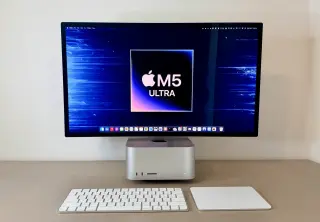
The M5 Ultra Mac Studio delivers a significant leap in local AI performance, offering 70% faster token generation and 150% quicker prompt processing compared to the M3 Ultra. While it remains slower than an RTX 5090 in raw compute, its unified memory architecture allows for larger model contexts and quieter operation. However, the system’s high cost and limited RAM configurations remain barriers for mainstream adoption.
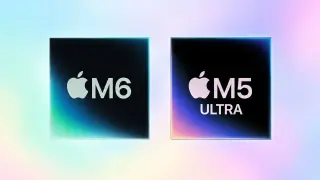
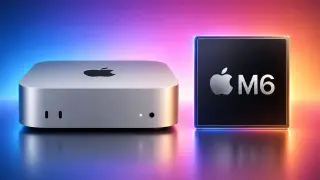
Apple has launched its new Mac mini and Mac Studio lines, featuring the debut M6 chip and upgraded M5 Max/Ultra processors. While performance gains are significant, the entry-level Mac mini price has jumped to $899 due to a global memory shortage, marking a sharp departure from previous value-oriented pricing.
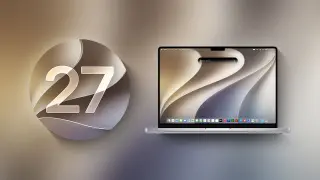
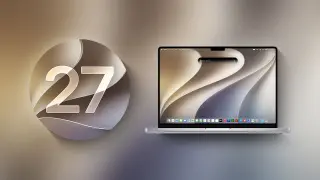
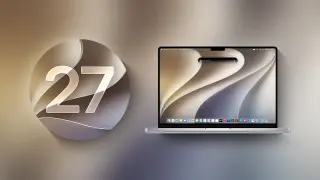
macOS 27 Golden Gate, released September 14, 2026, is the first macOS version exclusive to Apple Silicon Macs, ending support for Intel hardware, Boot Camp, and AFP. While it retains Rosetta 2 for legacy apps, macOS 28 in fall 2027 will likely remove it entirely. The update also introduces significant design changes, including Liquid Glass refinements, HDR support, and improved iPhone Mirroring, though it removes AirPort Utility and Time Capsule compatibility.
macOS 27 Golden Gate, released September 14, 2026, introduces a comprehensive visual overhaul and performance enhancements beyond its headline Siri AI feature. The update mandates Apple silicon hardware, dropping Intel Mac support and Boot Camp. Key changes include a widespread redesign of app icons using the Liquid Glass aesthetic, expanded High Dynamic Range (HDR) support across the system UI, and fixes for previous design inconsistencies in macOS Tahoe. While Siri AI remains the primary focus, the update also refines iPhone Mirroring and removes legacy protocols like AFP and Rosetta 2, marking a significant shift toward modern hardware standards.
Apple Intelligence models now consume significantly more storage on macOS 27 Macs than officially stated, with some users reporting over 30GB usage. Unlike previous versions, the download is mandatory and cannot be disabled, forcing users to allocate space for AI features even if unused.
Apple's Mac mini M6 is the fastest mini yet, with up to 32GB RAM and strong real‑world performance, but at a $899 base price it's no longer the bargain the minis used to be; memory/storage upgrades are pricey, and for more power you might opt for the M5 Pro or Mac Studio rather than sticking with the base model.
A purported Geekbench result for an unreleased M6 Pro chip appears dubious due to internal inconsistencies flagged by Geekbench’s John Poole; Bloomberg had previously reported that Apple plans to skip the M6 Pro and M6 Max, suggesting the alleged score may not be legitimate.
Early Geekbench 7 GPU benchmarks show Apple’s M5 Ultra delivering a Metal score up to 366,744 (vs M3 Ultra’s 230,420) and the M6 reaching 93,217, with OpenCL scores roughly in line with NVIDIA’s RTX 4080; results indicate meaningful graphics performance gains ahead of the new Mac Studio and Mac mini, though real‑world results will vary.
A leaked Geekbench 7 GPU score for Apple's M5 Ultra suggests a roughly 41% GPU performance gain over prior models, with the M5 Ultra GPU scoring 360,019 vs the M3 Ultra's 255,009 and rivaling the RTX 5080 in some creative workloads. Apple had announced the M5 Ultra alongside the Mac Studio, which starts at $6,799 and ships around Sept. 22, with the new GPU highlighting AI and GPU-accelerated workflow improvements.
An unverified Geekbench 7 result for Apple's 2nm M6 chip shows 4,071 (single-core) and 22,783 (multi-core), suggesting ~12% faster single-core and ~27% faster multi-core than the M5; Apple claims the M6 delivers the world’s fastest single-threaded CPU, and the Mac mini with M6 (launching Sept. 22 alongside new Mac Studio models) could reflect these gains, though GPU results are not yet available and real‑world performance may vary.
Apple says developers can now submit apps built with iOS 27, iPadOS 27, macOS 27, tvOS 27, visionOS 27, and watchOS 27 using the Xcode 27 Release Candidate ahead of their rollout next Monday; macOS 27 will be Apple Silicon–only, with Intel Macs losing support after macOS 26, so apps must target arm64; Apple also highlights new age rating questions and updated product-page assets, and notes that starting April 2027 uploads must meet the relevant 27 SDK minimums (iOS/iPadOS, tvOS, visionOS, watchOS).
Apple announced that macOS 27 Golden Gate will be released to all compatible Macs on September 14, alongside iOS 27, iPadOS 27, watchOS 27, tvOS 27, and visionOS 27. The update, which includes Siri AI and design/performance enhancements, supports Macs with Apple Silicon (M1 and newer). macOS Tahoe remains the last Intel-based macOS, with Intel Macs continuing to receive security updates for three years; Golden Gate will still run Intel apps on Apple Silicon via Rosetta, marking the final major macOS release to include the full Rosetta translation layer.
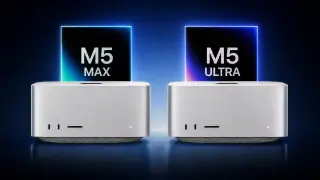
Apple introduced two Mac Studio models: the M5 Max starting at $2,499 and the M5 Ultra starting at $5,499. The Ultra offers more CPU/GPU cores, higher memory bandwidth, more ProRes engines, and expanded display support, but its base memory is 96GB (less than the Max’s 128GB), so the Ultra shines at higher memory tiers (up to 512GB RAM and 16TB storage) while the Max remains the better value for most workflows. Memory and storage upgrades are expensive, making the price gap smaller when configuring the Max. Both models support Thunderbolt 5, RDMA, and up to eight 4K/6K displays (Ultra supports more), with Ultra weighing 3.6 kg versus 2.7 kg for the Max. Availability begins September 22; the 512GB RAM configuration is expected to push well past $10,000. Apple also notes a cheaper Mac mini option with M5 Pro starting at $1,699 for those who don’t need Studio-class power.
Apple says universal Mac App Store apps that require macOS 13+ can drop support for Intel-based Macs, simplifying development and reducing download and on-device sizes. Intel users will still be able to run the last compatible version of an app. macOS Tahoe remains the last OS that runs on Intel Macs, while macOS Golden Gate targets Apple Silicon and Rosetta 2 will be phased out for most apps after Golden Gate (with exceptions for some older unmaintained games).