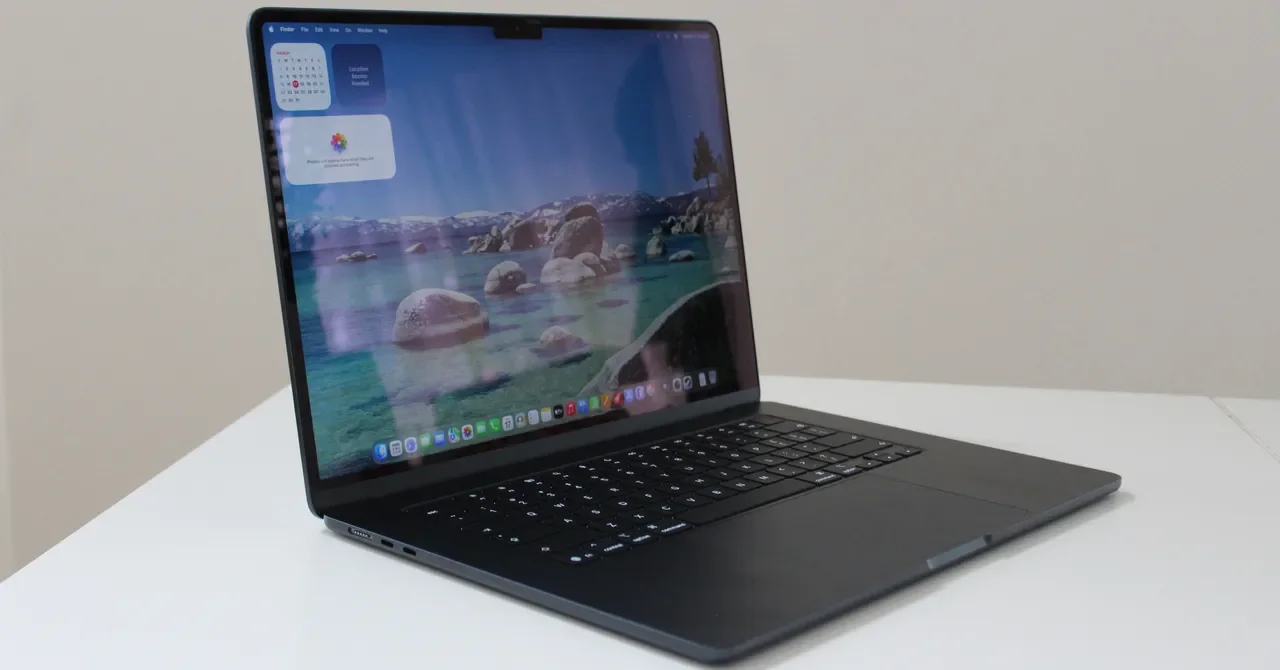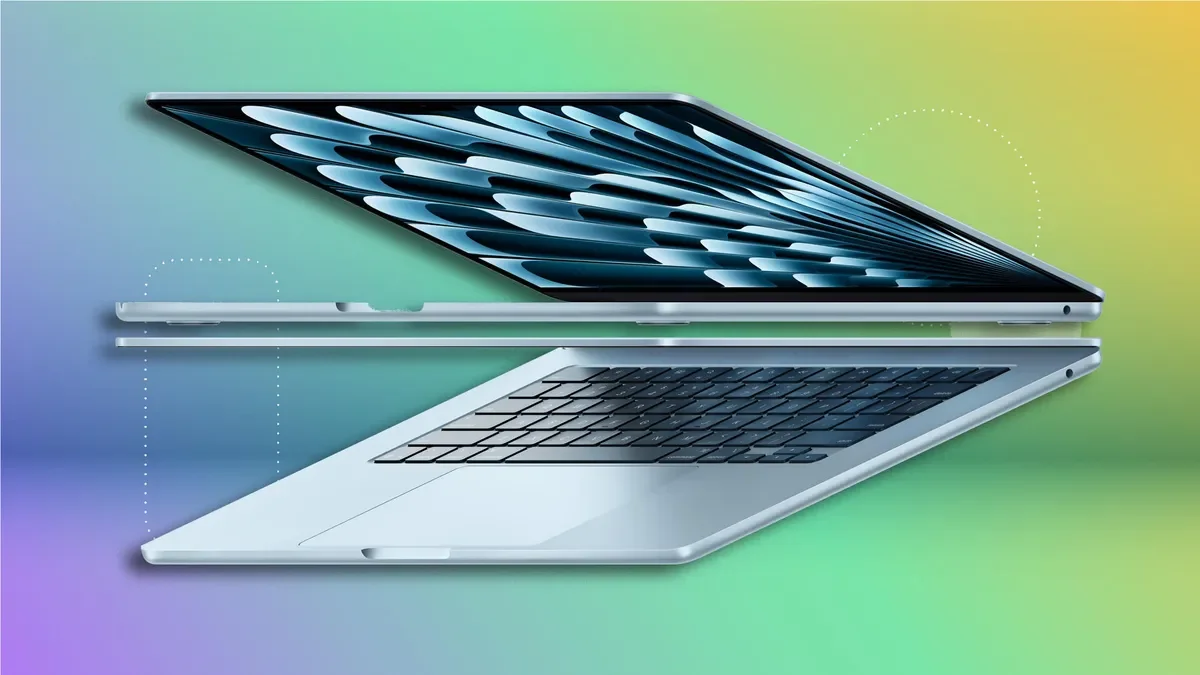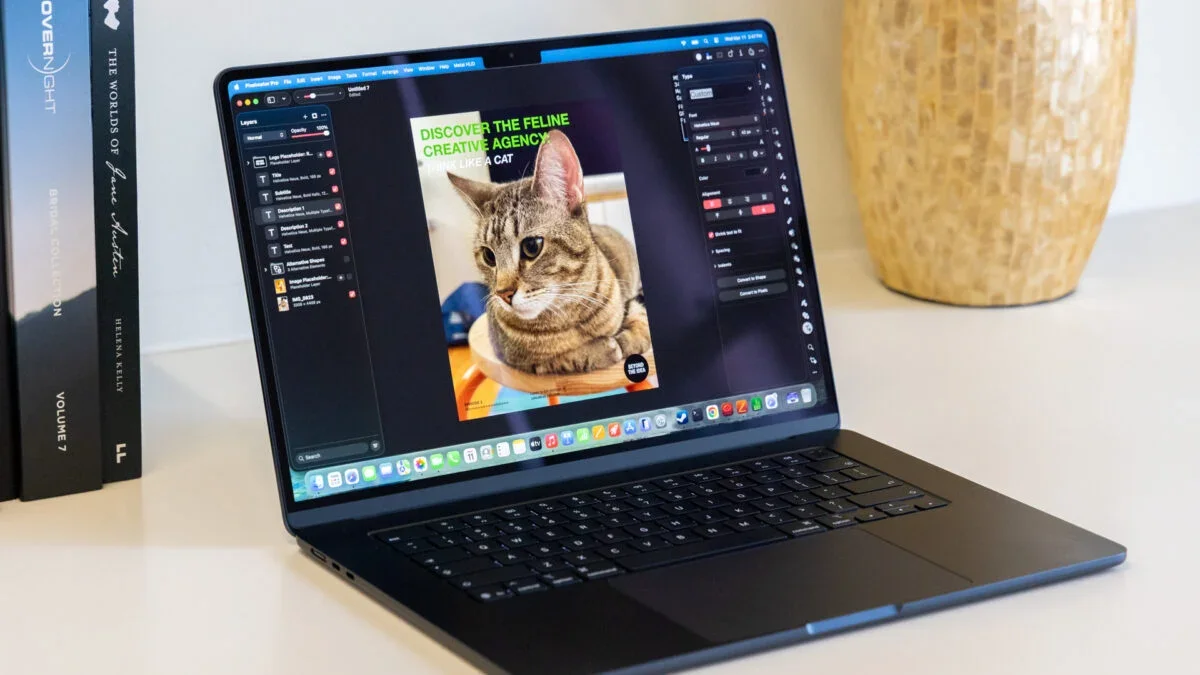
Amazon has rolled out record-low prices on the M5 MacBook Air, including the 13-inch 512GB at $949 (down from $1,099) and the 16GB/1TB at $1,149, plus a 24GB/1TB option at $1,349; 15-inch models also see up to $150 off with 512GB starting at $1,149, 16GB/1TB at $1,349, and 24GB/1TB at $1,549.
Apple's M5-powered MacBook Pros—M5, M5 Pro, and M5 Max—bring a major performance leap with up to a 40-core GPU, doubled memory bandwidth, and 128GB of unified memory and 2TB SSD options, plus Thunderbolt 5. They enable on-device AI with neural accelerators, letting creatives run AI models locally for faster iteration on tasks like 3D rendering, video editing, and photo culling, and support on-location workflows without cloud connectivity. The emphasis is on enabling new workflows and faster iteration rather than just chasing benchmark numbers.
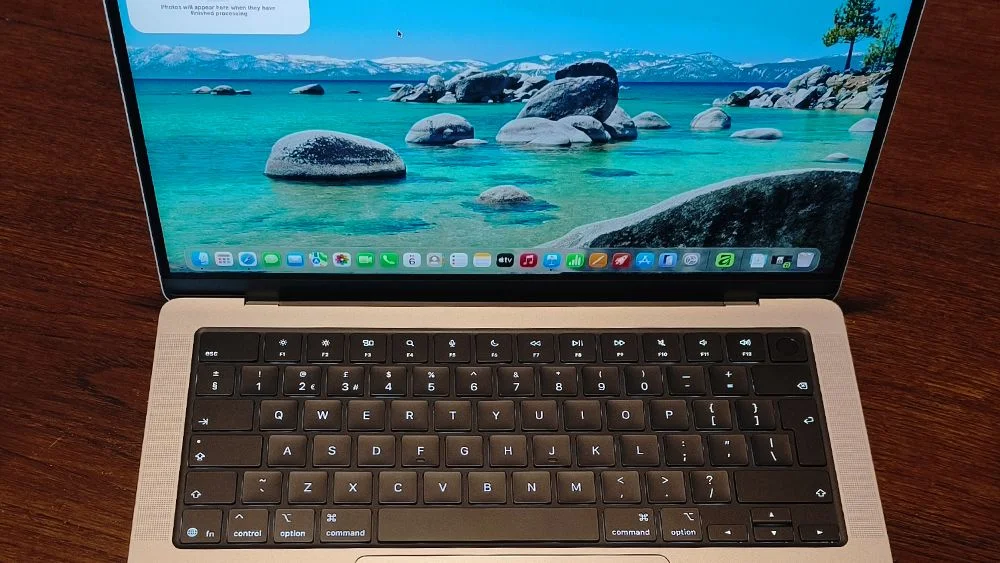
The 2026 MacBook Air with the M5 chip remains the go-to balance of price and performance for most buyers, delivering a meaningful CPU/GPU uplift, faster storage, fanless operation, strong battery life, and superb portability, while placing itself between the Neo and Pro in Apple’s lineup. Despite modest updates beyond the M5 and a higher starting price, it remains a well-rounded, do-it-all laptop—hard to beat for daily workloads and creative tasks—though power users who need Pro-level features may still prefer a Pro.
Apple's M5 MacBook Air introduces a 3nm M5 CPU with 10 cores, 8–10 GPU cores, plus a neural accelerator per core, along with faster memory/SSD, Wi‑Fi 7 and a 512GB base storage at $1,099 (13-inch) or $1,299 (15-inch). Upgrading depends on your current model: Intel Macs should upgrade now; from M4/M3 the gains are incremental (roughly 9–13% faster Geekbench 6 and 12–18% faster Cinebench 2024 vs M4; about 33% faster single-core and 40% multicore vs M3), while the M2‑to‑M5 jump is more substantial and the M1‑to‑M5 upgrade is a clear choice. The M5 keeps the familiar design but offers meaningful improvements for future‑proofing, making the 15-inch option particularly appealing; for many M4/M3 users, the upgrade may not be urgent, whereas Intel‑based Macs meet the threshold for upgrading now.
Gizmodo’s take on the M5 MacBook Air highlights a strong, portable performer with a bright 15-inch display, 16GB of unified memory, and a 512GB base SSD, making it capable for creative work and day‑to‑day tasks while offering excellent battery life. It sits between the budget MacBook Neo and the pro‑level MacBook Pro, delivering solid performance but limited sustained headroom and ports, which keeps it from being the best choice for heavy workloads or expansion. Prices start at $1,100 for the 13-inch and $1,300 for the 15-inch, with higher GPU core options and upsell paths; overall, it’s a compelling middle ground for portability minded buyers who don’t want to sacrifice too much power.
Apple’s M5 13-inch MacBook Air arrives with a real performance boost and a higher starting price of $1,099, pushing it above the budget MacBook Neo. The M5 features a 10-core CPU/GPU, faster unified memory, Wi‑Fi 7 and a 1TB base SSD, delivering stronger Geekbench/Cinebench scores and about 17 hours of streaming battery life. However, the Neo remains a much better value for students, and many buyers will find the 15-inch Air a better overall balance of size, performance, and price. The 13-inch is still solid for design or STEM-focused users who need compact power, but it’s no longer Apple’s entry point and not the best value in the lineup.
Notebookcheck’s review hails the MacBook Air 15 M5 as a powerful, completely fanless laptop with excellent efficiency, delivering strong single‑core performance and capable gaming without throttling, aided by Wi‑Fi 7 and PCIe 4.0 SSDs. It still has soldered RAM/storage, a 60 Hz IPS display, and limited ports, but offers long battery life (~17 hours web browsing at 150 nits) and a premium build for a starting price of $1,299. While the Pro line may beat it on display and features, the Air M5 stands out in the 15‑inch, fanless segment.
Bloomberg’s Mark Gurman indicates Apple will push a broader 2026 Mac lineup after introducing M5-based MacBook Air/Pro/Max, including a mid-2026 Mac Studio refresh (likely with the M5 Max and an M4/M5 Ultra), new Mac mini variants, and an iMac with a refreshed color palette; a high‑end MacBook Ultra featuring a touchscreen OLED is expected later in the year, while the Mac Studio, Mac mini, and iMac visuals remain largely unchanged.
Geekbench 6 results show the MacBook Air with the 10-core M5 chip scoring 17,073 in multi-core, about 15% faster than the M4 Air (14,731); the gain aligns with Apple’s claims and places the M5 Air ahead of the older M3 Pro MacBook Pro by up to 16%, though it remains slower than some M4 Pro/newer Pro models. The M5 MacBook Air is available to pre-order now and launches March 11.
Ars Technica reports that macOS Tahoe 26.3.1 retroactively renames the M5’s high-performance cores from “performance” to “super” cores, aligning with the new M5 Pro/Max naming. The change appears only cosmetic—no real performance difference for existing M5 Macs—while updating System Information and Activity Monitor and enabling Studio Display support. Older M-series chips (like the M4) are not affected.
Apple kicked off a busy release week with the iPhone 17e (A19 chip, faster C1X modem, 48MP camera, MagSafe) and refreshed MacBook lineup led by the M5-powered Air (13" and 15" starting at $1,099) plus a new MacBook Neo at $599. The Pro line gets M5 Pro/Max with up to 128GB unified memory; the iPad Air moves to the M4 with up to 12GB RAM. New Studio Display models bring Thunderbolt 5 and Center Stage, while Studio Display XDR uses mini-LED, up to 2,000 nits, and DICOM presets. Pre-orders begin March 4; ships begin March 11 (Studio Display starts at $1,599; Studio Display XDR at $3,299).
Apple’s latest MacBook Air lineup uses the M5 chip with 512GB base storage and higher price points. Best Buy is offering the 13-inch M5 for $1,099 with a $50 gift card and the 15-inch for $1,299 with the same perk ahead of its March 11 release, while Amazon is selling the 15-inch M4 with 512GB for $1,099 to match the new price. The M5 brings faster Wi‑Fi 7 and Bluetooth 6, plus a larger display and six speakers on the 15‑inch, but Verge notes the two generations should feel similar in day-to-day use, making the older M4 a solid value for some buyers.
Apple is reportedly set to unveil M5 Pro and M5 Max MacBook Pros (14-inch and 16-inch) with a 3nm M5 chip delivering about 20% CPU and 30% GPU gains over the M4, plus an enhanced Neural Engine; designs are expected to match the M4, with a launch anticipated next week ahead of Apple's March 4 event. Rumors also hint at OLED/touchscreen upgrades in a future generation (M6), which could influence whether buyers wait for a bigger overhaul.
Apple has announced a March 4 event branded the “Special Apple Experience,” with strong rumors of new Macs (including M5 Pro/Max models and a cheaper MacBook), potential iPhone 17e budget model, and iPad updates (A18/M4); the show starts at 9 a.m. ET in New York City, with Ars Technica delivering coverage.
Tech coverage argues Apple’s upcoming M5 MacBook Air, expected in March, will deliver about a 15–20% general performance increase over the M4 and stronger graphics/AI performance in the same slim, fanless chassis. With a base price around $999, the M5 Air could offer better everyday value than the Pro for most users, though Pro models add a larger 16-inch screen, more ports, ProMotion and higher performance at a higher cost and power draw. If you don’t need pro workloads, waiting for the M5 makes sense; otherwise, the current M4 Air or discounted M4 Pro could still be viable options.