Tag

Income Inequality

All articles tagged with #income inequality

Thin Margins, Big Shifts: The 21st-Century Pattern of U.S. Political Volatility
politics16 days ago

Thin Margins, Big Shifts: The 21st-Century Pattern of U.S. Political Volatility

U.S. politics has become a cycle of rapid power shifts driven by razor-thin majorities, a shrinking pool of swing voters, and a shift from economic to identity-based conflicts. Rising inflation and income inequality keep working-class voters anxious, boosting support for opponents when incumbents are in power. Analysts say sustained policy breakthroughs will require longer, broadly supported governance, while crises or strategic restraint could reset coalitions and ease the volatility—otherwise expect continued reversals after each election.

First-Time Homebuyers Confront Growing Cost Burden
real-estate1 month ago

First-Time Homebuyers Confront Growing Cost Burden

New homeowners in 2024 spent about 26% of their income on housing vs 20% for longer-tenured owners—a six-point gap dubbed the 'new homeowner penalty' and the widest since 1990—driven by high prices, mortgage rates hovering around 6%+, and rising costs like insurance and taxes. The result is a stubborn affordability crunch for first-time buyers, even with savings and family help; policymakers point to boosting housing supply through streamlined permitting and zoning reforms as the long-term fix, though effects will take time and vary by region.

OpenAI’s Progressive Policy Pitch Faces a Political Paradox
technology1 month ago

OpenAI’s Progressive Policy Pitch Faces a Political Paradox

OpenAI publishes a sweeping, pro-welfare economic vision—calling for a public wealth fund, higher taxes on the rich, expanded public funding for health care and education, and more worker influence in corporate governance—to share prosperity in the AI age. Critics view the plan as laudable in theory but hypocritical given OpenAI leaders’ political donations and opposition to welfare policies, arguing the proposals are vague, politically infeasible in the near term, and detached from the firm’s real-world political actions.

Oil Shock Deepens Economic Split as Iran War Lifts Gas Costs
business2 months ago

Oil Shock Deepens Economic Split as Iran War Lifts Gas Costs

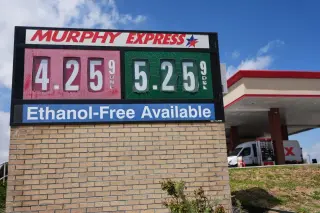
The Iran war has sent oil and gasoline prices higher—Brent crude up over 40% to about $102/bbl and U.S. gas averages near $3.79/gal—driven by Strait of Hormuz disruptions; economists warn the surge worsens the K-shaped economy by acting like a regressive tax that hits lower- and middle-income households hardest and could curb overall consumer spending, with knock-on effects for diesel, jet fuel, trucking, food, and travel.

K-Shape Economy: Spending, Jobs and Debt Split by Income
economy2 months ago

K-Shape Economy: Spending, Jobs and Debt Split by Income

America is in a persistent K-shaped recovery: higher earners continue to spend on essentials and leisure while lower- and middle-income households cut back on groceries and face rising credit stress. Wage growth has shifted in favor of the top third since 2024, GDP gains have disproportionately benefited higher-income groups, and tax changes may widen the gap. Data show richer households increasing purchases of meat, produce, and beverages while lower earners trim discretionary items; recent grads face higher unemployment than the overall workforce, and total credit-card debt rose to about $1.28 trillion in late 2025 with delinquency highest among the lowest-income households.

Luxembourg Tops Europe in Average Salary, Highlighting a Western-Northern Gap vs. the East
economy3 months ago

Luxembourg Tops Europe in Average Salary, Highlighting a Western-Northern Gap vs. the East

Luxembourg has Europe’s highest average full-time salary (about €83,000 in 2024), with Nordic and Western European countries like Iceland, Switzerland, Denmark, and Norway also at the top; by contrast, Southern and Eastern European nations cluster around €30,000 or less, with Bulgaria at €15,387, illustrating a wide wage gap across Europe. The figures come from Eurostat and OECD (converted to euros for 2024) and reflect headline salaries before cost-of-living differences, which can widen or narrow real purchasing power.