The Washington Post Editorial Board argues that the Trump administration's recent reduction of fuel efficiency standards will not stop the transition to electric vehicles, as consumer demand and market forces continue to drive adoption despite lower regulatory mandates.
The U.S. Department of Transportation finalized new Corporate Average Fuel Economy (CAFE) standards on September 28, 2026, lowering the 2031 fleet average target to 34.9 miles per gallon. The administration claims this will reduce average new vehicle prices by $1,300 and save consumers $138 billion over five years, though independent analysts remain skeptical of these projections.
President Trump approved new Corporate Average Fuel Economy (CAFE) standards on September 26, 2026, replacing Biden-era rules that required 50.4 miles per gallon by 2031. The new rules lower the target to 34.5 mpg, effectively ending federal mandates for electric vehicle adoption. While Trump framed this as a cost-saver for consumers and manufacturers, critics argue it weakens U.S. competitiveness against global EV trends and lacks enforcement power due to recent legislative changes.
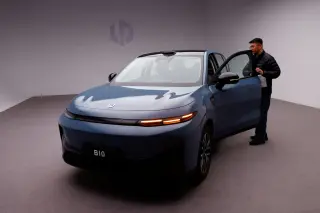
Chinese automakers are increasingly pushing inexpensive vehicles into North American (and European) markets to gain share from U.S. and European brands, signaling a Beijing-led strategy to deindustrialize—while U.S.-Canada-Mexico policy frictions complicate responses and risk hollowing out the industrial base; Leapmotor’s B10 is cited as a case in point.
A Here Technologies and SBD Automotive study finds 56% of U.S. drivers say high gas prices increased their interest in EVs; perceptions of charging infrastructure are improving (47% see a reasonable number of chargers), and 85% of current EV owners say infrastructure is adequate. Price remains the main barrier to adoption, but automakers are pursuing cheaper EV options and used EV sales remain a bright spot as incentives waned.
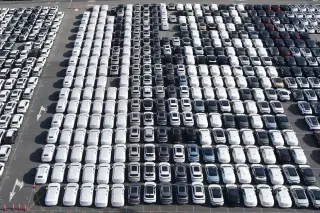
China’s car exports from January through August 2026 already exceed its total exports for all of 2025, signaling a robust rise in demand for Chinese-made vehicles and a rapid expansion of shipments powered by ports in Shanghai.
Volkswagen’s board approves a plan to cut a total of about 100,000 jobs and explore alternatives for four plants, potentially retiring Seat while Cupra continues. BMW recalls 190,000 older 3/5/7‑series sedans in Germany over moisture‑sensitive starter relays that could cause corrosion and fires. The Alliance for Automotive Innovation urges Congress to enact a ban on Chinese-made vehicles, software, and hardware in the U.S. A revived Jensen Interceptor is unveiled, and weekend motorsport schedules wrap the roundup.
Ford reportedly targets selling more than 100,000 Fathom EV pickups in its first year, a bold bet for a $29,945, compact EV built with modular design. While Ford's Maverick shows high volumes at sub-$30k, full-size electric pickups have struggled, with the F-150 Lightning and Cybertruck benchmarks suggesting this target is ambitious. The market is facing reduced EV incentives, softer registrations, and high fuel prices driven by Middle East supply risks, which could influence demand. If Ford delivers a compelling base model with adequate range and financing, the goal could be plausible; otherwise it's an audacious forecast to be tested in production.
Electrek argues that the Alliance for Automotive Innovation, led by John Bozzella, is pressuring Congress to curb EV competition by pushing bills that would ban Chinese vehicles from US roads, despite existing barriers like a connected-car rule and tariffs; the piece asserts Chinese automakers are advancing EV tech while US automakers cling to gas-powered models, criticizes protectionism as harming consumers and the environment, and calls for embracing open competition and faster EV adoption rather than propping up lagging incumbents.
A recent survey shows the manual transmission skill is fading in the US: only 18% of Americans know how to drive a stick, with Gen Z far less likely to have learned than older generations, as automatics dominate the market (under 2% of 2024 models). Experts warn the decline erodes driving understanding, though proponents argue manuals can boost focus and control in certain situations.
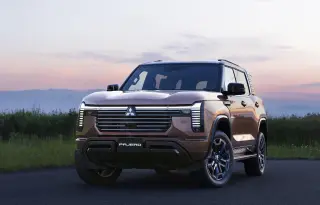
Mitsubishi Motors unveiled a revived Pajero after a seven-year hiatus, turning it into the company’s flagship SUV to be built in Thailand and sold in about 100 countries with domestic sales starting by year-end. The diesel-powered, ladder-frame SUV features seven driving modes and retro center-dash gauges, and is part of a growth plan through FY2029 aimed at boosting domestic sales to roughly 180,000 by 2030, with two smaller Pajero variants planned for the future.
Canadian Prime Minister Mark Carney said there remains a mutually beneficial Canada–U.S. trade deal, but negotiations cannot resume while U.S. officials publicly disparage Canada; he called such rhetoric beneath the office. Talks collapsed after tariff disputes and contentious auto-industry terms, with Canada preparing retaliatory duties. Carney emphasized that the U.S. auto sector benefits from Canada and Mexico and warned that a serious, respectful approach could bring talks back to the table.
A U.S.-Canada trade clash, including tariffs on steel, aluminum and potentially vehicles, risks higher vehicle prices, plant shutdowns and job losses in both countries. Honda and Toyota are more exposed because a larger share of their U.S. sales come from Canadian-built vehicles, while Ford, GM and Stellantis are less dependent on Canada. While Detroit Three face a pricing squeeze and possible model cuts, the broader threat of 50% auto tariffs and USMCA disputes could erode North American auto competitiveness and hurt Michigan and Ontario economies.
Trump’s plan to slap 50% tariffs on Canadian goods from January 1 upends the Detroit–Windsor cross-border auto supply chain, where about $1bn in goods cross daily and prices are already rising. Michigan voters oppose tariffs and polls warn they would raise costs, creating a political risk for Republicans in key swing races. Economists caution that both the US and Canada would suffer, while local leaders and the UAW criticize the escalation; Canada vows retaliation, raising the specter of broader North American manufacturing disruption and potentially energizing the Democratic challenger Abdul El-Sayed in Michigan.
With President Trump promising up to 50% tariffs on autos and auto parts from Canada if a deal isn’t reached by Jan. 1, automakers are lobbying cautiously to avoid destabilizing a highly integrated North American supply chain. Industry officials stress the need to protect cross-border manufacturing while pressuring for a favorable resolution, as talks stall and the U.S. and Canada navigate renegotiations underUSMCA framework. The dispute also draws comments from unions like the UAW, which opposes tariff escalation.