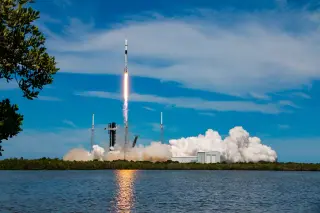
SpaceX is winding down commercial Falcon 9 operations, creating a temporary access-to-orbit gap for satellite operators. While the rocket has completed nearly 700 flights, new commercial bookings are increasingly difficult to secure. Industry leaders expect a critical transition period between 2029 and 2031 as SpaceX shifts focus to Starship and alternative providers struggle to match current launch cadences.
A Vega-C rocket launched two European Earth-observing satellites, FLEX and Sentinel-3C, from French Guiana on September 14, 2026. The mission, designated VV30, successfully deployed both spacecraft into orbit, marking the second Vega-C launch of 2026. FLEX will measure plant photosynthesis, while Sentinel-3C will monitor oceans and atmosphere, supporting long-term climate data collection.
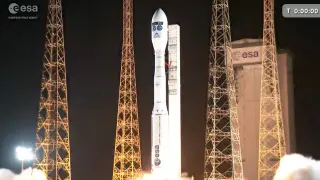
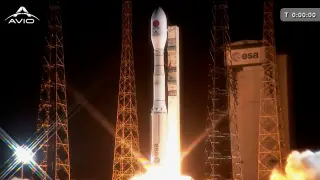
A European-Chinese space weather mission SMILE (Solar wind Magnetosphere Ionosphere Link Explorer) launched on May 18 atop a Vega C rocket from Kourou, deploying into a 707 km circular orbit about 56 minutes after liftoff. Over the next ~25 days SMILE will perform 11 engine burns to place the spacecraft into a highly elliptical orbit up to roughly 121,000 km above the North Pole and 5,000 km above the South Pole. SMILE’s four instruments (UVI, LIA, MAG on the platform and SXI on the payload) will study how the solar wind affects Earth’s magnetosphere to improve understanding of solar storms and space weather. The Chinese Academy of Sciences leads the satellite platform and three instruments, while ESA provides the payload module and will assist with orbit operations. The mission is planned for three years. Vega C, ESA’s 115-foot-tall rocket debuting in 2022, now has seven flights; Avio operates this first Vega C mission.
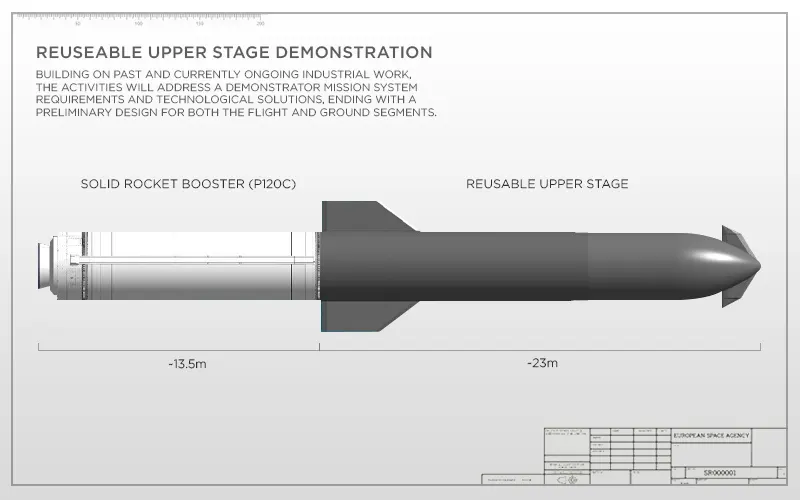
The European Space Agency awarded Italian company Avio a €40 million contract to develop a reusable rocket upper stage demonstrator over the next 24 months, focusing on system requirements and preliminary design, leveraging advancements in liquid propulsion and reentry technologies.
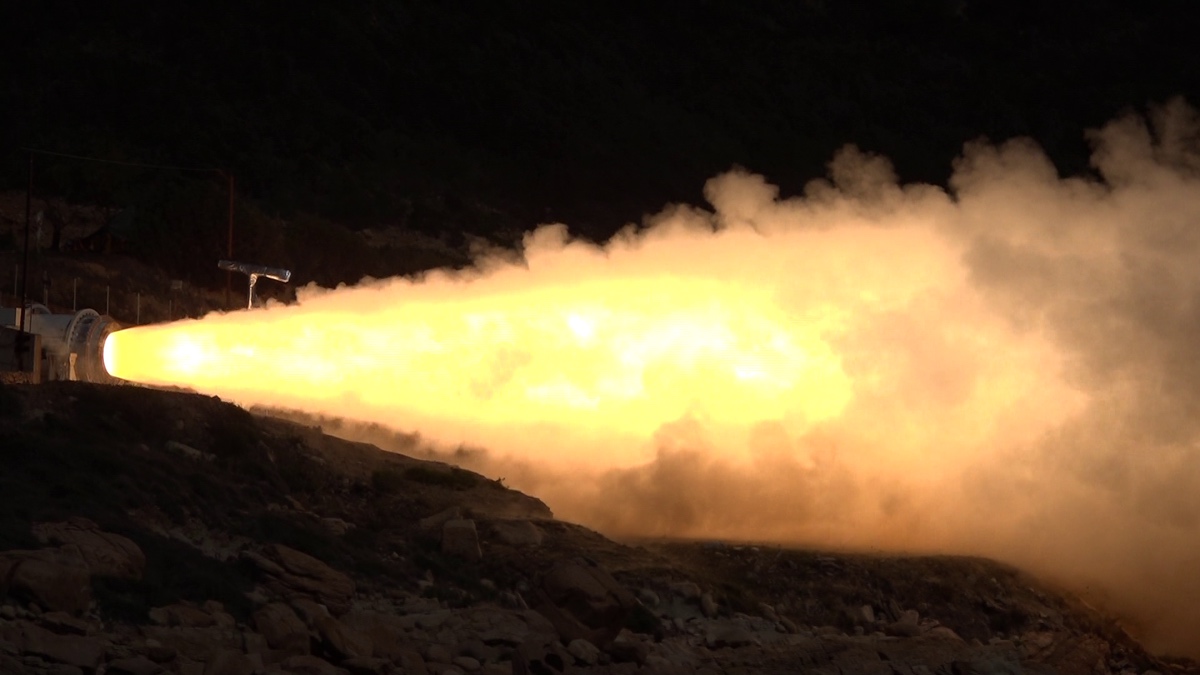
The European Space Agency announced that a redesigned Zefiro-40 motor for the Vega C rocket successfully passed a static-fire test, marking a significant step towards returning the rocket to flight by the end of the year. The motor, which failed in a previous launch due to faulty materials, has been redesigned and tested successfully for 94 seconds. A second test is planned for October to confirm its performance.
Avio's Vega rocket, set to launch the BIOMASS satellite for the European Space Agency, is facing a major setback as two propellant tanks on the fourth stage of the rocket went missing and were later found in a damaged state in a landfill. With the production lines closed, Avio is exploring options such as using old tanks or modifying the upper stage of the Vega C rocket. The ongoing issues with the Vega C rocket leave the European Space Agency with limited domestic options for launching the satellite in the near term.