Jim Polzin argues that Wisconsin’s hiring of former Nebraska deputy athletic director Shawn Eichorst as athletic director is a safe, familiar choice that could provide short-term stability, but it likely offers little relief from deeper issues facing UW athletics and may not address broader concerns about the hiring process or long-term performance.
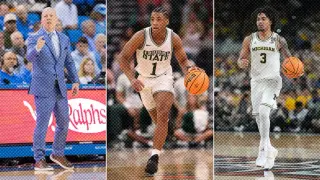
Mike Boynton Jr. was named Michigan’s interim head coach after Dusty May left for Dallas. In his first public comments, he praised May, thanked Warde Manuel for the opportunity, and noted ongoing roster-retention discussions. He said Michigan will keep the existing system—with a guard/wing-driven attack and emphasis on the 1s and 5s—and will work to keep the core together as Morez, Aday and Yax pursue their NBA dreams.
Senators Cruz and Cantwell advance the Protect College Sports Act toward a Senate floor vote, seeking federal rules to govern college athletics amid ongoing tension with the SEC and Big Ten over media-rights pooling, NIL concerns, and a potential antitrust exemption; passage remains uncertain as lobbying intensifies ahead of the August recess.
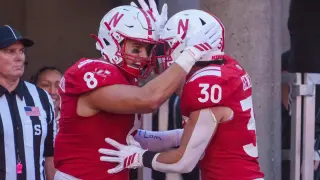
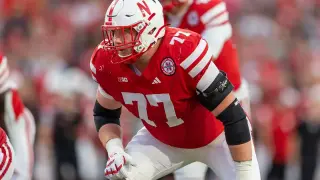
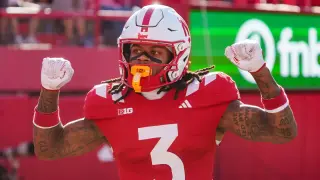
Nebraska revealed its 2026 football uniforms, preserving the classic red/white home and road looks and most elements while introducing a curved sans-serif number font similar to the LA Rams and two thick stripes over each shoulder; the pants stripe is shortened and the Winning Tradition patch is removed, potentially signaling room for an advertising patch. The design nods to past Husker eras and Rams aesthetics, provoking mixed reactions while noting uniforms don’t affect on-field performance.
A joint statement from Big Ten and SEC leaders says they engaged with lawmakers on the Protect College Sports Act, but limited time for feedback on an initial call and a revised bill that did not reflect many university concerns; they will continue to work with senators to refine the legislation to protect student-athletes and provide long-term stability for college athletics.
The Big Ten and SEC issued a joint statement criticizing how the Protect College Sports Act has been handled, saying university leaders had limited time for feedback and insufficient engagement with Senate staff before the revised bill. They note progress with the Senate Commerce Committee and welcome amendments, reaffirm their commitment to protecting student-athletes and establishing national standards and long-term stability for college athletics, and pledge to continue bipartisan engagement to refine the legislation.
Despite NCAA momentum from a recent eligibility ruling, the Protect College Sports Act faces pushback from the SEC and Big Ten over current language that would let 75% of FBS programs pool media rights and could block a merged superleague, with potential implications for intraconference postseasons and CFP eligibility; amendments before a Senate vote are possible, or the bill could move forward despite objections.
The Big Ten is expected to let member schools decide whether to schedule Texas Tech amid Brendan Sorsby’s gambling-rule violations and a judge’s order allowing him to play; no league-wide ban is anticipated, despite earlier discussions and notes that Nebraska and Georgia would not schedule Tech, while Illinois (basketball) and Oregon (football) already have games on the calendar. Sorsby, who transferred from Cincinnati, admitted to thousands of NCAA gambling-rule violations, including betting on his team as a redshirt freshman at Indiana.
The Big Ten is reportedly considering a league-wide mandate to avoid Texas Tech in all sports following Brendan Sorsby’s ruling restoring his eligibility; with no Texas Tech football games on the schedule this season, the move may be more performative than practical amid broader antitrust discussions surrounding the NCAA.
The Big Ten is weighing a conference-wide ban on scheduling Texas Tech in all sports after Nebraska instructed its teams not to schedule the Red Raiders and Georgia took similar steps following quarterback Brendan Sorsby’s gambling-related injunction; there are no 2026 Nebraska–Texas Tech games scheduled yet, and the NCAA has appealed in Sorsby’s case.
Former Penn State track standout Sincere Rhea, a Big Ten 60-meter hurdles champion in 2021 who later competed for Miami and Texas Tech, joins Love Island season 8 on Peacock, entering a Fiji villa with ten islanders for a $100,000 prize. The reality show features public voting, with new episodes dropping daily during the first week before settling into a five-a-week schedule; Rhea’s fast track career, including 60m hurdles and 110m hurdles times, underscores his transition from collegiate hurdling to reality TV stardom.
SEC and the Big Ten declined to back the bipartisan college-sports reform bill, citing critical issues; with major conferences on the sidelines, the measure’s fate now hinges on whether lawmakers can secure broader support.
Ahead of a Senate hearing, the Big Ten and SEC released a joint statement opposing the Protect College Sports Act as drafted, arguing it leaves critical issues unresolved and could impede rapid rulemaking and direct revenue sharing for student-athletes. They back a sustainable national framework with an effective transfer portal and clear eligibility standards, and will continue working with lawmakers to improve the bill.
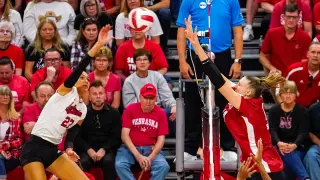
Nebraska’s 2026 volleyball schedule features 28 regular-season matches (17 Big Ten, 11 non-conference), with nine against teams that finished in the 2025 AVCA top 25. The trip starts with Spikes Under the Lights in Arlington on Aug. 27, then the Players Era Showcase in Las Vegas (UNLV on Aug. 29, Texas on Aug. 30). After South Dakota State, DePaul, and Missouri at Wrigley Field, the Huskers host New Mexico, Baylor, and Georgia Tech, plus Creighton at Pinnacle Bank Arena and a non-conference closer with North Carolina and Florida Gulf Coast. Big Ten play opens at home vs Rutgers and Ohio State, followed by three road tests (Penn State, Maryland, Indiana), a Wisconsin home date, Northwestern, a home stretch against Purdue, UCLA and USC, a four-game road swing to Michigan, Michigan State, Oregon and Washington, and a closing run of Illinois, Iowa and Minnesota at home. The inaugural Big Ten Tournament runs Nov. 20–25 in Fishers, Indiana; start times and TV info will be announced later, with Red-White Scrimmage to be determined.
SEC commissioner Greg Sankey argues the Southeastern Conference is the strongest and most competitive college football league by far, pointing to thin margins in key games and CFP metrics to support the claim, while noting the Big Ten has recent successes; he stresses the SEC’s breadth and depth as what sets it apart.