Tag

Brown Adipose Tissue

All articles tagged with #brown adipose tissue

Losartan May Repurpose Blood Pressure Therapy to Boost Metabolism via Brown Fat
health-and-medicine8 days ago

Losartan May Repurpose Blood Pressure Therapy to Boost Metabolism via Brown Fat

A new study in Nature suggests that losartan, a common blood pressure medication, can stimulate brown fat activity, potentially boosting metabolism and reducing risks for heart disease and depression. Researchers analyzed over 100,000 patient scans and confirmed in mice that the drug activates brown fat through mechanisms distinct from its blood pressure effects.
Losartan Repurposing: New Study Links Brown Fat Activation to Reduced Disease Risk
health-and-medicine12 days ago

Losartan Repurposing: New Study Links Brown Fat Activation to Reduced Disease Risk

A large-scale study published in Nature reveals that the common blood pressure medication losartan can activate brown adipose tissue (BAT), potentially boosting metabolism. By analyzing over 100,000 patient records, researchers found that individuals with active BAT have significantly lower risks of cardiovascular and psychiatric conditions. This suggests losartan could be repurposed to treat metabolic disorders, independent of its blood pressure effects.

Brown fat–generated microRNAs map an inter-organ metabolic circuit via secreted carriers
science3 months ago

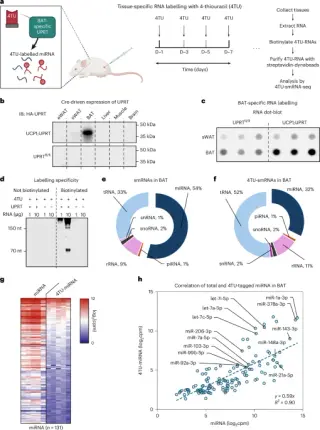
Brown fat–generated microRNAs map an inter-organ metabolic circuit via secreted carriers

Using brown-fat–specific 4-thiouracil labelling, researchers traced how brown fat secretes microRNAs in vesicles and protein-bound forms that are selectively taken up by liver, muscle, and hypothalamus. In recipient tissues these BAT-derived miRNAs enter Ago2–RISC and regulate metabolic pathways (notably miR-1a-3p targeting FoxO1 in muscle, affecting mitochondrial function). Deleting Dicer in BAT reduces circulating BAT miRNAs and disrupts tissue metabolism, revealing a defined endocrine network whereby brown fat communicates with distant organs to modulate energy homeostasis.

Debunking the Connection Between Brown Fat and Social Interaction
science3 years ago

Debunking the Connection Between Brown Fat and Social Interaction

A study attempting to establish a non-invasive method for measuring brown adipose tissue (BAT) activity and its link to social behaviors yielded inconclusive results. The use of infrared thermography to measure BAT activity proved unreliable, contradicting previous smaller-scale studies. The study highlights the complexity of linking BAT activity with human social behaviors and attachment styles, emphasizing the need for alternative methods to explore this relationship further.

"UCLA Unveils Groundbreaking Method to Combat Obesity: Activating Brown Fat"
health3 years ago

"UCLA Unveils Groundbreaking Method to Combat Obesity: Activating Brown Fat"

Researchers at UCLA have discovered nerve pathways that supply brown adipose tissue (BAT), a type of tissue that releases energy from fat metabolism as heat. This finding could potentially lead to new treatments for obesity and related metabolic conditions. By understanding and manipulating these nerve pathways, researchers hope to activate BAT and stimulate fat-burning heat, offering a targeted approach to weight loss solutions. The study, published in PLOS ONE, provides a first step towards using BAT therapeutically and finding long-term solutions for obesity.

The Mysterious Link Between Cold Exposure and Metabolism
health3 years ago

The Mysterious Link Between Cold Exposure and Metabolism

New research challenges the prevailing belief that brown adipose tissue (BAT) is responsible for the metabolic benefits of cold exposure. A team of Canadian researchers argues that skeletal muscles, not BAT, are the primary heat generator and drive the metabolism of glucose and lipids in cold temperatures. While BAT has been linked to lower body mass indices and improved metabolic health, it is only detectable in a small percentage of adults even in cold conditions. The researchers suggest that a more integrated perspective is needed, focusing on skeletal muscles as the main organ involved in heat production and energy expenditure during cold exposure. Further research is required to understand the full impact of cold exposure on metabolism and overall health.