Rising food costs have driven a 252% surge in searches for all-you-can-eat buffets. While traditional chains like Golden Corral and El Torito remain popular for weekend brunches, diners are also exploring niche options like Uzbek hot bars and Korean BBQ, with prices varying significantly by concept.
Las Vegas’s traditional Strip buffets have dwindled from more than a dozen in 2020 to just four, as tourism fell 7.5% in 2025 to 38.5 million. The city is shifting toward luxury dining, celebrity-chef restaurants, and premium experiences, with budget buffets surviving only at a few properties. Luxury buffets like Bacchanal and Wynn often see long lines, illustrating a broader industry shift away from bargain dining toward high-end experiences and non-gaming attractions.
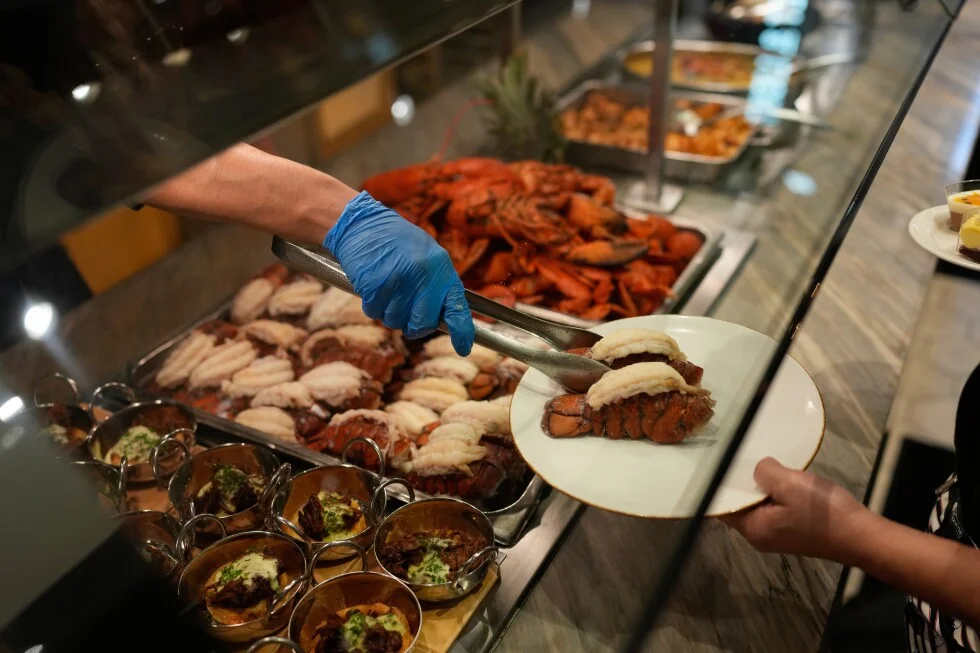
Las Vegas has moved away from the old era of $1 buffets to premium experiences, with luxury buffets priced around $175, as seen at the A.Y.C.E Buffet in the Palms, signaling a significant shift in the city’s dining and hospitality market.
A microbiologist shares insights on food safety and highlights potential risks to avoid. Eating outdoors increases the risk of food poisoning due to lack of proper handwashing facilities and the presence of insects that can transfer germs. Buffets pose a risk of contamination from people touching food and airborne germs. Lukewarm food should be avoided as bacteria can grow rapidly at temperatures below 60 degrees Celsius. Raw shellfish, such as oysters, can harbor harmful germs, and bagged salads have been found to contain pathogens that thrive in salad juices. Proper cooking practices, including checking use-by dates, avoiding cross-contamination, and not reheating cooked rice, are essential. Being aware of food safety measures can help prevent food poisoning.