Energy-fueled May push lifts U.S. producer prices to multi-year high
U.S. producer prices rose in May driven by a surge in energy costs, producing the largest year-over-year increase for the PPI since 2022 and signaling ongoing inflation pressures.
All articles tagged with #bureau of labor statistics

U.S. producer prices rose in May driven by a surge in energy costs, producing the largest year-over-year increase for the PPI since 2022 and signaling ongoing inflation pressures.

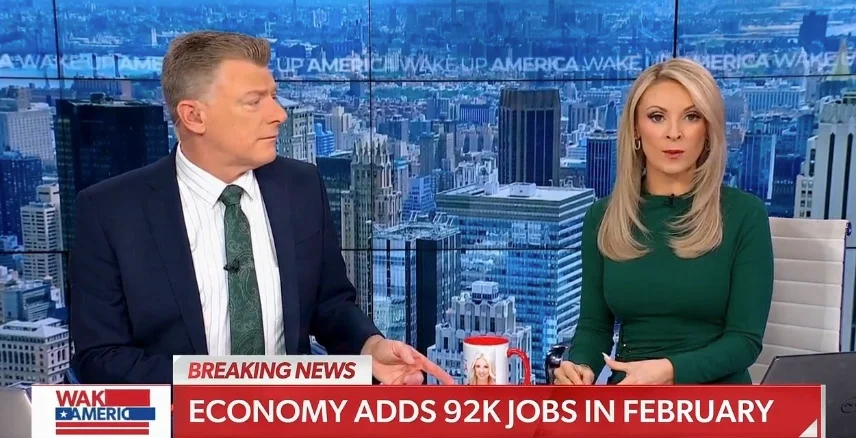
Newsmax’s Marc Lotter corrected co-host Sharla McBride on air after she claimed February’s jobs report added 92,000 jobs; the correction stated the economy actually lost 92,000 jobs, with December revisions downward by 65,000, totaling about a 17,000 net December loss. The data coincided with a sharp market drop (Dow ~900 points, S&P 500/Nasdaq ~1.6%), a small uptick in unemployment to 4.4%, and warnings that healthcare hiring could fall if proposed Medicaid cuts pass in President Trump’s plan.

The U.S. labor market weakened in February, with payrolls down 92,000 and the unemployment rate at 4.4%. This marks the worst job loss since October and comes after downward revisions to December and January gains. Health care shed 28,000 jobs largely due to strikes, signaling a cooling labor market and potential shifts in expectations for future policy actions.

U.S. producer prices rose 0.5% in January, hotter than the 0.3% consensus and December’s revised gain, with the year-over-year PPI at 2.9% and core PPI up 0.8% MoM (3.6% YoY). The report shows persistent wholesale inflation, as final-demand services jumped 0.8% (led by trade services) while final-demand goods fell 0.3% (energy and food declines, with gasoline driving much of the drop). This could feed into consumer prices in coming months, even as CPI appeared cooler in January.

President Trump said he intends to nominate Brett Matsumoto, a former BLS economist now with the White House Council of Economic Advisers, to run the Bureau of Labor Statistics, replacing Erika McEntarfer. Matsumoto has a decade-long background in price index measurement at the BLS and previously served at the CEA; the nomination follows controversy over a prior pick. The BLS is a nonpartisan data agency, and the move comes as payroll data revisions for 2025 are expected to show slower job growth.

President Trump nominated Brett Matsumoto, a career BLS economist known for explaining data, to head the Bureau of Labor Statistics after firing the previous commissioner over weak jobs numbers; his Senate-confirmation is required, and the agency—scarred by turnover and morale issues—faces staffing challenges, but officials say the data remains reliable and less prone to political interference under a conventional leadership.

President Trump announced he will nominate Brett Matsumoto, a White House economist and veteran staffer, to lead the Bureau of Labor Statistics, filling the post left vacant after he dismissed the prior commissioner following a weak jobs report.

Wall Street economists warn that November's US inflation report, showing a sharp decline, may be flawed due to missing data caused by the government shutdown, leading to skepticism about the accuracy of the figures and their impact on monetary policy.

In September, consumer prices increased at a 3% annual rate, the highest since January, signaling a rise in inflation according to the Bureau of Labor Statistics.

The White House announced that there will likely be no inflation report released in November due to the ongoing government shutdown, which has paused data collection by the Bureau of Labor Statistics. This absence of data could impact the Federal Reserve's decision-making on interest rates and leave markets and policymakers without crucial information on inflation trends.

The US government is unlikely to release October inflation data due to the ongoing shutdown, which has halted data collection activities at the Bureau of Labor Statistics, marking the first time such data is not published in history. This delay could impact markets, businesses, and the Federal Reserve's decision-making.

During the government shutdown, businesses and policymakers turned to alternative private sector data sources like restaurant reservations, hotel occupancy, and job listings to gauge the economy, highlighting the importance of the official data from the Bureau of Labor Statistics, which remains the gold standard for economic measurement despite the availability of various unconventional indicators.

The US Labor Department's Bureau of Labor Statistics will resume work on September's consumer price index report despite the ongoing government shutdown, with the report scheduled for release on October 24, nine days later than planned, while other data releases remain delayed due to the shutdown.

The Bureau of Labor Statistics is recalling staff to finalize and release the delayed Consumer Price Index (CPI) data, crucial for determining the Social Security Cost of Living Adjustment (COLA), which was postponed due to the government shutdown. The CPI data, essential for economic and Federal Reserve decisions, is now expected to be released soon, ensuring timely COLA calculations despite other delayed reports like September's unemployment figures.

The Bureau of Labor Statistics is partially resuming work to release the September Consumer Price Index data despite the federal government shutdown, which has delayed key economic reports, including the jobs report, but the CPI data will be available in time for the Federal Reserve's upcoming meeting.