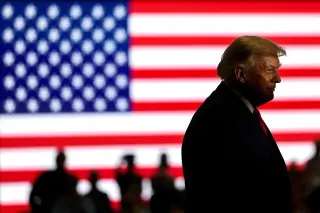
A Reuters analysis indicates that 41 of 62 Republican candidates in competitive races are distancing themselves from President Trump ahead of the November midterms. This strategic retreat follows a sharp drop in the generic ballot and reflects widespread concern over the president's low approval ratings and unpopular economic policies.
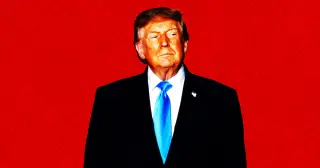
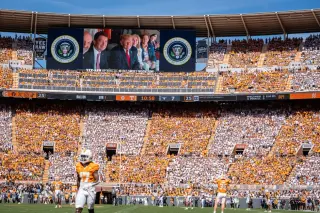
President Trump is continuing his 32-day pre-election travel schedule, prioritizing college football games in swing states like Georgia and North Carolina over traditional campaigning. While the White House argues these visits energize core supporters, critics note his sinking approval ratings and the risk of alienating voters due to the Iran war and high gas prices. A potential hurricane could disrupt the itinerary, but the administration maintains that attending marquee sporting events reinforces Trump's 'Sports Guy' brand, despite concerns that the time spent at stadiums detracts from substantive political work.
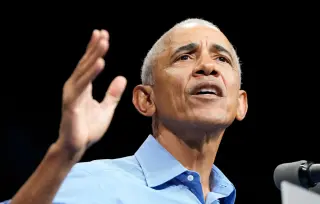
With four weeks left until Election Day, former President Barack Obama is intensifying his role as the Democratic Party’s primary surrogate, launching ads for 24 Senate and gubernatorial races and appearing in key battlegrounds. His strategy targets persuadable voters in states with close races, leveraging his high favorability ratings to counter a Democratic leadership vacuum. While some critics argue his focus on moral narratives ignores economic concerns, others note his impact on turnout in critical states like Michigan and Texas.
President Trump drove the presidential limousine at speeds near 100 mph on wet roads to reach an Oklahoma rally after storms grounded his aircraft. This incident highlights his aggressive 32-day campaign blitz ahead of the November 3 midterms, focusing on deep red states to boost Republican turnout despite economic concerns.
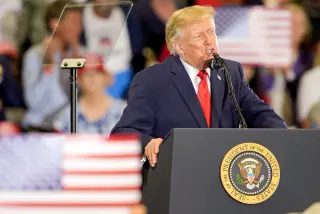
President Donald Trump returned to Mobile, Alabama, on October 2, 2026, to hold a campaign rally five weeks before the midterm elections. The visit marked a return to the site of his 2015 political breakthrough, where he first addressed tens of thousands of supporters. While the event aimed to energize the Republican base, attendance was lower than in previous years, and the rally occurred amid broader struggles for the GOP, including internal clashes and economic concerns. Trump used the trip to promote local projects and endorse candidates, such as Senator Tommy Tuberville, signaling a strategy to rely on core supporters to offset declining national approval ratings.
Senate Democratic Leader Chuck Schumer expressed confidence that his party can overcome a massive Republican funding advantage in the final weeks of the midterm campaign, framing the race as a contest between GOP dollars and Democratic candidate quality. While acknowledging the risk of losing, Schumer characterized the outcome as a '50/50' proposition, emphasizing that Democrats possess a superior political climate and stronger candidates. This optimism follows a period of internal party struggles, including contentious primaries, and comes as both parties prepare for a seven-week recess. The assessment contrasts sharply with Republican claims of a guaranteed majority, highlighting a deeply contested battleground across several key states.
Senate Majority Leader John Thune and Whip John Barrasso are embarking on extensive campaign tours across key battleground and red states in the final weeks before the November midterms. Thune plans stops in North Carolina, South Carolina, Florida, Iowa, Nebraska, Kansas, Minnesota, and Michigan, while Barrasso targets Ohio, Montana, Kansas, and Kentucky. This intensified effort comes as Republicans face unexpectedly competitive races in states previously considered safe, including Ohio, Michigan, Iowa, and Kansas. Thune described the outlook as a 'jump ball,' noting that while the party has raised over $500 million, the outcome depends on execution in margin-of-error races. The campaign surge coincides with internal party tensions over affordability messaging and legislative priorities, with some senators criticizing Thune’s cautious approach to cost-of-living issues.
President Trump is prioritizing defensive campaigning in conservative strongholds like Alabama, Ohio, and Texas for the next 30 days. While this aims to mobilize base support, it limits opportunities to pressure Democrats in competitive states. Local security measures are intensifying ahead of a rally in Mobile, Alabama, amid concerns over threats and protests.
President Trump is expanding his October campaign schedule to include deep-red states like Iowa, Florida, Texas, and Alaska, alongside previously announced stops in Oklahoma and Alabama. This shift aims to shore up Republican majorities as voter dissatisfaction grows over high costs, the Iran war, and mass deportations. While the White House frames this as base energizing, internal GOP polling shows competitive races in traditionally safe areas, prompting a strategic pivot to protect core territories before the November midterms.
Republican Florida gubernatorial candidate Byron Donalds has significantly reduced references to President Donald Trump on his campaign website, replacing prominent endorsements and photos with a focus on affordability and policy. While Donalds maintains he still supports the president's agenda, the shift reflects a broader trend among Republicans distancing themselves from the unpopular president ahead of the November general election.
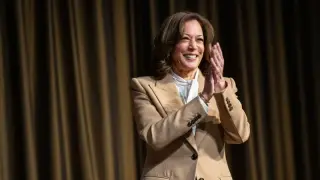
Kamala Harris is delaying a firm decision on a 2028 presidential run, pursuing a low-profile, Malibu-style strategy focused on the midterms with regular supporter calls and planned early-state appearances, while not offering major policy speeches or a clear yes/no, effectively letting rivals wait and watch.
Democrats are updating their midterm messaging to directly address a new wave of GOP anti-trans attacks, urging candidates to state clear positions and then pivot back to voters’ concerns like costs and daily living; Republicans are leaning into anti-trans rhetoric with wide ad campaigns and convention speeches, while Donald Trump uses the Dallas convention to mobilize the base with turnout-focused promises such as $5,000 checks.
Rep. Tom Kean Jr.’s long-standing, low-profile campaigning is facing backlash as a four-month absence, sparse town halls, and opaque fundraising invite renewed scrutiny in a competitive New Jersey district against Democrat Rebecca Bennett, threatening to erode his name-brand legacy and complicate his alignment with Trump-era politics.
Democrats are betting on Sen. Jon Ossoff’s tightly managed, clip-ready messaging to beat Rep. Mike Collins in Georgia, with Ossoff described as meticulous about every detail and content sign-off; polling currently shows him ahead, while the roundup also notes ethics-reform efforts, Florida primary drama, and other partisan messaging battles shaping the midterms.
Sen. Jon Ossoff’s 2026 reelection bid in Georgia is being run with unusually tight control over messaging and a knack for generating viral moments, as his team scripts speeches, blasts Trump on foreign policy, and buys national ads to raise his profile, all while he denies White House ambitions and concentrates on winning a pivotal Senate contest in a state that could shape the chamber.