
New Study Links Venus’s Longest Channels to Carbonatite Lava and a Potential Climate Shift
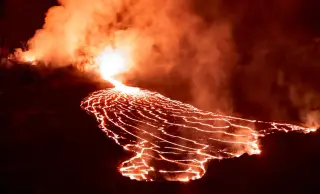
A 2025 study in Science Advances proposes that Venus’s vast canali, including the 6,800-kilometer Baltis Vallis, were carved by carbonatite lava rather than water or standard basalt. This low-viscosity, carbonate-rich melt could travel much farther than other lavas and release significant carbon dioxide, potentially helping build Venus’s current thick atmosphere. The hypothesis suggests a late-stage climate catastrophe where rising temperatures melted carbonate-rich crust, releasing greenhouse gases and ending a potentially temperate era. While the model fits the observed channel lengths better than basalt or komatiite, it requires extreme eruption rates and volumes not seen on Earth. Future missions like NASA’s VERITAS and ESA’s Envision, launching no earlier than 2031, may test this theory through high-resolution radar and spectral analysis, though direct sampling remains unlikely.