Tag

Caregiving

All articles tagged with #caregiving

Bringing Mom Home With Parkinson’s: A Caregiver’s Wake-Up Call
health1 day ago

Bringing Mom Home With Parkinson’s: A Caregiver’s Wake-Up Call

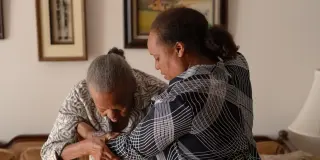
A California woman recounts moving her 78-year-old mother with Parkinson’s into their home to avoid a costly assisted-living facility, only to face intense daily caregiving demands, constant interruptions during work, safety risks from stairs and a large dog, and financial strain. After escalating stress, they moved her to a smaller, more communal facility with in-home support and, eventually, hospice, which provided better care and allowed the family to regain balance and quality time together.

Medicaid Cuts Endanger At-Home Care for Disabled Family Members
us-news12 days ago

Medicaid Cuts Endanger At-Home Care for Disabled Family Members

Trump-era Medicaid reductions threaten in‑home care for millions by slashing funding for self‑directed caregiver programs; with Maryland already cutting caregiver wages and hours and other states moving toward similar cuts, families like Melissa Gonce’s—who cares for her nonverbal son Jason—face tough choices about keeping loved ones at home and maintaining stability.

Ryan Reynolds Opens Up About His Father’s Hidden Parkinson’s Hallucinations and Family Struggles
health13 days ago

Ryan Reynolds Opens Up About His Father’s Hidden Parkinson’s Hallucinations and Family Struggles

Ryan Reynolds reveals how his father James, diagnosed with Parkinson’s at 52, later developed vivid hallucinations and delusions that doctors initially attributed to other causes, leaving his wife Tammy an overwhelmed caregiver. He details the loneliness and miscommunication around non-motor PD symptoms, the dangers of older antipsychotics for PD patients, and the shift to newer, safer treatments. Reynolds reflects on their strained relationship, the care his family provided, and his advocacy for awareness through the Michael J. Fox Foundation, urging others to openly discuss cognitive symptoms to improve empathy and quality of life for patients and caregivers.

Caregiving burnout: the hidden toll of looking after loved ones
health29 days ago

Caregiving burnout: the hidden toll of looking after loved ones

More than 63 million Americans are caregivers, and burnout goes beyond workplace fatigue due to emotional, physical, and financial strain. Experts describe 'secondhand stress'—absorbing a loved one’s pain—as a key factor, and many face additional burdens like balancing a job and mounting costs. The piece offers coping tips (short, affordable self-care, outsourcing tasks) and resources (AARP’s Care for the Caregiver guide, support groups, veteran benefits) while noting Medicare doesn’t cover ongoing long-term care.

Caregiver burnout: navigating secondhand stress and costs
explain-it-to-me1 month ago

Caregiver burnout: navigating secondhand stress and costs

Caregiving burnout affects millions beyond the workplace, driven by secondhand stress—the emotional spillover from caring for a loved one—and mounting financial strain. Vox’s Explain It to Me outlines what secondhand stress is, how finances complicate burnout, and practical coping tips (micro-breaks, outsourcing tasks, leveraging benefits, and joining counseling or caregiver support groups) to help caregivers protect their well-being while supporting those they care for.

The Caregiver Paradox: Why Being the Rock for Others Can Leave You Lonely in Midlife
health1 month ago

The Caregiver Paradox: Why Being the Rock for Others Can Leave You Lonely in Midlife

Half of U.S. older adults report social isolation with health risks comparable to smoking; the piece describes how compulsive caregiving creates an identity built on being useful rather than being loved, leaving people without reciprocal support when they need it. Rewriting this script means embracing vulnerability, asking for help, and building authentic friendships—not just maintaining usefulness—to sustain connections in later life.

Caring Around the Clock After a Young-Onset Dementia Diagnosis
health1 month ago

Caring Around the Clock After a Young-Onset Dementia Diagnosis

Jill Scott became her husband Stuart's full-time carer after his early-onset dementia diagnosis at 61, ending their retirement plans and leaving them feeling isolated with few services tailored to younger patients, as they join local groups and plan 'dementia adventures' to keep life hopeful, amid more than 70,000 in the UK living with young-onset dementia.

Becoming Her Voice: A Daughter's Dementia Journey
health2 months ago

Becoming Her Voice: A Daughter's Dementia Journey

CherylAnn Haley, a Tampa-based private aide and dementia educator, cares for her mother Sandy, who developed vascular dementia in her 70s. After a long decline—including getting lost, moving from home to assisted living, then memory care, and finally hospice—Haley has become Sandy’s eyes, ears, and voice, advocating for her needs, interpreting her behaviors for caregivers, and sharing the emotional toll of caregiving while finding support from the Dementia Society of America.

Caregiver's Leap: Bucks County Dream Home Hits Market as Alzheimer's Changes Their Future
lifestyle3 months ago

Caregiver's Leap: Bucks County Dream Home Hits Market as Alzheimer's Changes Their Future

Karen Sandone puts their Bucks County dream home on the market after her husband Anthony, diagnosed with early-onset Alzheimer's at 55, can no longer be left alone. She plans to downsize to a maintenance-free 55-plus community in 2026 to ease finances and caregiving duties while preserving their life and memories together.

Alzheimer’s Agitation: A Brain Change Often Mistaken for Burnout
health3 months ago

Alzheimer’s Agitation: A Brain Change Often Mistaken for Burnout

The article explains that agitation is a common, brain-based symptom of Alzheimer's caused by brain changes that disrupt emotion regulation and by imbalances in neurotransmitters such as serotonin, norepinephrine, and dopamine. It notes caregivers often blame themselves, but agitation increases with disease progression (about 56% in early stages to 68% in moderate-to-severe stages). Environmental stressors, like large gatherings or disrupted routines, can worsen it. The piece offers practical management tips—maintaining daily routines, avoiding arguments, using calming approaches, and consulting healthcare providers about treatments—while emphasizing caregiver support and self-care.

Fitbit founders launch Luffu AI to ease family caregiving
technology3 months ago

Fitbit founders launch Luffu AI to ease family caregiving

Fitbit co-founders James Park and Eric Friedman unveiled Luffu, an AI-powered “intelligent family care system” that ties together health data from apps, portals and devices, learns routines, and flags meaningful changes across family members (and pets). Users can log information via voice, text or photos and ask plain-language questions, with privacy controls and configurable Guardian access to share data. The private-testing startup, about 40 employees, aims to ease the caregiving burden for roughly 63 million U.S. adults and plans to expand into hardware later.

Preparing for the End: A Model for Dying With Dignity
health3 months ago

Preparing for the End: A Model for Dying With Dignity

NYT profile of Brian Cahill, a 58-year-old with metastatic prostate cancer who reorganizes his life around care, planning, and relationships. He builds a supportive circle for medical decisions, relocates from NYC to Cincinnati for affordable hospice care, and even considers a temporary drug holiday to regain energy and autonomy. The piece frames a “good death” as one shaped by preparation, connection, and living fully within limited time, using his experiences as a blueprint for dying with dignity.

Reading Aloud: A Lifeline Through Dementia's Fog
health3 months ago

Reading Aloud: A Lifeline Through Dementia's Fog

Jo Glanville reflects on caring for her parents with dementia and describes how reading aloud to them kept them mentally engaged and connected to the world, challenging the idea that late-stage dementia means a complete loss of understanding. She cites evidence from The Reader’s reading groups and argues against assisted dying, calling for ongoing advocacy and care for people with dementia.