
Tag

Cavitation

All articles tagged with #cavitation

Simple Liquids Can Crack: New Breakthrough in Fluid Fracture
science1 month ago

Simple Liquids Can Crack: New Breakthrough in Fluid Fracture

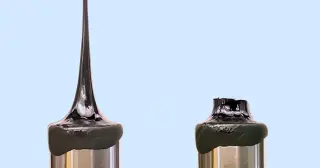
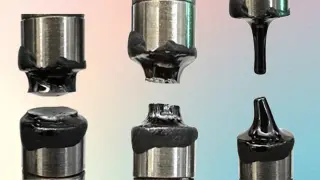
Drexel researchers, led by Thamires Lima, found that even simple, nonelastic liquids can fracture under high tearing stress, showing brittle-crack-like failure with crack speeds of roughly 500–1,500 m/s and a critical stress near 2 MPa—challenging the notion that only elastic or viscoelastic fluids crack. The cracks form rapidly after nucleation, aided by cavitation and lacking elastic energy dissipation, unlike slower cracks in complex fluids. Using extensional rheology and high-speed imaging, the team demonstrated that simple fluids can fracture, with potential implications for propellers, inkjet printing, soft robotics, and more; they also suggest that a deeper mechanism—perhaps cohesive energy—is at play and that faster testing could reveal cracking in even less viscous liquids.

Plants Under Stress Emit Ultrasonic Clicks Humans Can’t Hear
science4 months ago

Plants Under Stress Emit Ultrasonic Clicks Humans Can’t Hear

Researchers recorded stressed tomato and tobacco plants and found they emit airborne ultrasonic clicks not audible to humans. Stressed plants produce roughly 30–50 sounds per hour (healthy plants are mostly silent), with sounds varying by stress type (dehydration vs. cutting). A machine-learning model could distinguish healthy vs stressed plants and identify the stress type and plant species. The exact origin may be cavitation, and it’s unclear if these sounds are deliberate signals or byproducts. Ecologically, other organisms might hear and respond to these signals, and there could be agricultural uses for monitoring crop health and irrigation.

When Liquids Snap: A New Solid-Like Fracture Under Stress
science4 months ago

When Liquids Snap: A New Solid-Like Fracture Under Stress

Scientists found that simple, viscous liquids can fracture like solids when pulled beyond a 'critical stress,' with the threshold depending on stress per area rather than viscosity. The rapid fractures travel at 500–1,500 m/s—consistent with cavitation—and were observed in tar-like hydrocarbons and styrene oligomer, hinting that many liquids might exhibit this behavior and opening potential for applications in inkjet printing, soft robotics, and 3D printing.