Simple Liquids Can Crack: New Breakthrough in Fluid Fracture
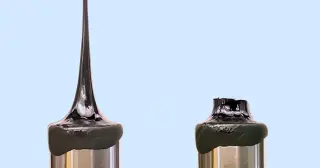
Drexel researchers, led by Thamires Lima, found that even simple, nonelastic liquids can fracture under high tearing stress, showing brittle-crack-like failure with crack speeds of roughly 500–1,500 m/s and a critical stress near 2 MPa—challenging the notion that only elastic or viscoelastic fluids crack. The cracks form rapidly after nucleation, aided by cavitation and lacking elastic energy dissipation, unlike slower cracks in complex fluids. Using extensional rheology and high-speed imaging, the team demonstrated that simple fluids can fracture, with potential implications for propellers, inkjet printing, soft robotics, and more; they also suggest that a deeper mechanism—perhaps cohesive energy—is at play and that faster testing could reveal cracking in even less viscous liquids.