Financial analyst Josh Brown has added a little-known pharmaceutical company to his recommended stock list, suggesting it may offer significant value to investors despite its low public profile.
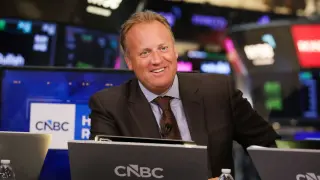
Rick Santelli, CNBC’s long-time economic-indicators analyst known for his blunt, market-focused commentary, plans to retire from CNBC as a full-time employee on October 2, 2026, though he will remain a contributor. A CNBC veteran since 1999, Santelli’s on-air moments — including a 2009 Tea Party–era rant about President Obama’s mortgage plan — helped define the network’s persona. His last day will coincide with the next U.S. jobs report, with CNBC noting his dedication to covering Fed days and key data releases.
CNBC updates NBA valuations after the pending $12.5 billion Lakers sale, lifting the league’s average team value to about $6.68 billion and pushing the Warriors to $13 billion; the Knicks and Bulls each rise roughly 26%, with all 30 teams revalued based on sale dynamics, arena economics, market size, and investor interest.
The article flags two major factors likely to move stocks in the coming week, offering investors guidance on what to watch for potential volatility or opportunity.
CNBC’s 2026 quality-of-life ranking lists Arkansas, Oklahoma, Alabama, Missouri, Utah, Georgia, Louisiana, Indiana, Texas and Tennessee as the bottom 10 states to live in, all Republican-led, prompting critics to allege liberal bias in the criteria despite ongoing population growth in several of those states. The ranking factors include crime, air quality, healthcare, childcare, inclusiveness, and reproductive rights, with some commentators arguing the metrics unfairly penalize conservative policy environments.
CNBC's 2026 quality-of-life ranking places all 10 bottom spots in Republican-led states, prompting accusations of liberal bias even as Census data show red states gaining residents and ongoing migration from blue states to the Sun Belt.
Elon Musk postponed his CNBC interview with Julia Boorstin that was to cover Tesla, SpaceX’s historic IPO and the Grok AI model; the report also highlights SpaceX’s IPO details and broader AI industry moves from OpenAI, Anthropic and Meta, reflecting Musk’s evolving stance toward AI rivals.
Connecticut rose five places to 23rd in CNBC’s 2026 America's Top States for Business rankings, aided by a heavier emphasis on infrastructure and CT’s strong performance in education (4th) and quality of life (5th). The state also ranked well in technology/innovation (19th), business-friendliness (21st), access to capital (23rd) and workforce (25th), while affordability remained a weakness (cost of doing business 40th, cost of living 44th). CNBC evaluated 50 states across 138 metrics; Ohio topped the list, followed by North Carolina (2), Virginia (3), Texas (4) and Minnesota (5). Among New England states, Massachusetts ranked 15th and Connecticut 23rd.
Ohio is named CNBC’s 2026 Top State for Business, led by top Infrastructure and Cost of Doing Business scores, with strong site-readiness programs and a landmark $4.2B, 10-gigawatt data-center project; still, Education and Workforce remain weaknesses as the state plans a $300M JobsOhio effort to close its skills gap amid an affordability debate in the governor’s race.
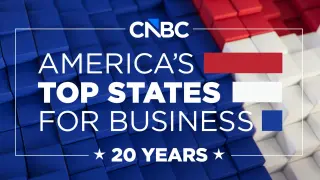
CNBC's 2026 Top States for Business, now in its 20th year, ranks all 50 states using 138 metrics across 10 categories. Infrastructure is the top-weighted factor and permitting ease is counted for the first time, with the economy sliding to second and workforce remaining key. Ohio leads, followed by North Carolina and Virginia, with Texas and Minnesota rounding out the top five, reflecting shifts in how states balance infrastructure, economy, and workforce to attract investment.
During a CNBC interview from the Oval Office, Trump says he feels bad his family faces conflicts of interest over investments, reveals his son Eric handles his finances via semi‑blind trusts, vows to oust Fed Governor Lisa Cook, offers a tepid stance on a bipartisan housing bill while pushing to attach the SAVE Act, and accuses liberal Supreme Court justices of voting as a bloc.
CNBC anchor Joe Kernen’s Oval Office interview with Donald Trump was unusually deferential, as Kernen echoed the president’s boasts, fawned over Trump’s wealth and his new Air Force One, and even brought along Kernen’s son, while Trump dodged a focused critique and steered the conversation back to praise.
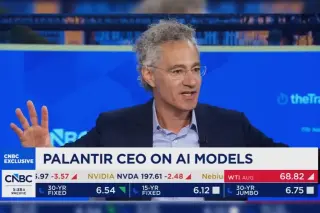
Palantir CEO Alex Karp appeared to melt down during a live CNBC Squawk Box interview, rambling for about 20 minutes about the AI boom and related worries, with the hosts visibly perplexed as his stream-of-consciousness tirades and digressions overshadowed the intended discussion on a Palantir–Nvidia AI infrastructure deal.
During a CNBC interview, Trump defended his business dealings and his family’s finances as being managed by outside firms, while asserting the presidency has grown stronger under a recent Supreme Court ruling that expands the president’s power over independent agencies (with limits on firing Fed officials). He floated potential government stakes in OpenAI and Intel, pushed the Save America Act and housing bills, and touted U.S. leadership in AI and chip manufacturing, alongside debatable claims about tariffs, GDP, and the Iran war. He also criticized opponents as communists and noted his children’s business interests are largely overseen by others.
Palantir CEO Alex Karp delivered a high-energy CNBC interview railing against frontier AI firms' token-based models, warning about intellectual-property security, criticizing proposals for wealth taxes on tech companies, and weighing in on politics and Israel, all while addressing past drug-use rumors and turning the appearance into a televised spectacle.