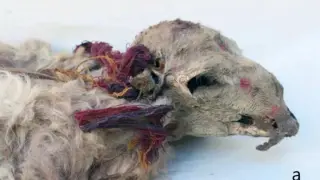
New findings at the Tambo Viejo site in Peru suggest the Inca performed sacrificial rituals by burying decorated llamas and guinea pigs alive, contradicting Spanish colonial accounts that claimed such offerings were burned.
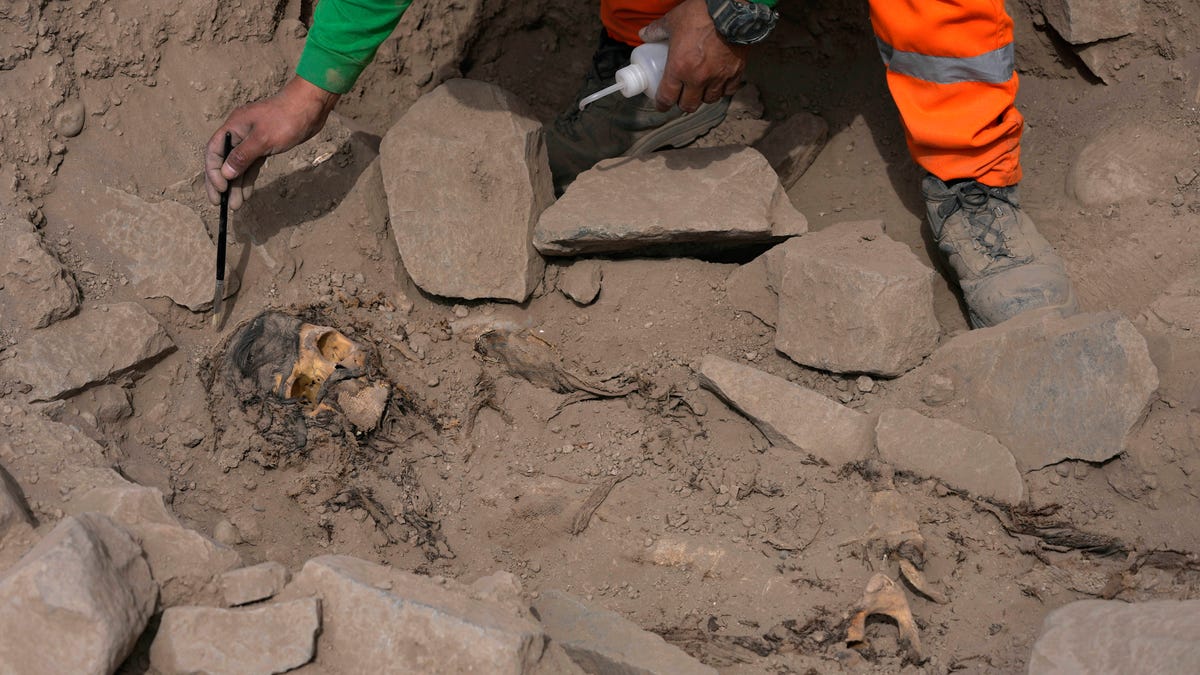
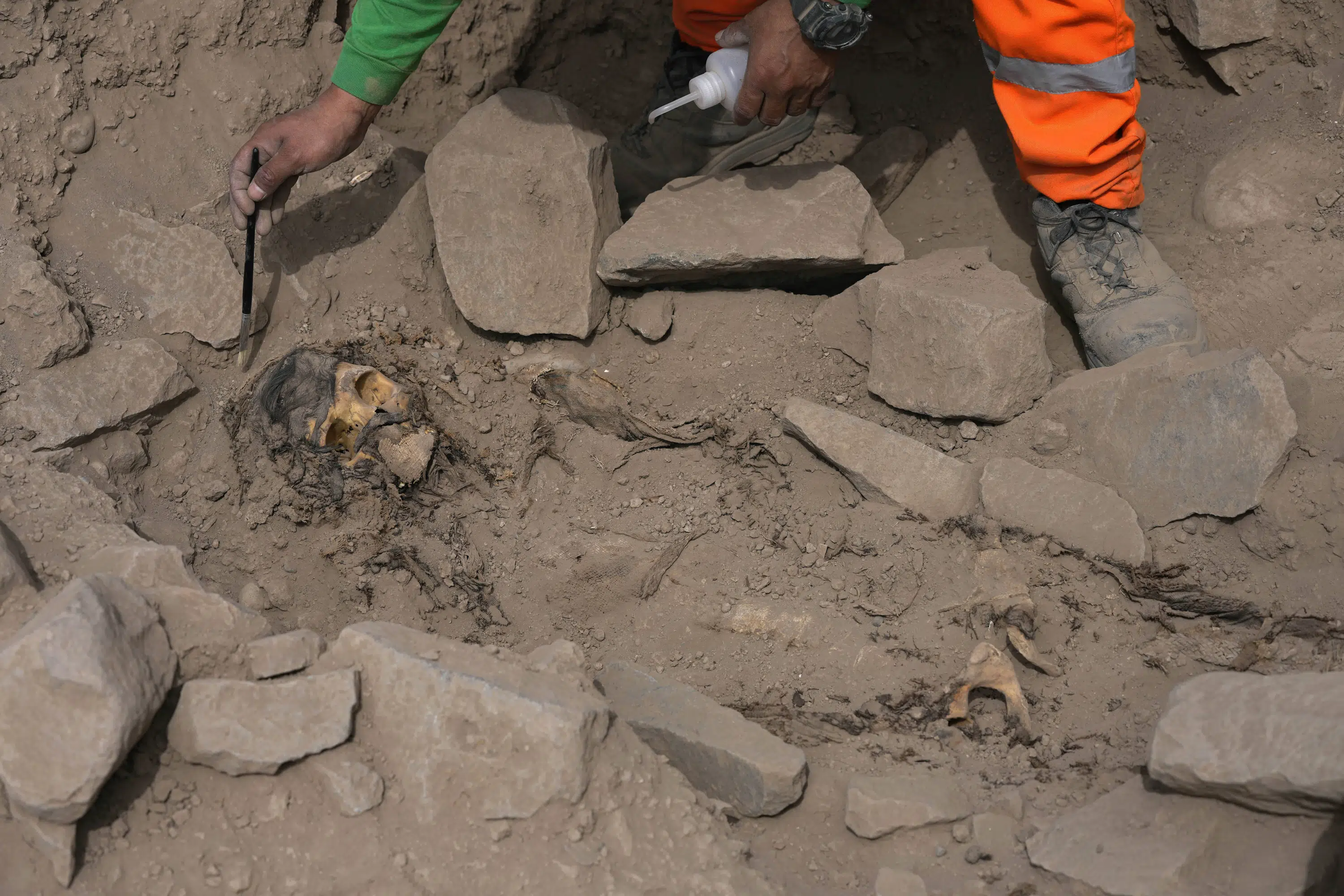
Archeologists in Peru have discovered a pre-Hispanic mummy buried in a ritual that included coca leaves and seashells. The mummy was found on top of a destroyed U-shaped clay temple, buried one meter down, and surrounded by stones. The body was tied with a rope braided from vines of vegetable origin, a pattern seen in ceremonies. The mummy has not yet been dated, but old fly eggs found next to the skeleton suggest the body was exposed for several days before being buried. The hill where the mummy was found is a "huaca," a Quechua word meaning oracle or sacred place.
Archaeologists in Peru have discovered a pre-Hispanic mummy buried in a ritual that included coca leaves and seashells on top of a destroyed U-shaped clay temple. The mummy, which has not yet been dated, was found with its lower extremities tied with a rope braided from vines of vegetable origin. The burial site was on top of a hill in Lima, which was a "huaca," a Quechua word meaning oracle or sacred place. Mummies and other pre-Hispanic remains have been found in unusual places in the city.
Archaeologists in Peru have discovered a pre-Hispanic mummy buried in a ritual that included coca leaves and seashells on top of a destroyed U-shaped clay temple. The mummy was found on a hill in Lima next to the practice field of a professional soccer club. The body was tied with a rope braided from vines of vegetable origin and surrounded by stones. The mummy has not yet been dated, but old fly eggs found next to the skeleton suggest that the body was exposed for several days before being buried.