
Tag

Comet Tempel Tuttle

All articles tagged with #comet tempel tuttle

2026 Leonid Meteor Shower Expected to Be Weak as 1966 Storm Anniversary Passes
science11 days ago

2026 Leonid Meteor Shower Expected to Be Weak as 1966 Storm Anniversary Passes

The 2026 Leonid meteor shower is expected to be weak, with peak rates of only 10 to 20 meteors per hour, marking a quiet anniversary of the 1966 storm. While the 1833 and 1966 events produced thousands of meteors per hour, current conditions offer limited visibility due to the comet's distance from the sun. Experts predict the next significant outburst may occur in 2034, though Jupiter's gravitational influence could disrupt future storms.
"Get Ready for the Spectacular Leonid Meteor Shower this Weekend"
astronomy3 years ago

"Get Ready for the Spectacular Leonid Meteor Shower this Weekend"

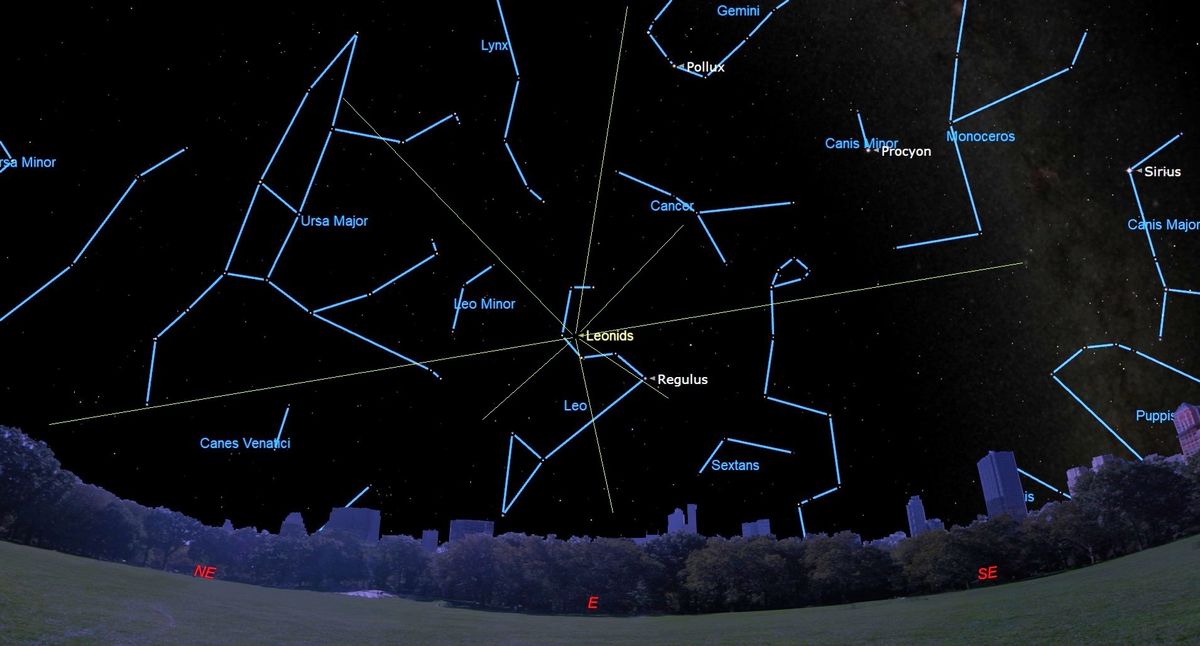
The Leonid meteor shower, known for its spectacular displays in the past, is expected to reach its peak on Saturday morning. However, this year's shower is predicted to be weak, with only 10 to 15 meteors per hour. To maximize your chances of seeing the meteors, find a dark, non-light polluted area and look towards the Leo constellation after midnight. The Leonids are caused by the periodic Comet Tempel-Tuttle, which leaves a trail of debris in its wake. While this year's shower may be underwhelming, future years are expected to bring more impressive displays.

Don't Miss the Spectacular Leonid Meteor Shower This Weekend!
astronomy3 years ago

Don't Miss the Spectacular Leonid Meteor Shower This Weekend!

The Leonid meteor shower, one of the fastest meteor showers, is set to peak on November 18. Viewers can expect to see around 10-15 meteors per hour in the early hours of Saturday morning. The shower occurs when Earth passes through the debris left behind by the comet Tempel-Tuttle. While not as impressive as the Taurid meteor shower, the Leonids still offer a beautiful show. Meteor storms, with an unprecedented number of comets, have been observed in the past, but they only occur roughly every 33 years. To get the best view, viewers should find a dark location away from city lights and give their eyes time to adjust.