Tag

Consciousness

All articles tagged with #consciousness

Death as Reorganization: Physics Says You Don’t Vanish
science16 days ago

Death as Reorganization: Physics Says You Don’t Vanish

Physics says when you die, your atoms don’t vanish; they disperse into soil, air and other living systems, while the pattern that defined you—the brain’s arrangement of those atoms—unravels as energy flow ceases. Memories and personality are tied to this arrangement, not to any single atom, so personal identity ends even as matter persists and recycles throughout the universe.

Brain Biophotons: A Possible Light Pathway to Consciousness
science20 days ago

Brain Biophotons: A Possible Light Pathway to Consciousness

Scientists propose that brain tissue emits biophotons (light particles) that could carry quantum-like information, suggesting a potential third signaling pathway alongside electrical impulses and chemical synapses. While some experiments show entangled photons can retain correlations through thin brain tissue, the idea is highly speculative and would require more research with specialized detectors and modeling to determine if it influences neural activity or consciousness.

Consciousness as the Hidden Ground of Physics
science25 days ago

Consciousness as the Hidden Ground of Physics

Harald A. Wiltsche argues that physics cannot escape phenomenology: objectivity in physics is not detachment from observers but invariance across frames, achieved through transformation rules; perceptual objectivity shows how our experiences and anticipations about objects from different perspectives ground physical knowledge, meaning the subject–object correlation has always underpinned physics and must be embraced to advance science.

Brains Could Be Tuning Into Earth's Hidden Pulse
science26 days ago

Brains Could Be Tuning Into Earth's Hidden Pulse

Researchers propose a testable idea that human brain activity may respond to faint planet-wide electromagnetic rhythms—Schumann resonances around 7.83 Hz—via membranes, vicinal water, and cerebrospinal fluid. While not proven, the framework links energy, matter, and information to stability of neural activity and outlines concrete experiments to detect coupling, with potential medical implications if supported.

Consciousness First: New Theory Reframes Reality as Emergent from Mind
science1 month ago

Consciousness First: New Theory Reframes Reality as Emergent from Mind

AIP Advances paper by Maria Strømme proposes that consciousness is the foundational field from which time, space, and matter emerge, with individual minds as expressions of a universal consciousness. The theory aims to unite quantum physics with non-dual philosophy, offering testable predictions across physics, neuroscience, and cosmology, and even suggests personal identity survives death within the field. While mathematically framed, it is not yet experimentally confirmed and remains controversial, challenging materialist views and awaiting proof.

Pollan Argues AI Won’t Be Conscious, and Why That Matters
technology1 month ago

Pollan Argues AI Won’t Be Conscious, and Why That Matters

In a WIRED excerpt adapted from A World Appears, Michael Pollan argues that AI can mimic many tasks but is unlikely to achieve true consciousness because embodiment and genuine feelings are central to consciousness, not merely computation. He critiques the Butlin report’s claim that there are no obvious barriers to conscious AI, questions computational-functionalism, and flags the ethical stakes of potential conscious machines— including questions about suffering, empathy, and moral consideration—using Frankenstein as a cautionary frame.

Rat Study Keeps Minds Awake Longer, Stirring Quantum-Consciousness Debate
science1 month ago

Rat Study Keeps Minds Awake Longer, Stirring Quantum-Consciousness Debate

A Wellesley College study found rats given a microtubule-stabilizing treatment stayed conscious longer under anesthesia, lending experimental support to Orch OR—the idea that consciousness arises from quantum processes in the brain—and suggesting quantum effects might persist at physiological temperatures; although controversial, the result fuels the debate on whether consciousness could extend beyond the brain, if validated.

Pollan’s journey into consciousness spans brains, plants, and AI
culture1 month ago

Pollan’s journey into consciousness spans brains, plants, and AI

Michael Pollan’s A World Appears surveys consciousness across animals, plants, and AI, blending neuroscience, philosophy and personal exploration; the Times reviewer praises Pollan’s readable synthesis and measured skepticism toward hype around AI, while noting gaps (dreaming and hypnosis) and inviting readers to rethink what consciousness means in nature and machines.

Consciousness Without the Afterlife: From Brains to Bots
science1 month ago

Consciousness Without the Afterlife: From Brains to Bots

Nature’s book review of Michael Pollan’s A World Appears traces how consciousness remains hard to explain despite brain research; it surveys embodied approaches and theories (like integrated information theory and global neuronal workspace), plant sentience, interoception in the brainstem, and the free-energy principle, while questioning whether AI can ever be truly conscious given current data-driven models and the absence of subjective experience.

Consciousness May Linger After Death, Prompting a Reconsideration of What 'Dead' Really Means
science1 month ago

Consciousness May Linger After Death, Prompting a Reconsideration of What 'Dead' Really Means

A Telegraph-derived report presented at AAAS suggests death is a process and that consciousness may persist for hours after circulatory death. Anna Fowler’s review of over 20 studies indicates some patients recall surroundings during complete heart stoppage, challenging the idea that the brain immediately and permanently ceases activity. The findings raise ethical questions about organ donation practices and advocate redefining death as a staged, negotiable process rather than a single moment, with potential updates to US death definitions.

Eye's Blind Spot May Point to How Consciousness Emerges
science1 month ago

Eye's Blind Spot May Point to How Consciousness Emerges

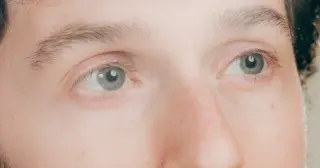
Researchers at the University of Glasgow are testing whether the eye’s blind spot—where the optic nerve enters the eye—can illuminate how consciousness arises by evaluating Integrated Information Theory and predictive-processing models, mapping individual blind spots and using eye-tracking to see how the brain fills perceptual gaps and creates a seamless sense of reality.

Anthropic CEO Questions Claude's Consciousness, Emphasizing Uncertainty
technology1 month ago

Anthropic CEO Questions Claude's Consciousness, Emphasizing Uncertainty

Anthropic CEO Dario Amodei says Claude's consciousness is uncertain and that the company doesn’t know what consciousness would mean for a model, noting Claude Opus 4.6 sometimes rates itself as 15-20% conscious under prompts; the interview echoes in-house philosopher Amanda Askell’s caution and highlights puzzling AI behaviors, stressing careful, safety-focused research over hype.

Last Moments, Bright Minds: Terminal Lucidity in Children
health2 months ago

Last Moments, Bright Minds: Terminal Lucidity in Children

Scientists are studying terminal lucidity, brief and unexpected moments of mental clarity near death, now observed in children as well as adults. The article highlights cases where dying kids regain speech, recognize family, and offer reassurance before death, including a documented case of a 3-year-old with liver and pulmonary failure. Estimates suggest 2–6% of dying individuals experience such episodes, though underreporting may inflate the true rate. The research explores overlaps with near-death experiences, potential neurological triggers, and the implications for end-of-life care—such as how caregivers respond and whether medications should be escalated—advocating a normalization of these experiences while recognizing that more study is needed to understand consciousness and brain function.