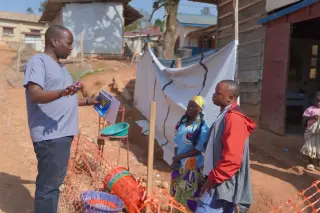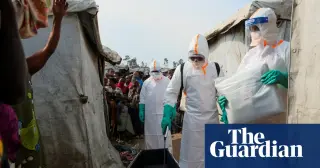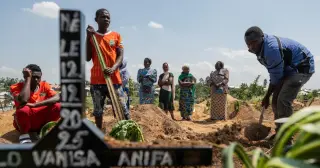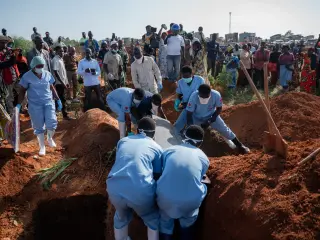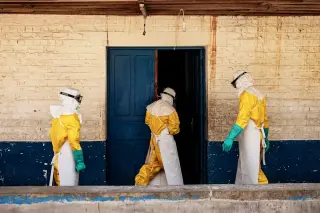
Nearly 300 Ebola-positive people are unaccounted for in the Democratic Republic of the Congo amid conflict and displaced camps, hampering contact tracing as the outbreak expands; WHO modeling suggests thousands of cases in coming months and vaccines/treatment trials are set to begin, though funding remains short.
Eastern Congo's Ebola outbreak has reached 1,003 confirmed cases and 254 deaths, with contact tracing at only about 55% coverage and thousands of potential contacts still unknown; the Bundibugyo virus has no vaccine or treatment, and authorities warn the true scale could be higher amid ongoing violence that hinders access and mass displacement, as the response works to identify patient zero and curb further spread.
DR Congo’s Ebola outbreak could become the deadliest on record, with 837 confirmed cases and 196 deaths; Africa CDC warns it could exceed the West Africa epidemic if not halted soon, as tens of thousands remain untraced and treatment centers are scarce amid community resistance. There is no approved treatment or vaccine yet, and vaccine development could take up to nine months, while funding shortfalls and cross-border cases (including Uganda’s 19) complicate containment.
The third-largest Ebola outbreak is sweeping the Democratic Republic of Congo with over 1,000 cases and 233 deaths; experts warn the true scope may be far larger due to undetected infections and 'unrecognized chains of transmission,' stressing that rapid, comprehensive contact tracing and sustained funding are needed as the outbreak spills into Uganda and poses a risk of reaching Nigeria.
DR Congo reports about 380 confirmed Ebola cases and 60 deaths, with 15 further cases and one death in Uganda. The apparent drop reflects better laboratory confirmation rather than an actual fall in danger, and key goals like tracing 90% of contacts remain unmet (around 45%). Ongoing conflict, community mistrust and burial practices hinder response, and there is no proven vaccine or treatment for this Bundibugyo outbreak.
The Ebola outbreak in the Democratic Republic of the Congo may have begun as early as January, according to WHO chief Tedros, and the response is being hindered by blanket travel restrictions, community mistrust, and low contact-tracing coverage (about 45%). There are 344 confirmed cases and 60 deaths in DRC, plus 15 cases and 1 death in Uganda. The first identified case was a nurse on April 24. There is no vaccine or treatment for the Bundibugyo strain yet, but some patients have survived with timely care; authorities are expanding labs and urging lifting travel bans to accelerate the response, aiming to raise contact tracing above 90%.
The International Rescue Committee warns the Ebola outbreak in the Democratic Republic of the Congo is likely far worse than official figures, with delayed detection and only about 20% of contacts currently being traced. There are over 1,000 suspected cases and 200+ suspected deaths, with 282 confirmed cases and 42 deaths; the virus may have been spreading undetected for months and could be crossing borders to Uganda, Burundi, or South Sudan. Diagnostics shortages and testing backlogs slow confirmation, while people avoid health facilities, risking further spread. The IRC urges urgent funding to boost tracing, testing, treatment, and community engagement. There is no approved vaccine for the Bundibugyo Ebola strain yet, though CEPI is fast-tracking three vaccine candidates from IAVI, Moderna, and Oxford.
The CDC has tightened guidance for those at the highest risk of hantavirus exposure tied to a cruise-ship outbreak, requiring stay-at-home isolation, limited contact with others, avoidance of non-home buildings, and coordinated travel with state or local health departments. Experts say the rules may be hard to follow in practice, but officials emphasize the low overall risk to the public while underscoring the virus’s severity and limited treatment options.
An outbreak of hantavirus on the cruise MV Hondius has led to evacuations and a worldwide contact-tracing effort after several deaths; health authorities say the Andes strain can spread in close contact but the overall risk to the general public remains very low, with British passengers facing 45 days of self-isolation as investigations continue.
California health officials confirmed tuberculosis exposure at Justin Garza High School with one active infection and 22 of 169 exposed testing positive but asymptomatic; a possible exposure was also reported at Sunset Elementary in San Ysidro. No students or staff are currently contagious on campus, and investigators are conducting contact tracing and free screenings. San Diego County TB cases have risen from 193 in 2020 to 265 in 2025, highlighting a rising trend in the state.
Suffolk County health officials say one active tuberculosis case has been identified in the Patchogue-Medford High School community; the investigation is ongoing, with free testing offered to potentially exposed individuals and tests conducted at the high school on Jan. 28 and 30, with a follow-up in March after the two‑month incubation period. No additional cases have been identified and privacy protections are in place.
Two students at Klein Cain High School have been diagnosed with active tuberculosis, prompting health officials to conduct contact tracing and notify potentially exposed students' parents, while emphasizing that TB requires prolonged close contact to transmit and the affected students are receiving medical care and not on campus.
A case of contagious tuberculosis has been confirmed at Cache Creek Casino Resort in Yolo County, prompting health officials to conduct contact tracing and notify potentially exposed individuals. The disease can spread through coughs, sneezes, or speech, and symptoms include a prolonged cough, chest pain, weight loss, and fever. Guests are advised to seek medical advice if they experience symptoms or have compromised immune systems.
The Washington County Sheriff’s Office and local health departments are working to contact over 200 people who may have had contact with an HIV-positive sex worker, Linda Leccesse, arrested in May. Despite efforts, there has been minimal increase in HIV testing, and no new positive cases have been reported. Health officials encourage testing for HIV and other STIs.
Tuberculosis cases have been reported at migrant facilities in Chicago, prompting urgent contact tracing by health officials following a recent measles outbreak. The Chicago Department of Public Health confirmed a small number of cases in multiple shelters and revealed that a fifth of Latin American arrivals carry latent tuberculosis, which is not contagious or symptomatic. While the situation is concerning, officials emphasize that tuberculosis is not a substantial threat to the public and can be treated with antibiotics.