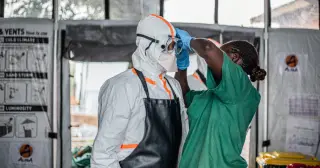
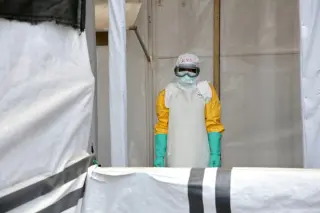
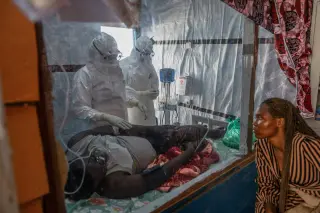
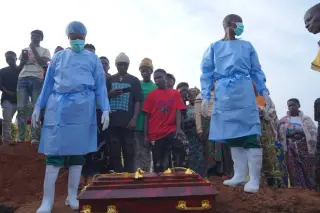
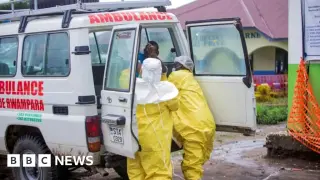
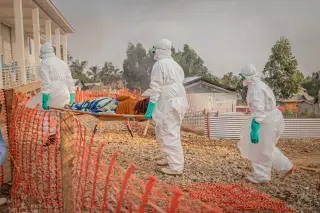
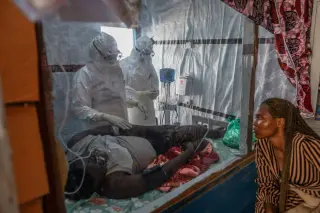
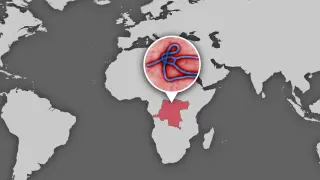
The Ebola outbreak in the Democratic Republic of Congo is accelerating toward what could become the worst on record, with doctors and aid groups warning that funding shortfalls and rampant misinformation are hampering the response and risking more lives without increased international support.
The Democratic Republic of Congo’s Ebola outbreak has reached 5,000 confirmed cases, a majority of which are linked to hard‑to‑reach areas, with NGOs and health authorities racing to scale vaccination, surveillance and treatment as the response struggles to keep pace.
Ebola is spreading in eastern Congo as case detection and contact tracing lag behind, leaving overworked health workers stretched thin amid security and access hurdles while response measures continue.
The Democratic Republic of Congo says about 2,000 people have died in its Ebola outbreak, marking the fastest-growing Ebola crisis on record as health officials race to contain transmission across the country.
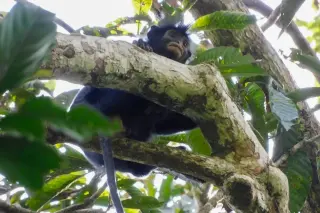
Scientists have identified a new monkey species, Colobus congoensis, locally known as Likweli, in the Congolese Lomami rainforest. The elusive primate weighs about 15 pounds, spans roughly four feet from nose to tail, sports a dramatic black coat with a pink/orange mouth, and emits a low roar. Its range covers about 650 square miles, and genetic analysis suggests it diverged from its closest relative around 5 million years ago.
The CDC confirms a second U.S. citizen working for a humanitarian organization in the Democratic Republic of the Congo has tested positive for Bundibugyo Ebola as Africa's outbreak reaches about 1,830 confirmed cases and 648 deaths; WHO says the global risk remains low. The U.S. is expanding airport screenings and coordinating contact tracing with authorities and the employing organization, while the earlier patient, Dr. Peter Stafford, recovered after evacuation to Germany; no other U.S. cases have been detected.
The World Health Organization launches a trial of two therapeutics for the Bundibugyo strain of Ebola in the DRC, with the first patient enrolled as the outbreak in the DRC (and Uganda) continues. There have been about 1,406 confirmed DRC cases and 438 deaths as of June 30, with 20 Ugandan cases and one French case by July 1. There are no approved vaccines or treatments for this strain yet; the study is coordinated by DRC’s INRB, Belgium’s Institute of Tropical Medicine, and the University of Oxford, aiming to expand safe treatment options.
Ebola cases in the Democratic Republic of Congo have surged past 1,000, with health experts warning the outbreak could be the worst on record—potentially rivaling the 2014–16 West Africa epidemic—while France confirms its first Ebola patient, a doctor returning from humanitarian work who is in stable condition.
The Ebola outbreak in the Democratic Republic of Congo and neighboring Uganda is accelerating, with weekly cases rising roughly 40% and the death toll surpassing 200. Health officials warn that funding lags undermine response: more than $900 million has been pledged, but only about $90 million has been released, while Africa CDC says hundreds more personnel are needed to contain the spread.
DRC’s Bundibugyo virus disease outbreak has risen to 676 confirmed cases with 136 deaths, while Uganda reports 19 confirmed cases (two deaths) and one probable death, for a combined total of 695 cases and 138 deaths. Ituri remains the epicenter and the outbreak is spreading to additional health zones; about 5,768 contacts have been identified with 4,141 under follow-up. Uganda has had no new cases in six days, and transmission is largely linked to importations and healthcare settings. WHO and partners are coordinating a continental response and evaluating candidate therapeutics for trials.
A Bundibugyo virus disease (Ebola) outbreak in the Democratic Republic of the Congo is expanding and has spread to Uganda, with 534 confirmed cases and 93 deaths reported as of 6 June 2026. Cross-border transmission, healthcare worker infections, and security-related access challenges are complicating response efforts. Africa CDC and WHO launched a US$518 million continental preparedness and response plan, and authorities are ramping up testing, contact tracing, infection prevention and control, safe burials, and community engagement. WHO: risk is very high in DRC and high in Uganda; travel restrictions are not advised; there are no licensed vaccines or specific treatments, so containment relies on rapid case finding, isolation, and cross-border collaboration.
More than 1,000 suspected Ebola infections are under investigation in the Democratic Republic of the Congo, with 906 suspected cases and 223 suspected deaths reported as of May 29, and seven confirmed cases in Uganda; the Bundibugyo strain has no approved vaccine or targeted treatment, prompting international response, U.S. travel considerations, and renewed focus on zoonotic spillover risks.
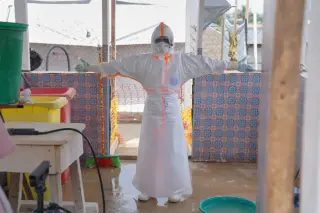
Four nurses in Bunia, Ituri, have recovered from Bundibugyo virus Ebola and were discharged, bringing total recoveries to five (including a lab worker). WHO notes early diagnosis and dedicated care are key to survival. A refurbished Ebola Treatment Centre with 24 beds (expandable to 60) and a planned annex (up to 42 beds) are being set up as the outbreak is investigated further; as of May 31 there were 210 confirmed cases and 17 deaths, with 349 suspected cases under investigation and 16 health workers sick. WHO remains hopeful and is prioritizing candidate treatments and vaccines for trials while continuing response measures and maintaining essential health services.
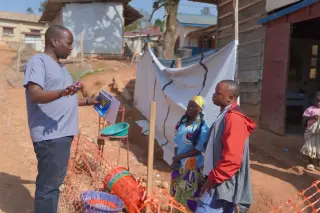
The International Rescue Committee warns the Ebola outbreak in the Democratic Republic of the Congo is likely far worse than official figures, with delayed detection and only about 20% of contacts currently being traced. There are over 1,000 suspected cases and 200+ suspected deaths, with 282 confirmed cases and 42 deaths; the virus may have been spreading undetected for months and could be crossing borders to Uganda, Burundi, or South Sudan. Diagnostics shortages and testing backlogs slow confirmation, while people avoid health facilities, risking further spread. The IRC urges urgent funding to boost tracing, testing, treatment, and community engagement. There is no approved vaccine for the Bundibugyo Ebola strain yet, though CEPI is fast-tracking three vaccine candidates from IAVI, Moderna, and Oxford.
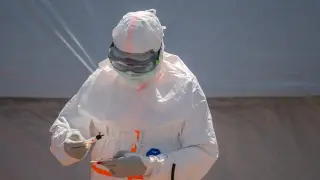
The WHO reports a rapidly evolving Bundibugyo virus disease outbreak in the Democratic Republic of the Congo and Uganda, with 906 suspected cases and 223 deaths in DRC and 134 confirmed cases (nine in Uganda) with 18 deaths as of 29 May 2026. Transmission remains concentrated in Ituri, North Kivu and South Kivu, and cross-border spread, insecurity, and gaps in isolation and follow-up complicate response. A U.S. physician treating patients in DRC tested positive and is being treated in Germany. Public health measures include rapid response teams, enhanced surveillance, lab confirmation, infection prevention and control, safe treatment centers, and community engagement; there are no approved vaccines or specific treatments. WHO assessed national risk as very high in DRC, high regionally, and low globally, and urged coordinated outbreak control and sustained surveillance with no travel restrictions for now.