
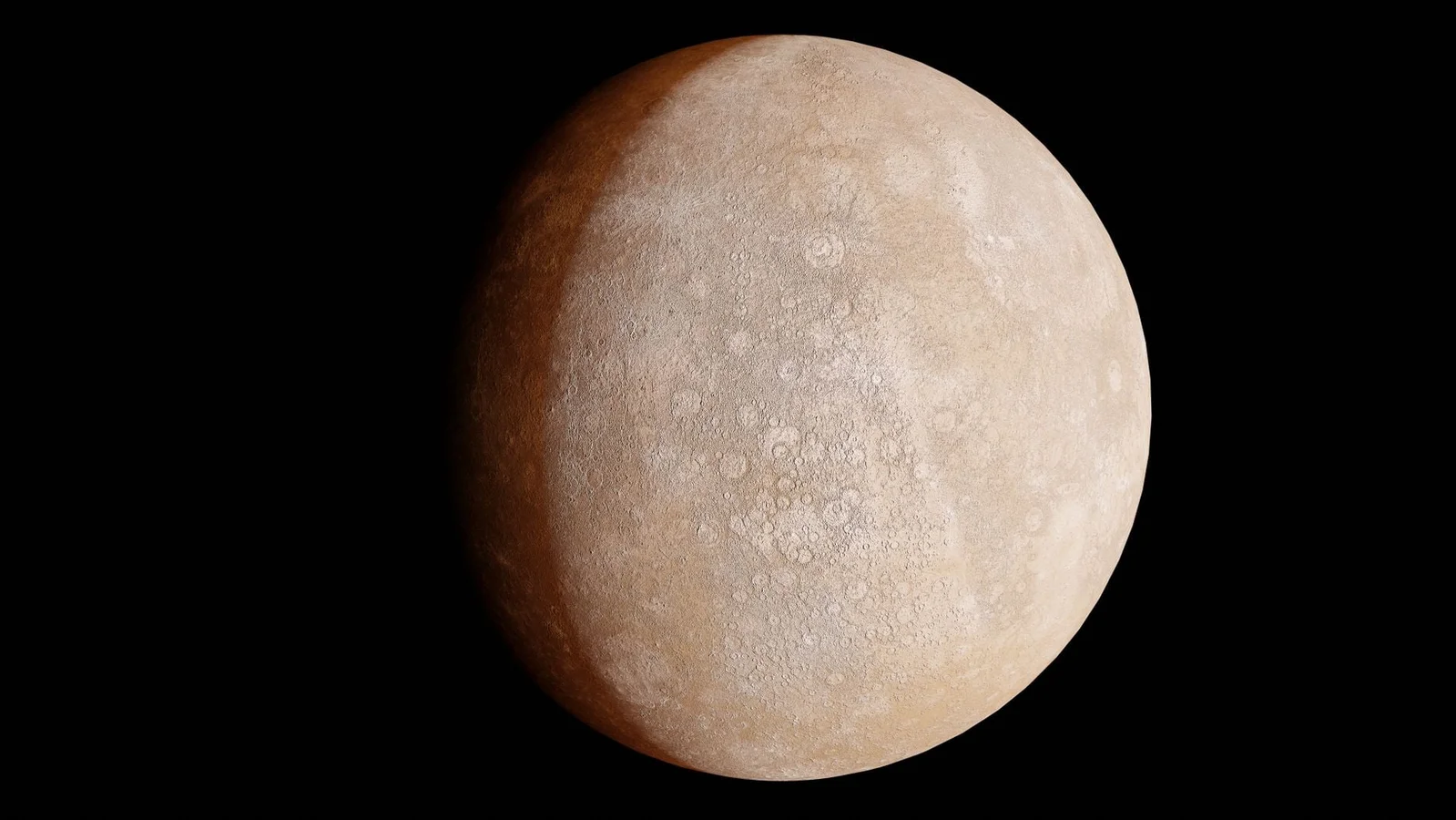
Mercury’s Wrinkles Reveal a Shrinking World as Its Core Cools
Mercury has cooled enough to shrink its radius by roughly 1–7 kilometers, leaving long lobate scarps that wrinkle the planet’s surface; recent analyses place the amount of contraction near 6.3 km when wrinkle ridges are counted and about 1.2 km when they’re excluded, highlighting a debate over whether the deformation records global shrinkage or mainly local faulting. The upcoming ESA–JAXA’s BepiColombo mission, arriving in 2026–27, is expected to help resolve how much of Mercury’s contraction is global versus localized.